


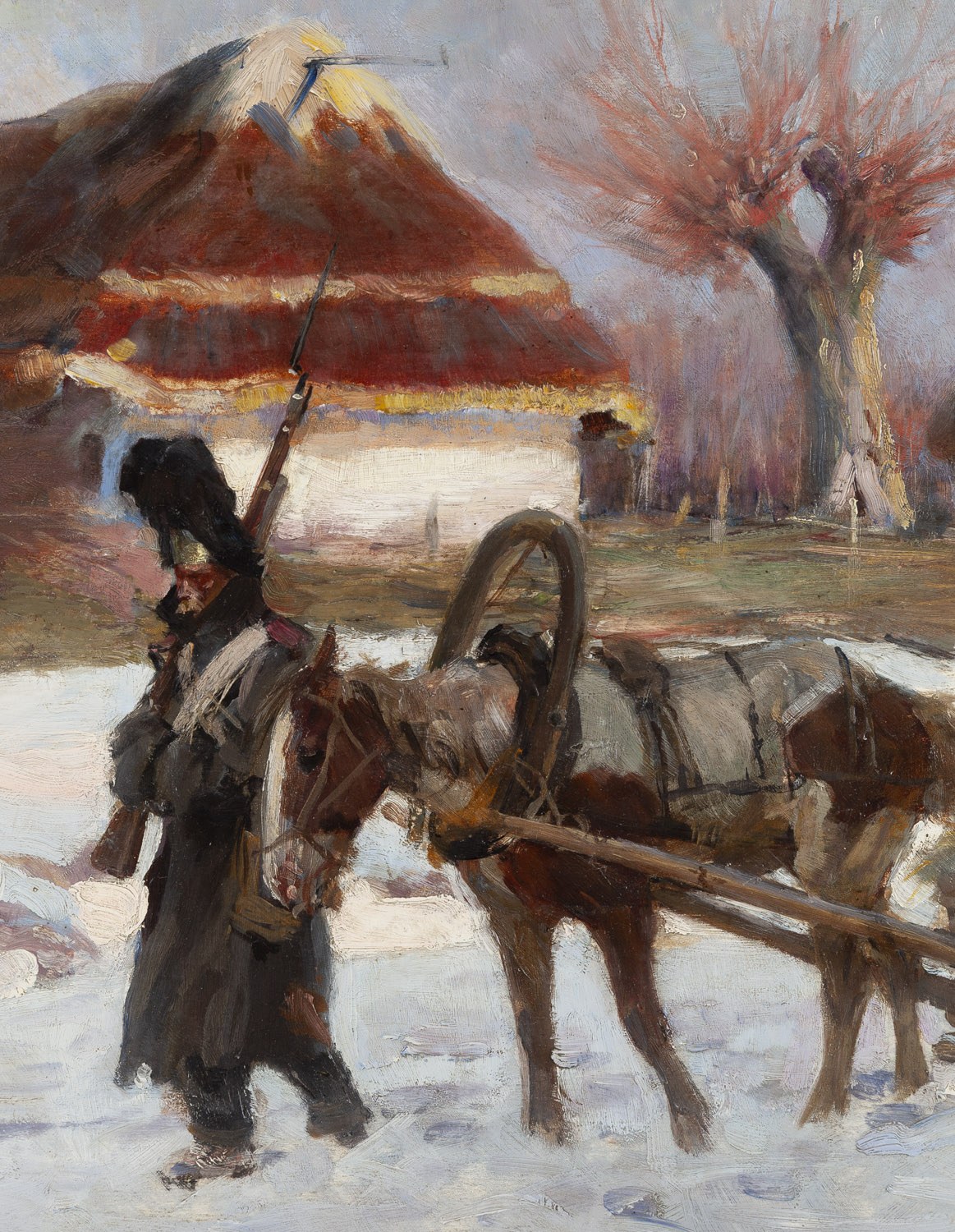
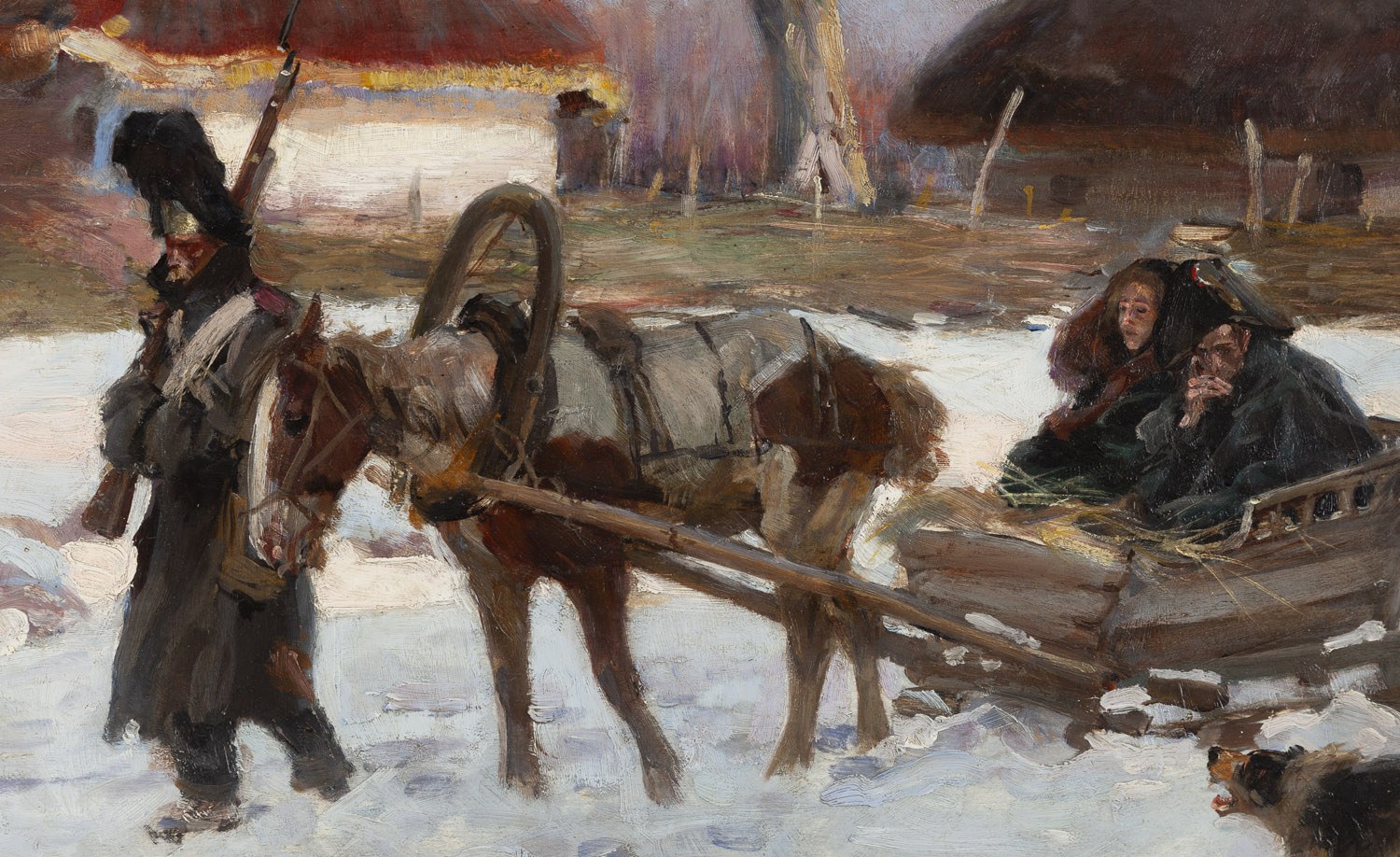
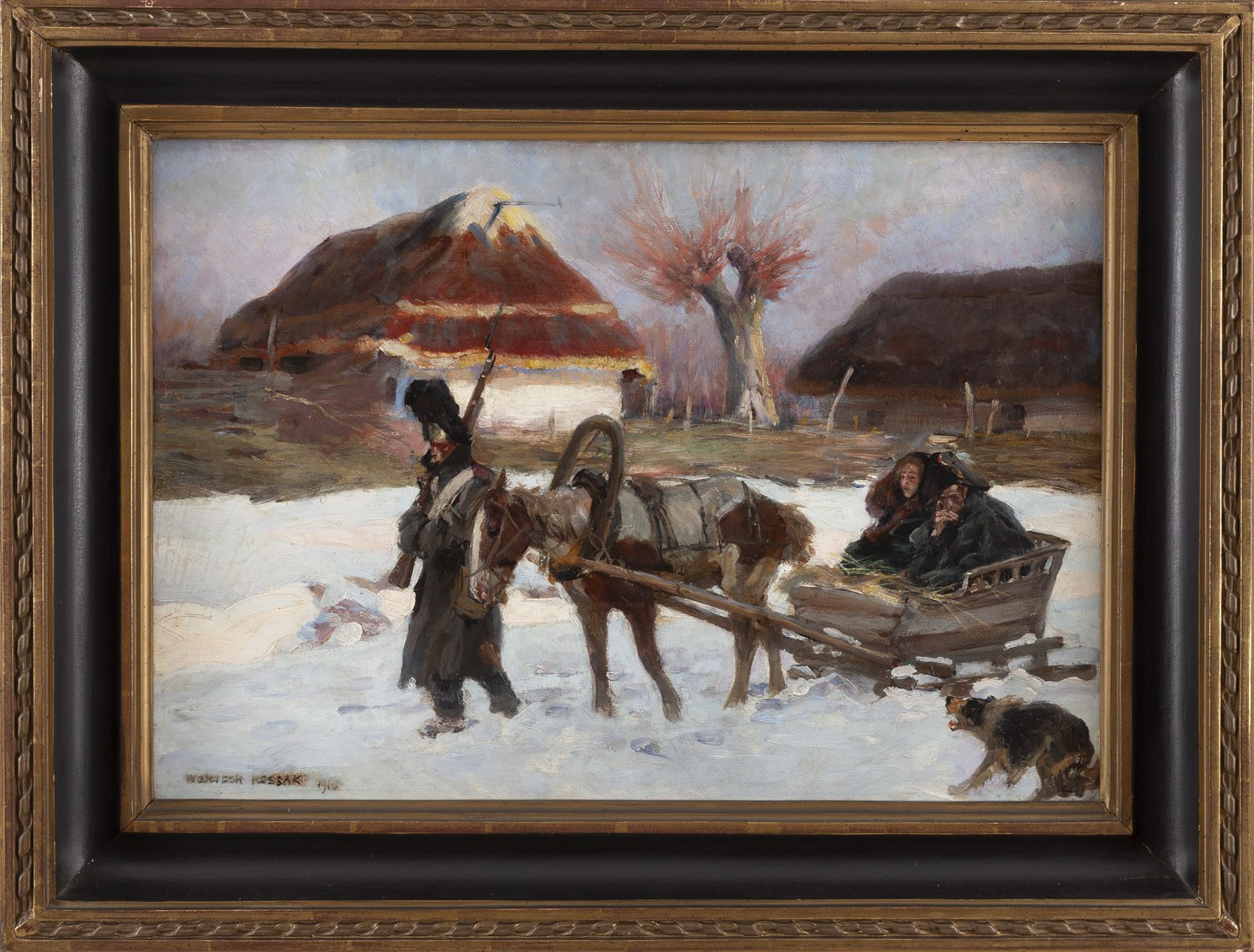
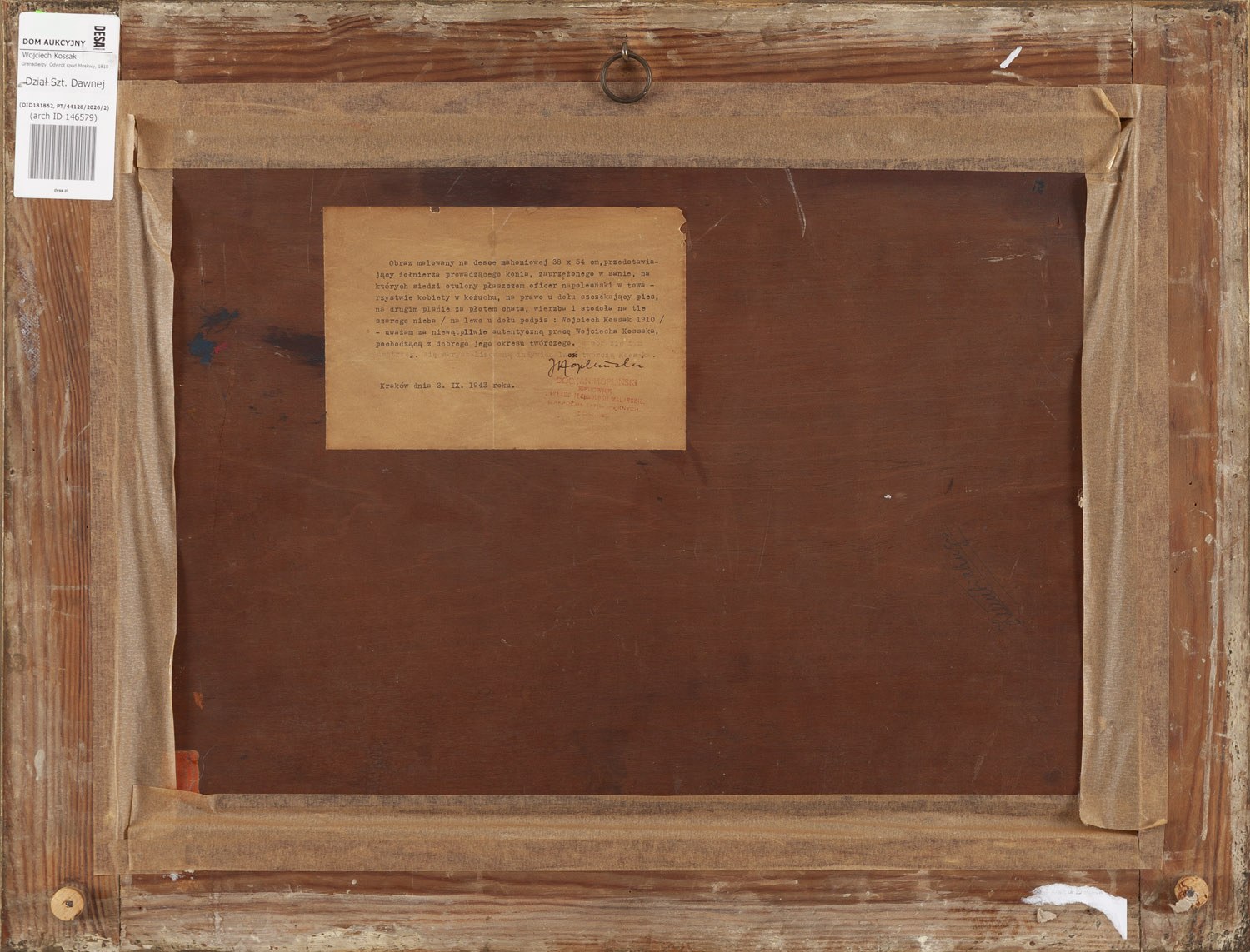
Dimensions: 38 x 54 cm
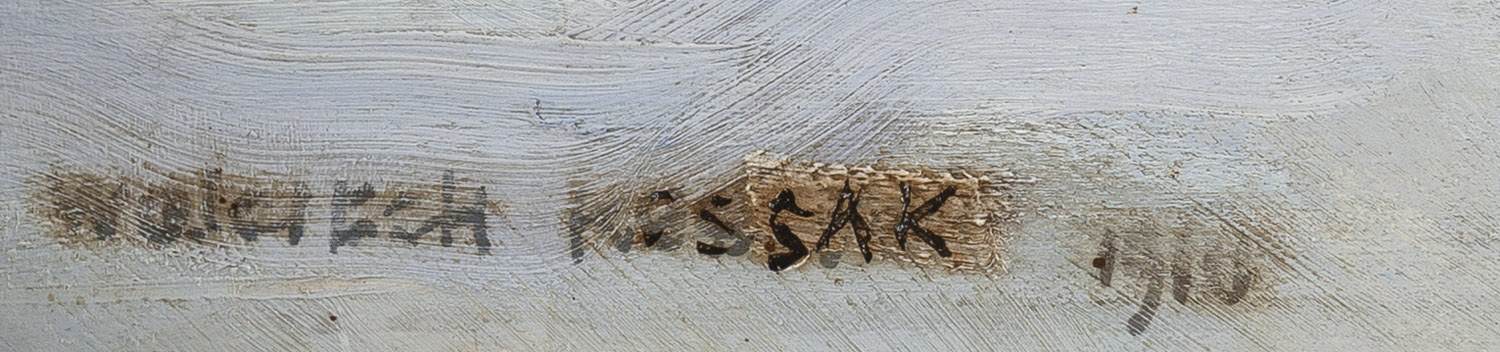
signed and dated lower left: 'WOJECIECH KOSSAK 1910'
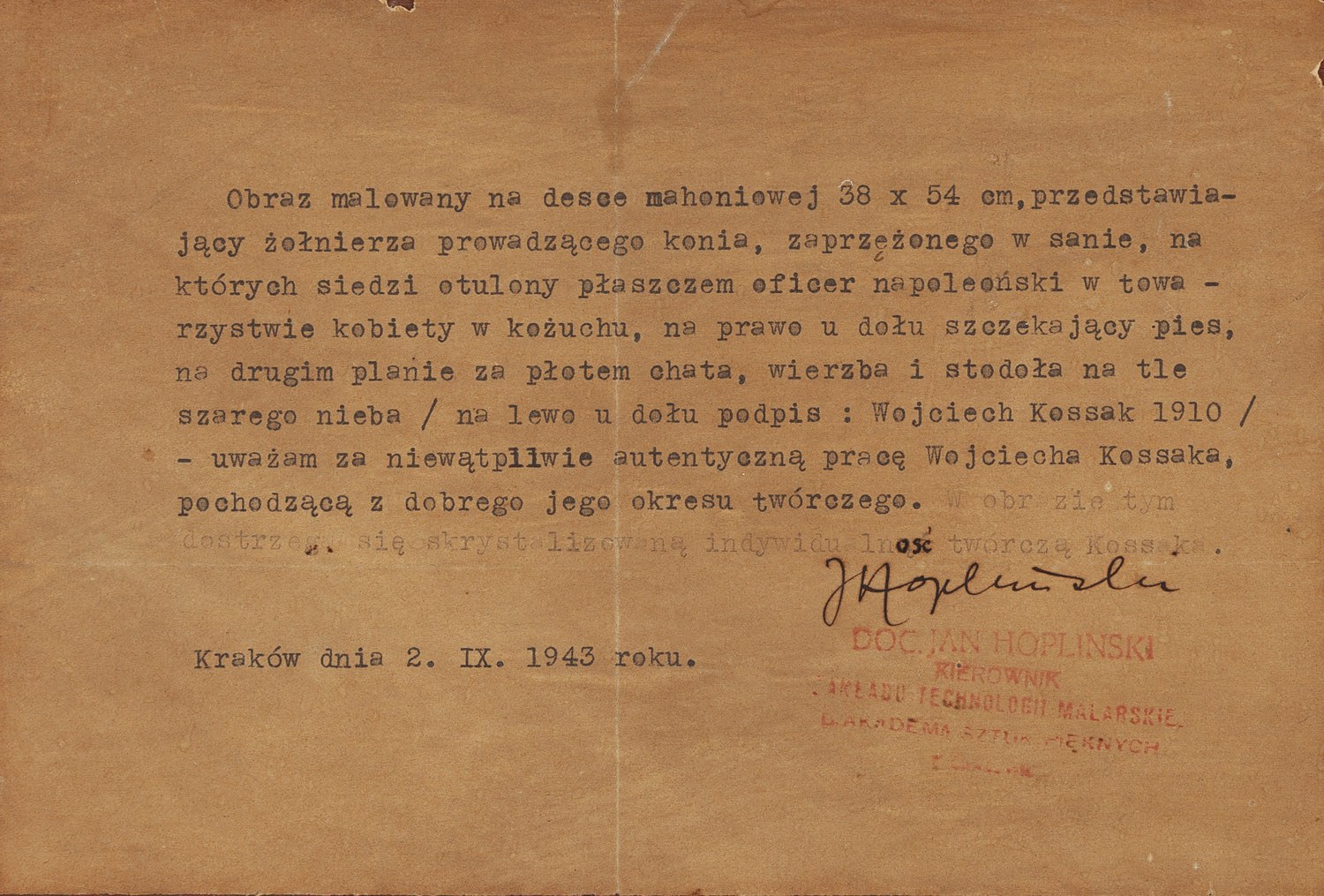
On the reverse, a card confirming authenticity, signed by Jan Hopliński on September 2, 1943, and a handwritten note of ownership
Bibliography
Compare: a postcard featuring a reproduction of Wojciech Kossak’s painting “Débris de la Grande-Armée 1812,” National Museum in Warsaw
Biography
He was the son and student of Juliusz Kossak, the father of Jerzy (also a painter), the poet Maria Pawlikowska-Jasnorzewska, and the writer Magdalena Samozwaniec. He studied at the Kraków School of Fine Arts, the Munich Academy, and in Paris. From 1895 to 1902, he lived primarily in Berlin, where he worked for Emperor Wilhelm II; he also painted for the court of Franz Joseph II. He traveled extensively, including to Spain and Egypt. In later years, he traveled to the United States several times to fulfill portrait commissions. In 1913, he was appointed professor at the Warsaw School of Fine Arts. He was a co-author of the panoramas: Racławice (1893–94), Berezina (1895–96), The Battle of the Pyramids (1901), and sketches for the uncompleted Samosierra (1900). He was an unrivaled painter of battle and historical scenes. In these works, he glorified the Polish military: the uhlans, the light cavalry, and the legionnaires. He had mastered the art of painting horses to perfection.










