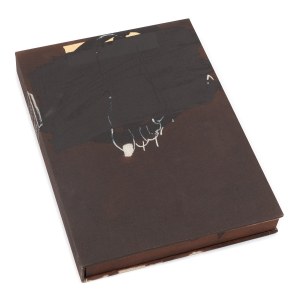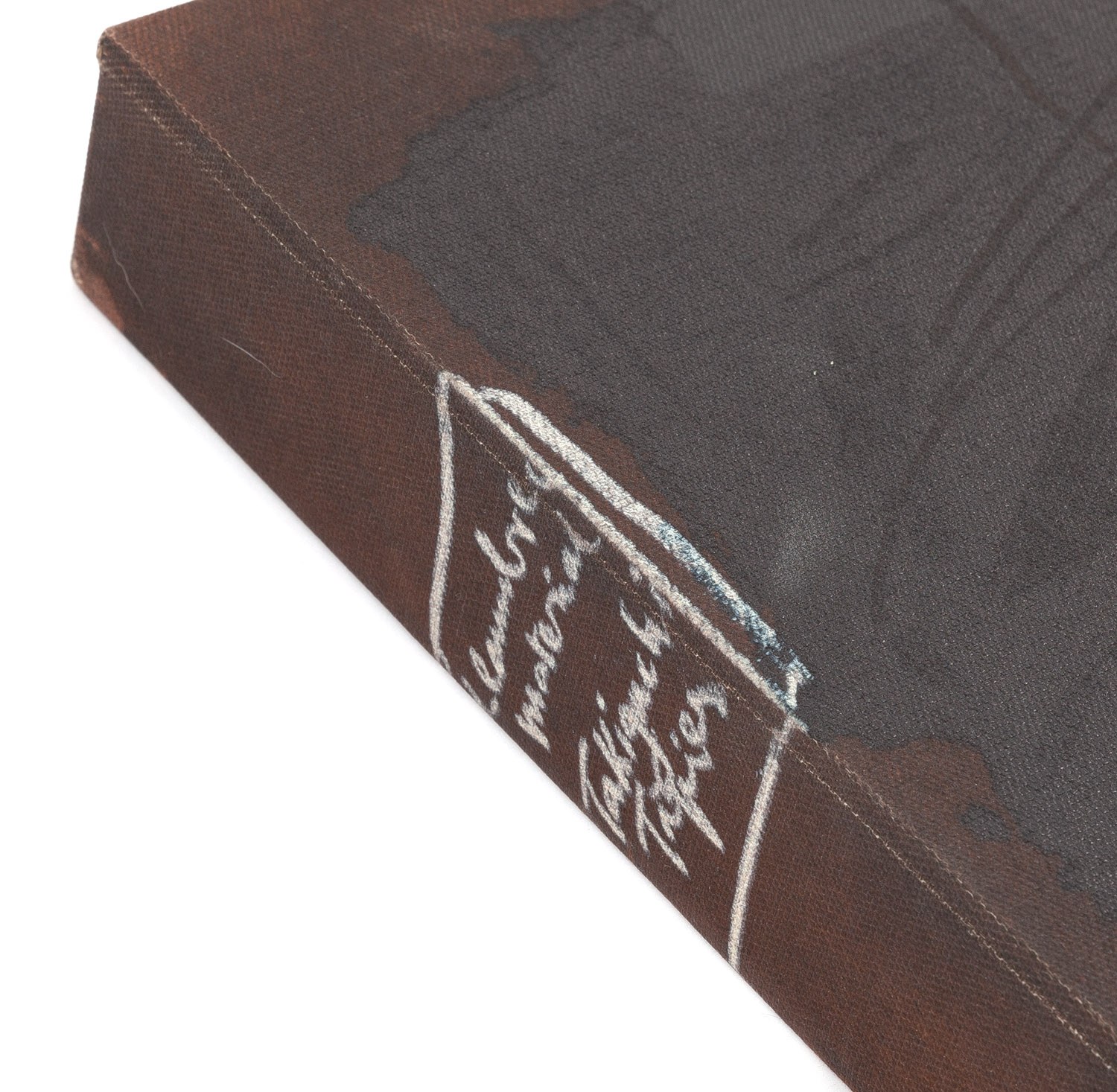
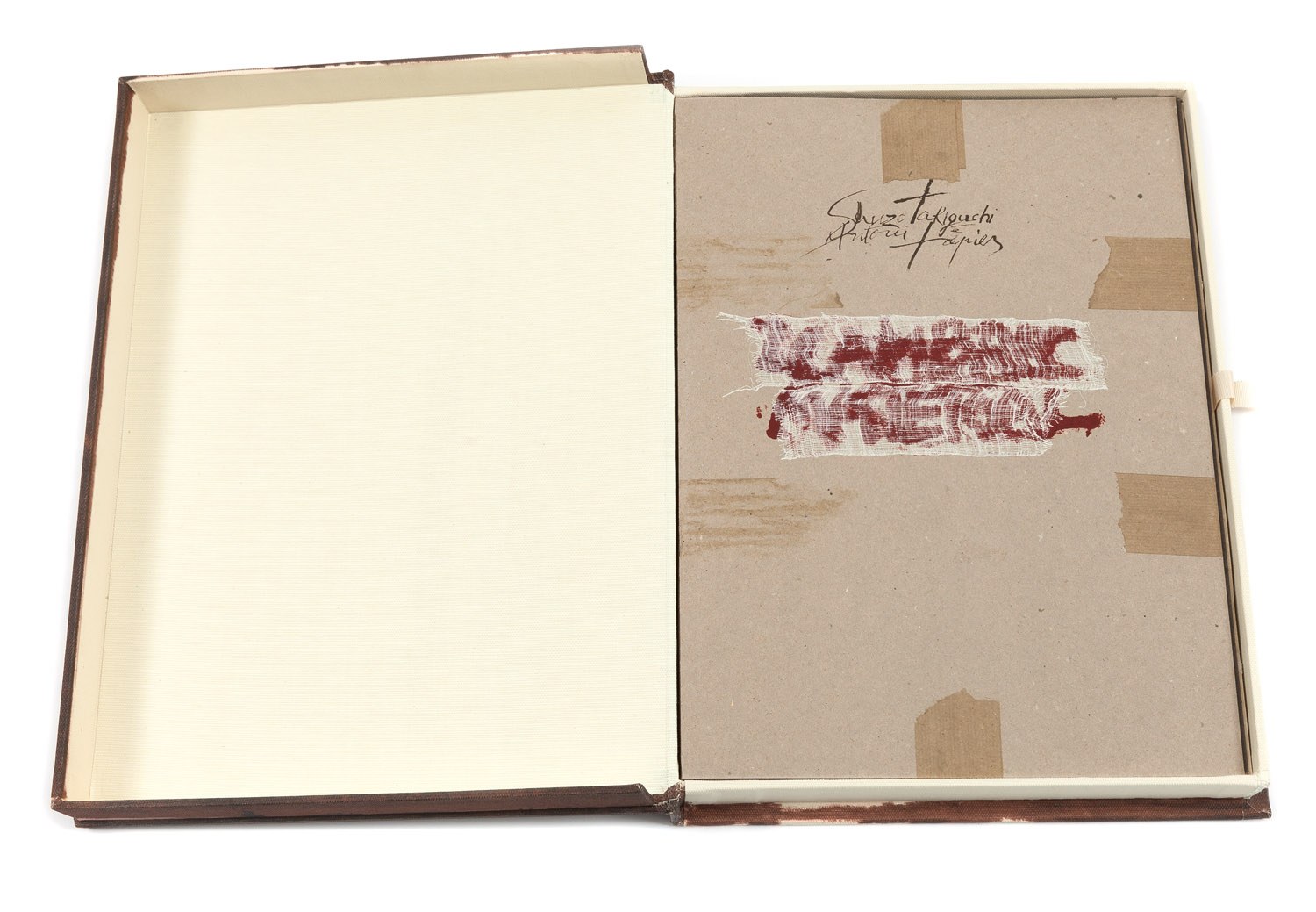
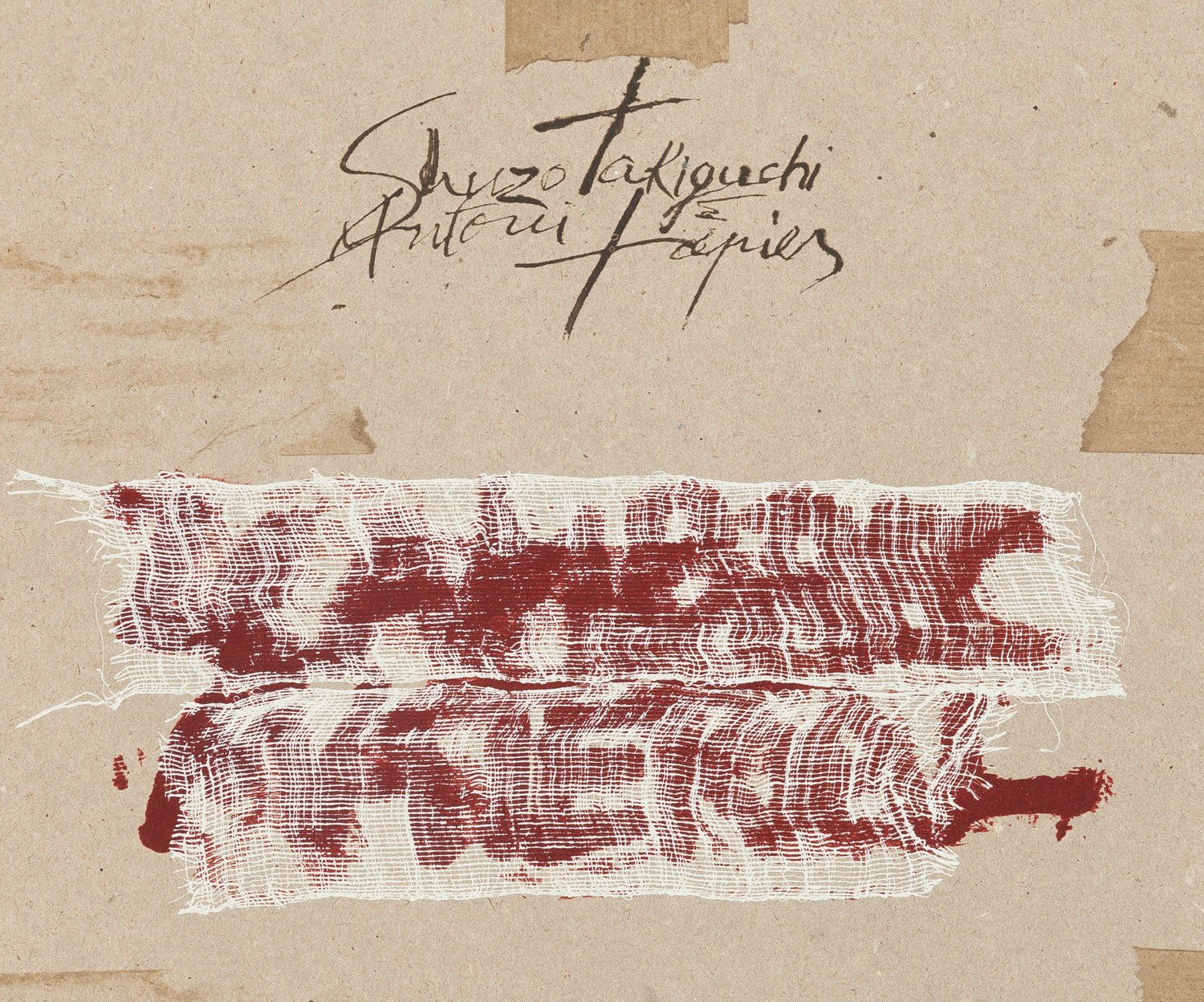
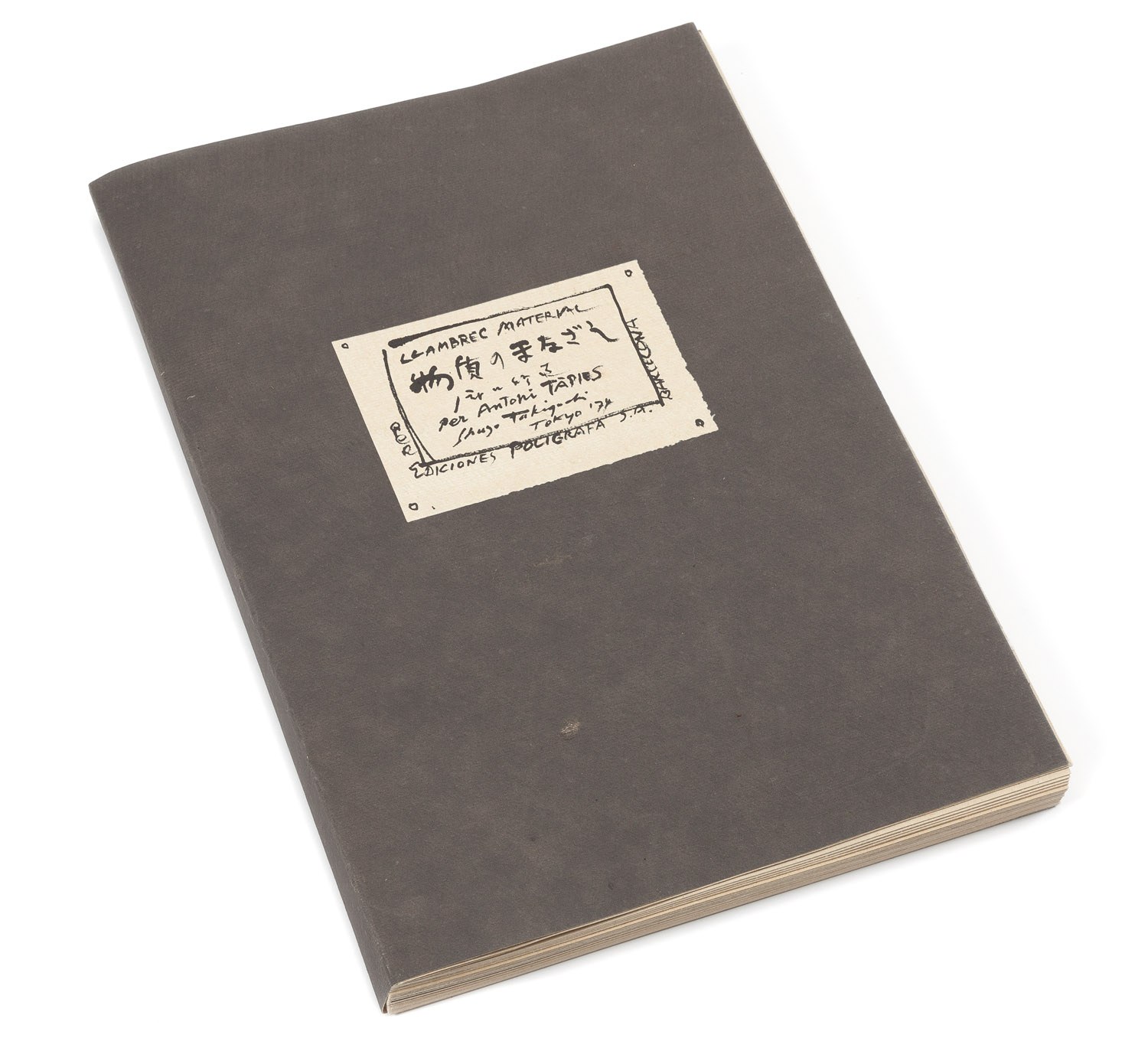
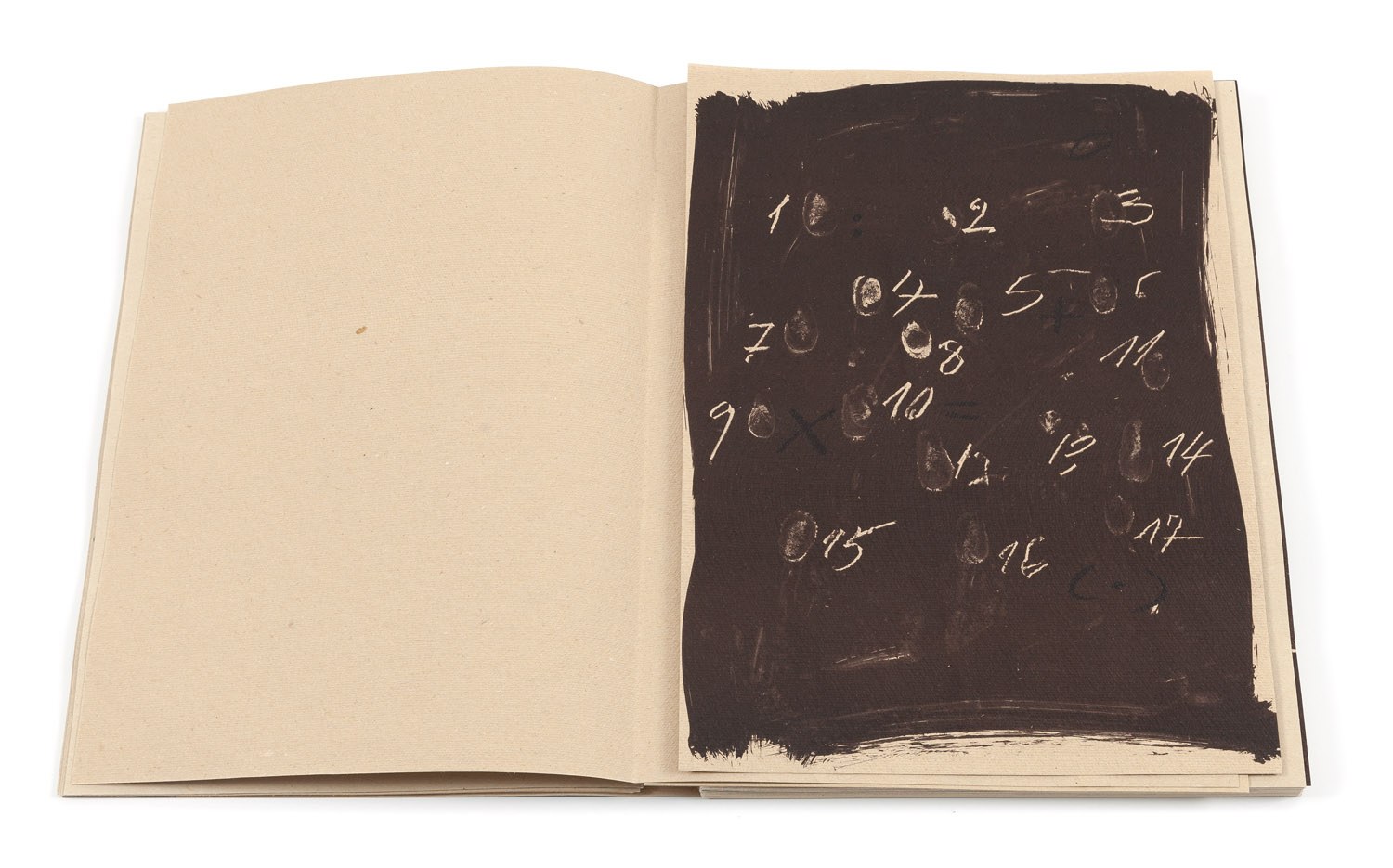
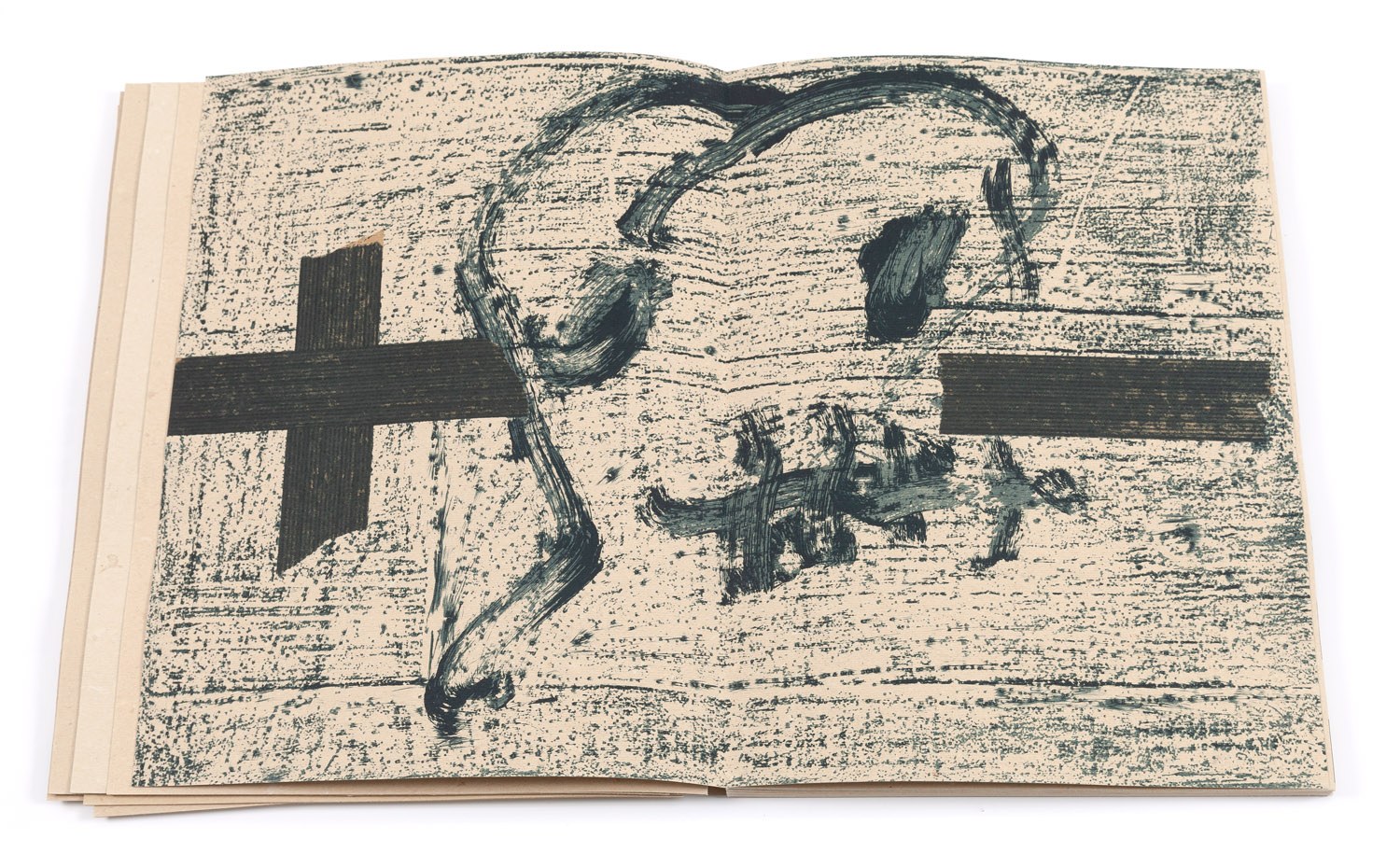
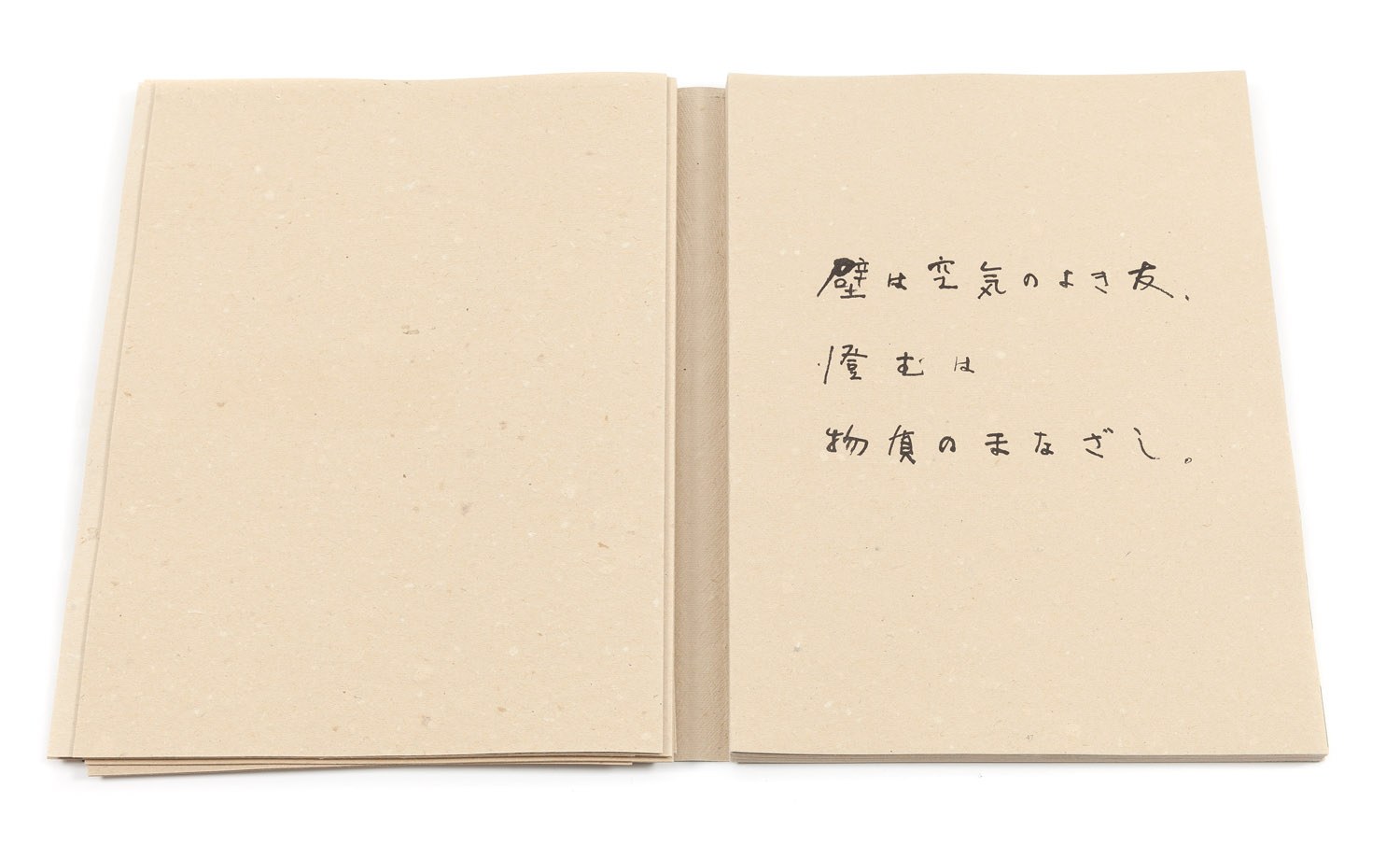
Dimensions: 50 x 37 cm (case)
signed in colophon
first edition contains 12 lithographs
signed in colophon
includes poems by Shuzo Takigushi published in Japanese, Catalan and French
Biography
Catalan painter, sculptor and art theorist. Master of Informel art. One of the most famous Spanish artists of the 20th century. Son of Josep Tapies i Mestres, a lawyer, and Maria Puig i Guerra, who came from a family of nationalist Catalan politicians. Raised at the Col-legi Alemany de Barcelona school. From 1940, as a result of tuberculosis disease, he stayed for two years in sanatoriums, where he awakened his interest in literature and art. Beginning in 1943, he studied law at the University of Barcelona for three years, after which he abandoned his studies and took up painting. In 1954, he married Teresa Barba i Fabregas and had three children with her: Antoni, Miquel and Clara. Throughout his life, with very short breaks, he lived in Barcelona. From the very beginning of his artistic path, Tapies became associated with modern trends in art. He set up his first painting studio in Barcelona in 1946. In 1948, he debuted at the first October Salon (Salón de Octubre) in Barcelona and co-founded the magazine and movement Dau al Set, associated with Surrealism and Dadaism, whose leader was the Catalan poet Joan Brossa. In 1949, he participated in the review of modern Catalan art organized by the French Institute in Barcelona and in the Salon of the Eleven (Salón de los Once) in Madrid. In 1950, he held his first solo exhibition in Barcelona (Galeries Laietanes) and received a scholarship from the French Government to travel to Paris, where he met, among others, Picasso and the influential marchand and art critic Michel Tapié. That same year, he presented his work for a Carnegie Institute award in Pittsburgh. In 1952, he represented Spain at the XXVI Venice Art Biennale. In 1953, he had his first solo exhibition in the United States (Chicago and New York) and was honored at the Second Sao Paulo Biennale. In 1955 he had a solo exhibition in Stockholm, and in 1956 in Paris. In 1957 he was awarded the top prize at the X Premio Internazionale per la Pittura de Lissone in Milan. In 1958, he was honored with a special exhibition room at the XXIX Venice Biennale and received prestigious awards from the Carnegie Institute and UNESCO. In 1960 he participated in the New Spanish Painting and Sculpture exhibition at MoMA in New York. By the 1960s, he already had a reputation as one of Spain's most recognizable artists. In addition to numerous solo exhibitions at the time, he received numerous awards, including Tokyo (1960), New York (1964) and Menton (1966). In the 1970s he became involved in the struggle against Francoism, for which he was briefly imprisoned. In the 1980s and 1990s he realized numerous cross-sectional exhibitions of his work around the world. Tapies did not train at any art school. He began as a Surrealist painter influenced by the work of artists such as Paul Klee and Joan Miró. However, he quickly developed his own style, moving from geometric abstraction and Informel art to a trend, initiated after World War II, as a result of the revaluation of such concepts as matter, dust, particle, atom, and which the artist himself referred to as matter painting (cat. pintura materica). He was one of the first artists to start using materials in his paintings that are not commonly considered painting media, including leather, paper, marble dust, and later, influenced by pop art, furniture, without abandoning the traditional form of painting. He experimented with the texture of paint and canvas, and also used everyday objects and placed simple motifs such as crosses or crucifixes, letters, numbers and geometric figures on such a composed background, thus giving his paintings a symbolic or metaphysical dimension. The central idea of his works was to rehabilitate materials, objects or concepts that are commonly despised or considered unimportant or imperfect. He often resorted to shocking the public with the simplicity of his means of expression. Later, he created emblematic and unusual sculptures depicting everyday objects. One of the most controversial is the design of an 18-meter-long Sock (Mitjó) with a hole in the heel, which was to adorn the National Museum of Art of Catalonia (MNAC) in 1990. However, as a result of protests from the public, as well as the authorities, the project was suspended and had to wait for a presentation, this time at the Antoni Tapies Foundation, until 2010. Antoni Tapies' works are exhibited in the most important contemporary art museums in the world. In addition to being awarded honorary doctorates at various universities, he has been awarded numerous prizes and awards, including: in 1981, the Wolf Foundation Prize in Art; in 1983, the Gold Medal for Merit from the Catalan authorities; in 1990, the Prince of Asturias Prize in Art; in 1993, the Picasso Medal from UNESCO; and in 2003, the Velazquez Prize in Visual Arts. On April 9, 2010, in recognition of his merits, King Juan Carlos I of Spain conferred on him the title of noble Marquis de Tapies.