


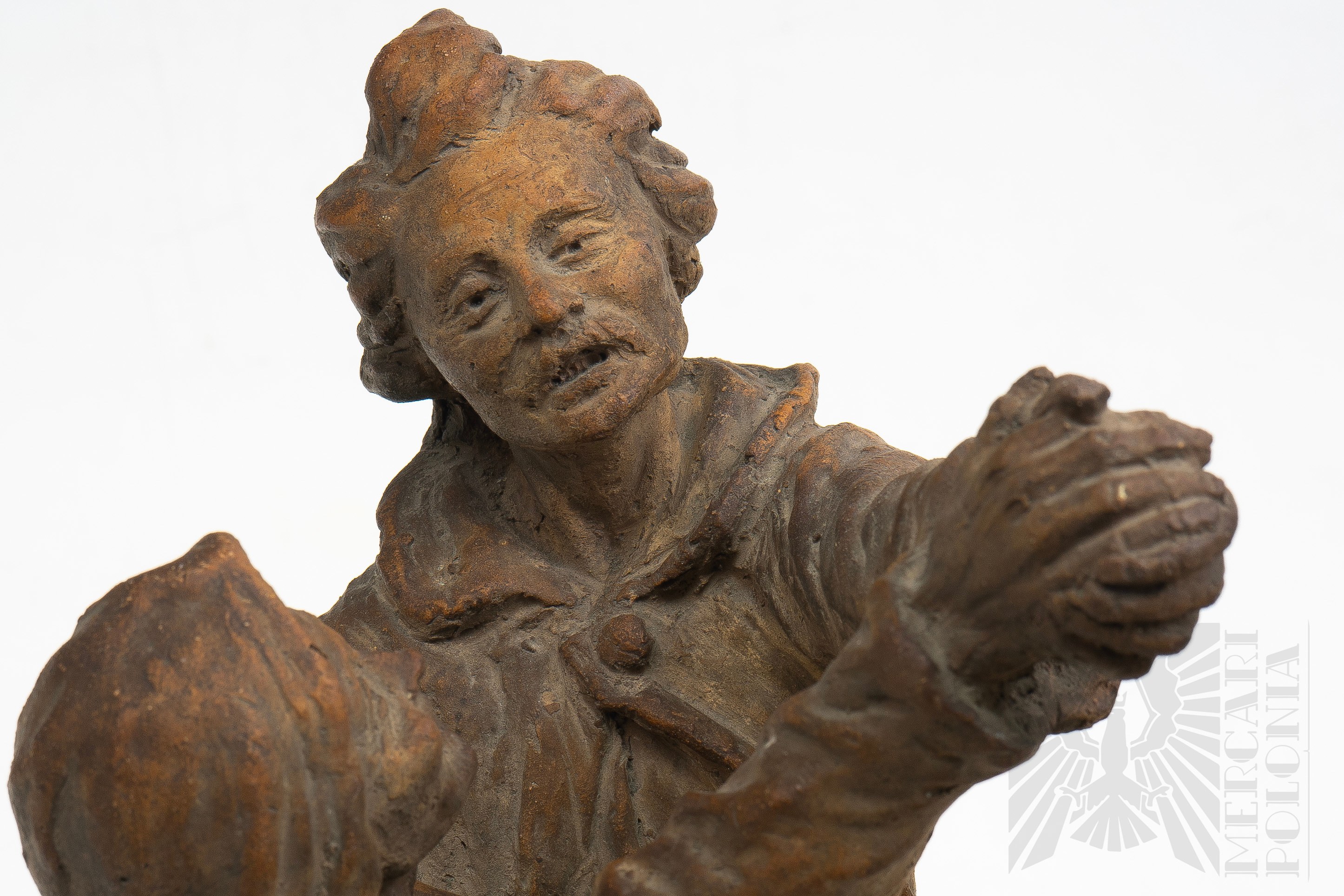
Antoni Kurzawa (1842-1898)
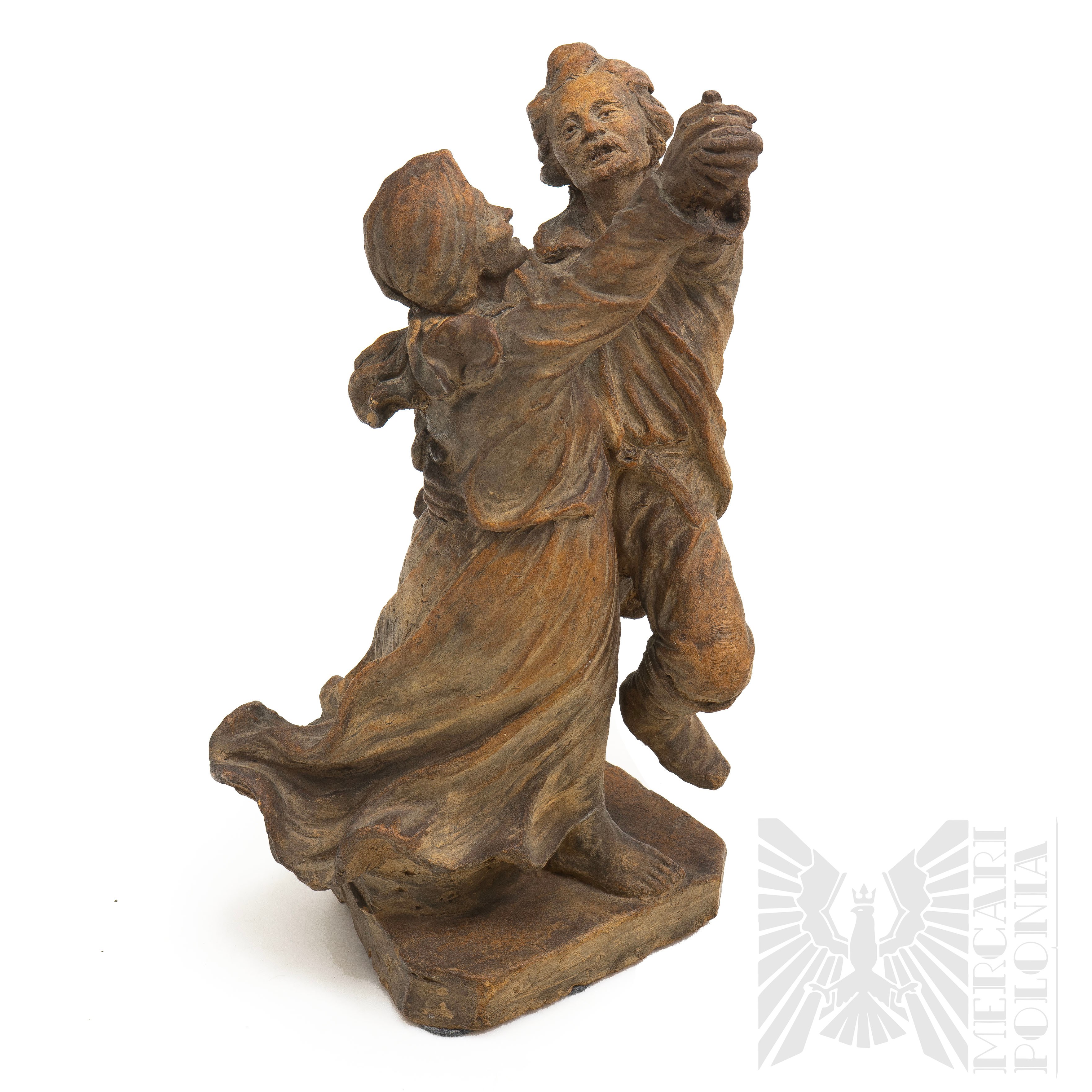
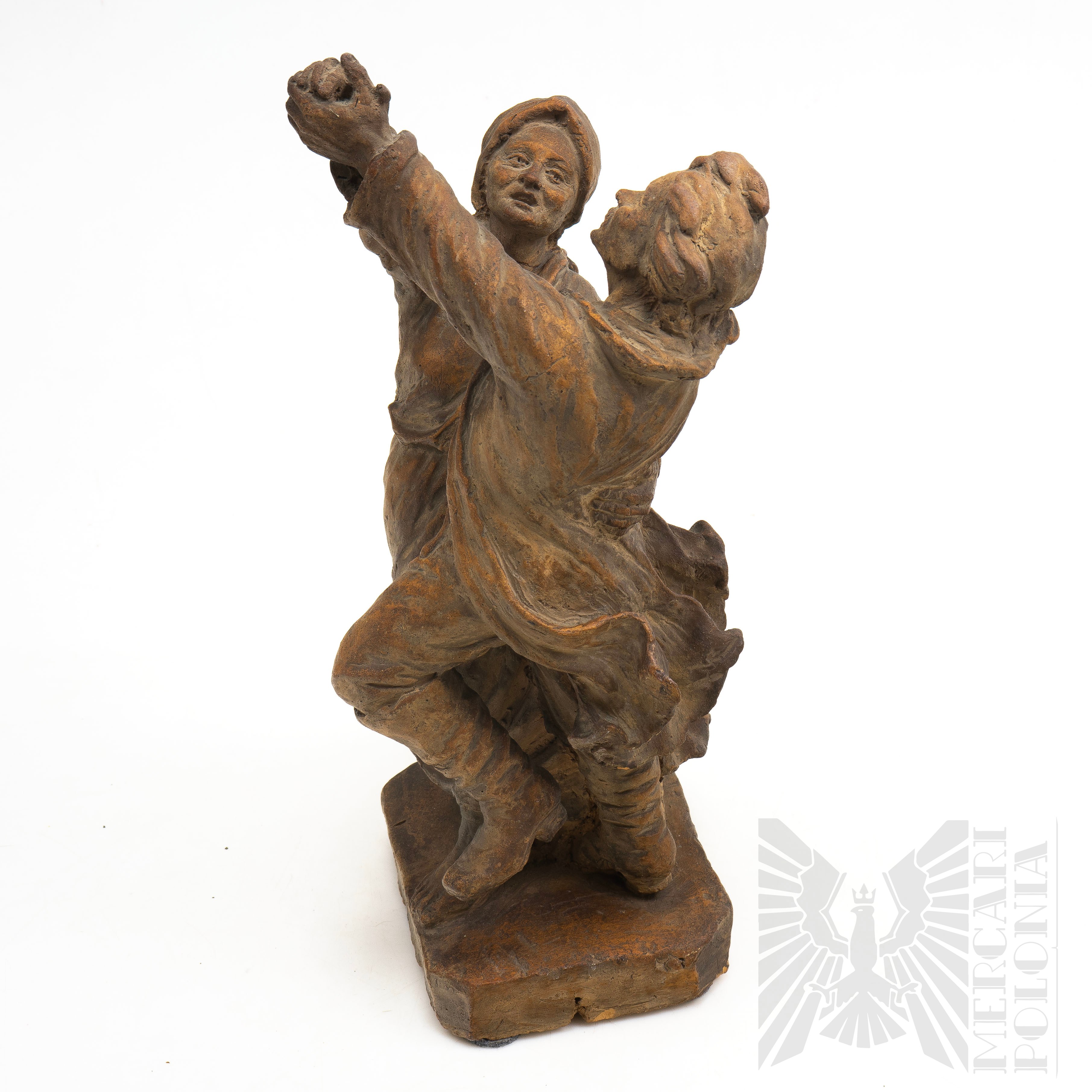
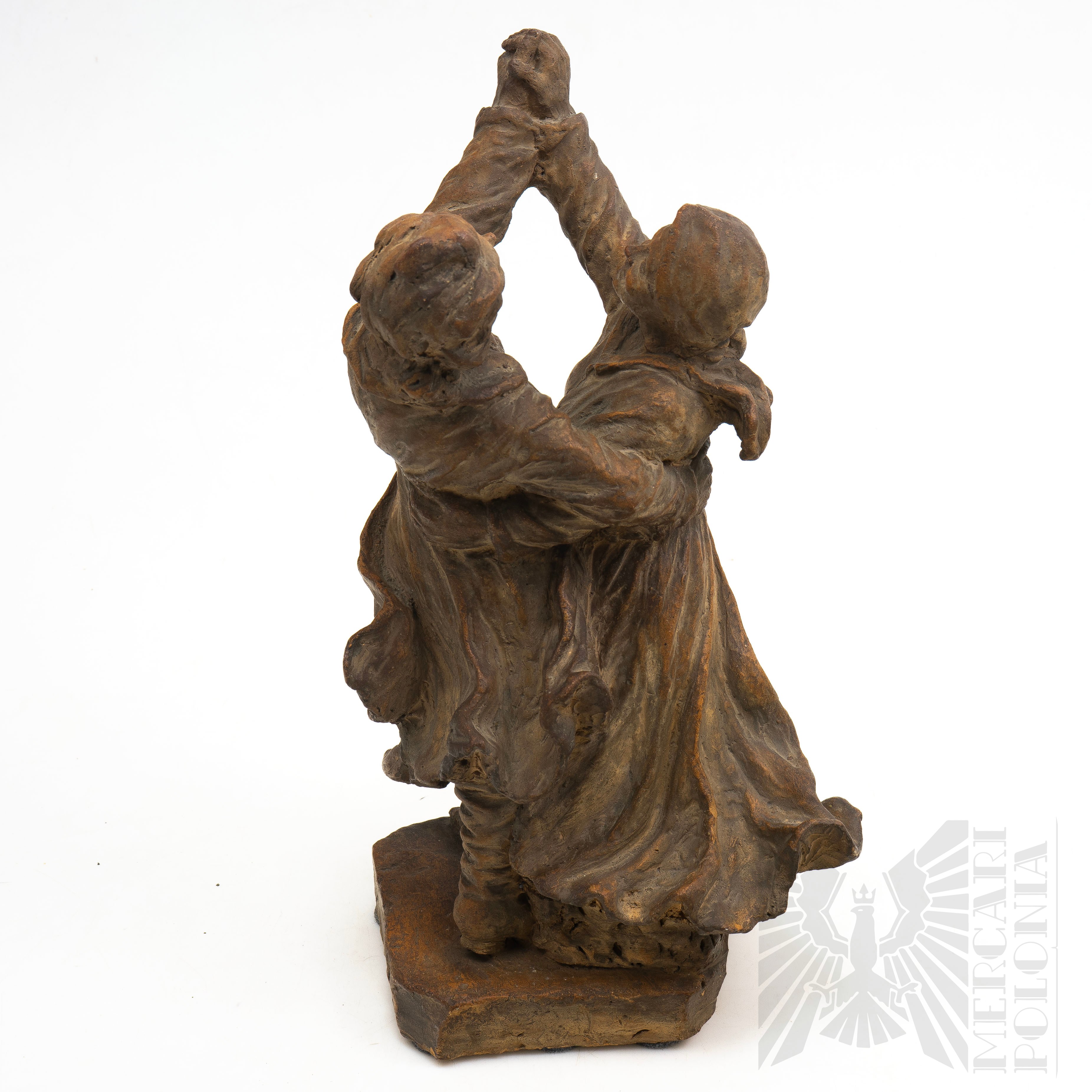
"Polish Dance"
Terracotta, height 36 cm
Poland, late 19th century
An exquisite sculpture by Antoni Kurzawa - an outstanding representative of Polish sculptural realism of the second half of the 19th century. The figure on display belongs to the artist's well-known series entitled Polish Dance, which is a tribute to folk tradition and the national spirit of the era of partitions.
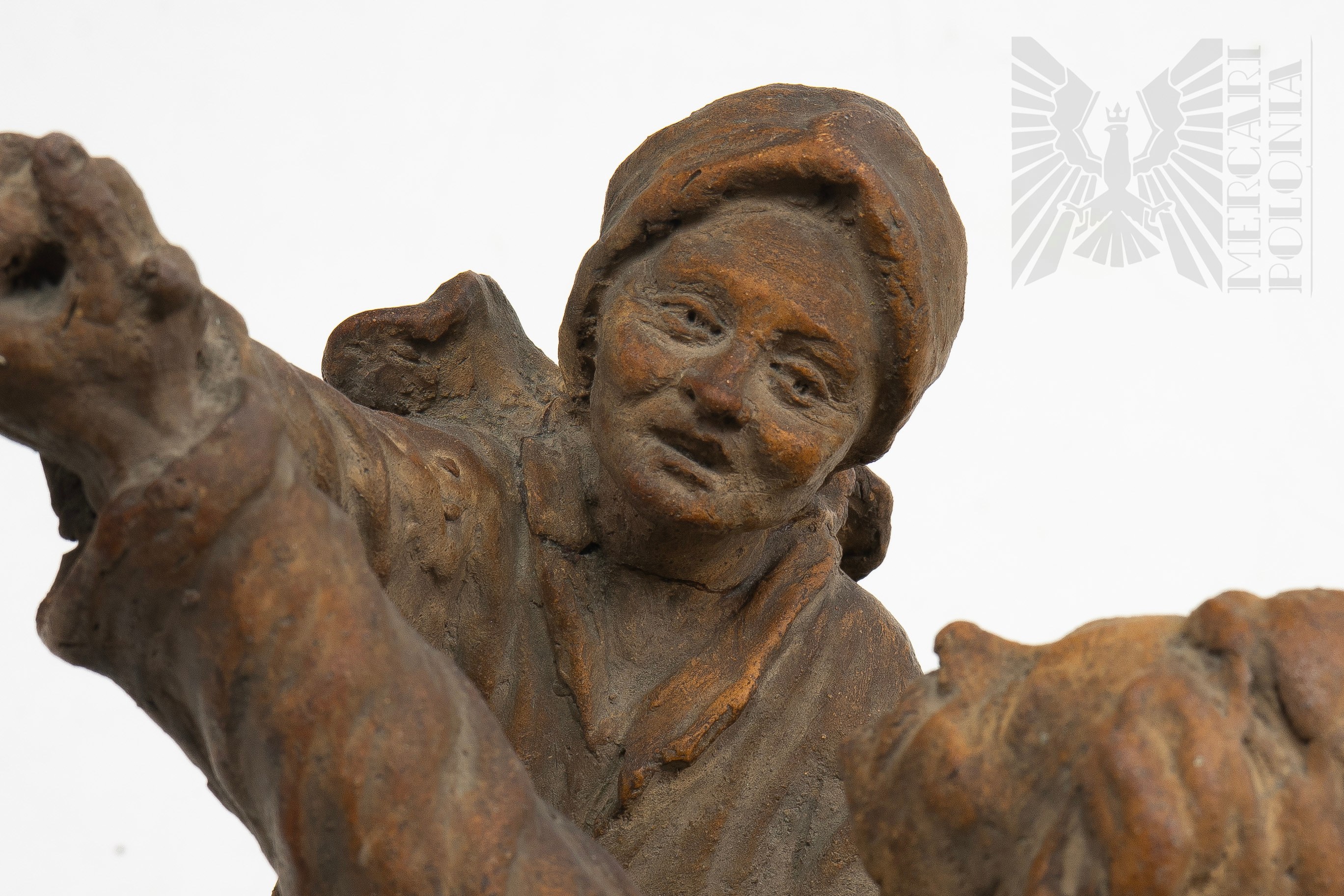
Captured in vivid movement, the dance duet shows a pair of country dancers in a dynamic, almost theatrical pose. The artist models the soft folds of the clothes, the energy of the gesture and the expression of the faces with extraordinary sensitivity, achieving an effect of deep realism and emotional involvement. The figures are executed in terracotta with Kurzawa's typical mastery, combining craftsmanlike precision with a subtle sensitivity to a national theme.
The work is not only an example of outstanding sculptural technique, but also a carrier of strong symbolic content - an affirmation of Polish cultural identity at a time when it is under threat. Kurzawa's figures, set in the realities of the countryside, were an expression of resistance to degeneration, becoming a material record of ethos and tradition.
------------
Antoni Kurzawa (1842-1898) was an outstanding Polish sculptor whose work combined expression with deep symbolism. Born in Tura, thanks to the support of Mieczyslaw Weryha Darowski, he took up studies at the School of Fine Arts in Cracow, where he studied under Henryk Kossowski and Władysław Łuszczkiewicz. He received further education in Vienna and Paris, which significantly influenced the development of his artistic style.
Kurzawa became famous for his sculptures of religious, mythological and genre themes, such as "Christ and Magdalene" (1864), "Samson's Fight with the Lion" (1865), "Judas' Kiss" (1867), "Genius Breaking the Ties" (1874), "Wawel and Vistula" (1878), "Oberek" (1881), "Polonaise" (1888) and "Sower" (1896). His works are characterized by dynamic form and deep emotional expression.
One of the most famous episodes in his career was the creation of the sculpture "Mickiewicz awakening the genius of poetry" (1889), which won third place in the competition of the Society for the Encouragement of Fine Arts in Warsaw. Disappointed with the result, Kurzawa, in an act of desperation, destroyed his own work during the exhibition.
Toward the end of his life, struggling with illness and deprivation, he settled in the Helcl Institute in Krakow, where he died in 1898. He was buried in the Rakowicki Cemetery, and his grave is adorned with the sculpture "Genius Breaking Tethers," which is one of his most symbolic works.
Antoni Kurzawa's work remains a testament to his talent and passion, and his works are valued by both collectors and art historians.




![[MŁODA POLSKA] Antoni Kurzawa (1842 Turza -1898 Kraków) - Figura - Cykl Taniec Polski, Terakota (Rzeźba, Kraków, Folklor)](https://img1.one.bid/img/10212/3185113_1w.webp?1787401476)








Utoljára megtekintett
A tételek listájának megtekintéséhez jelentkezz be
Kedvencek
A tételek listájának megtekintéséhez jelentkezz be