


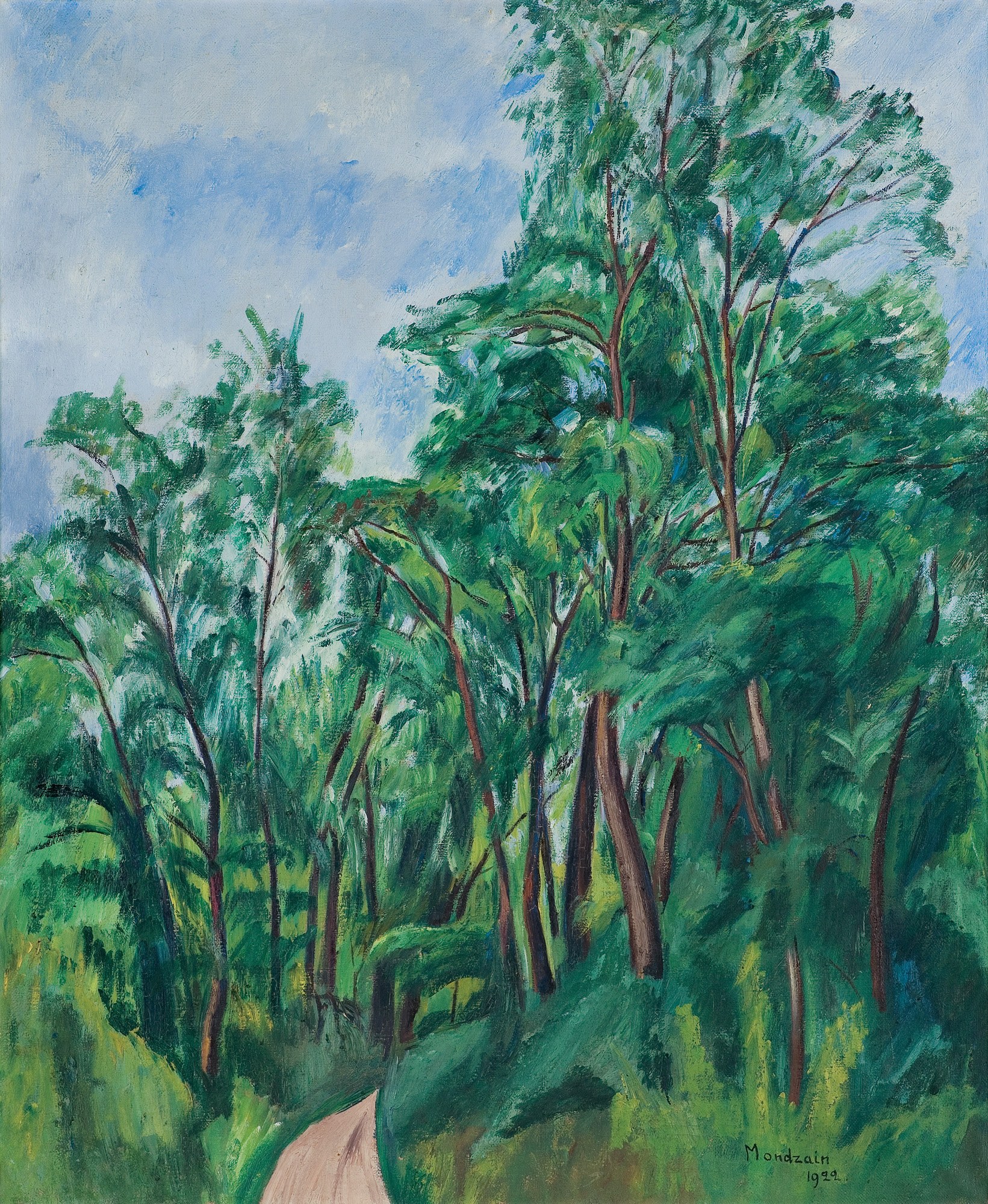
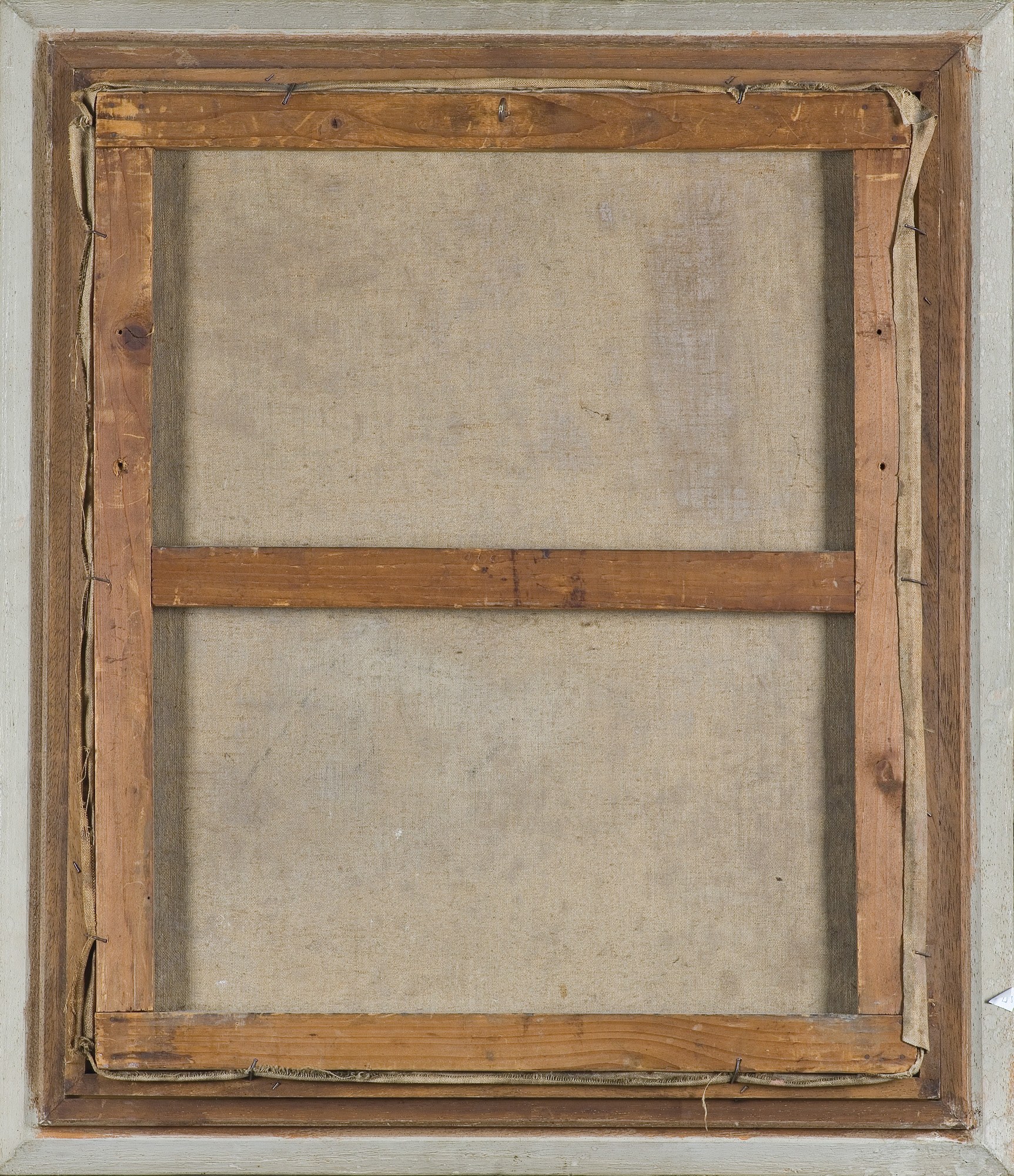
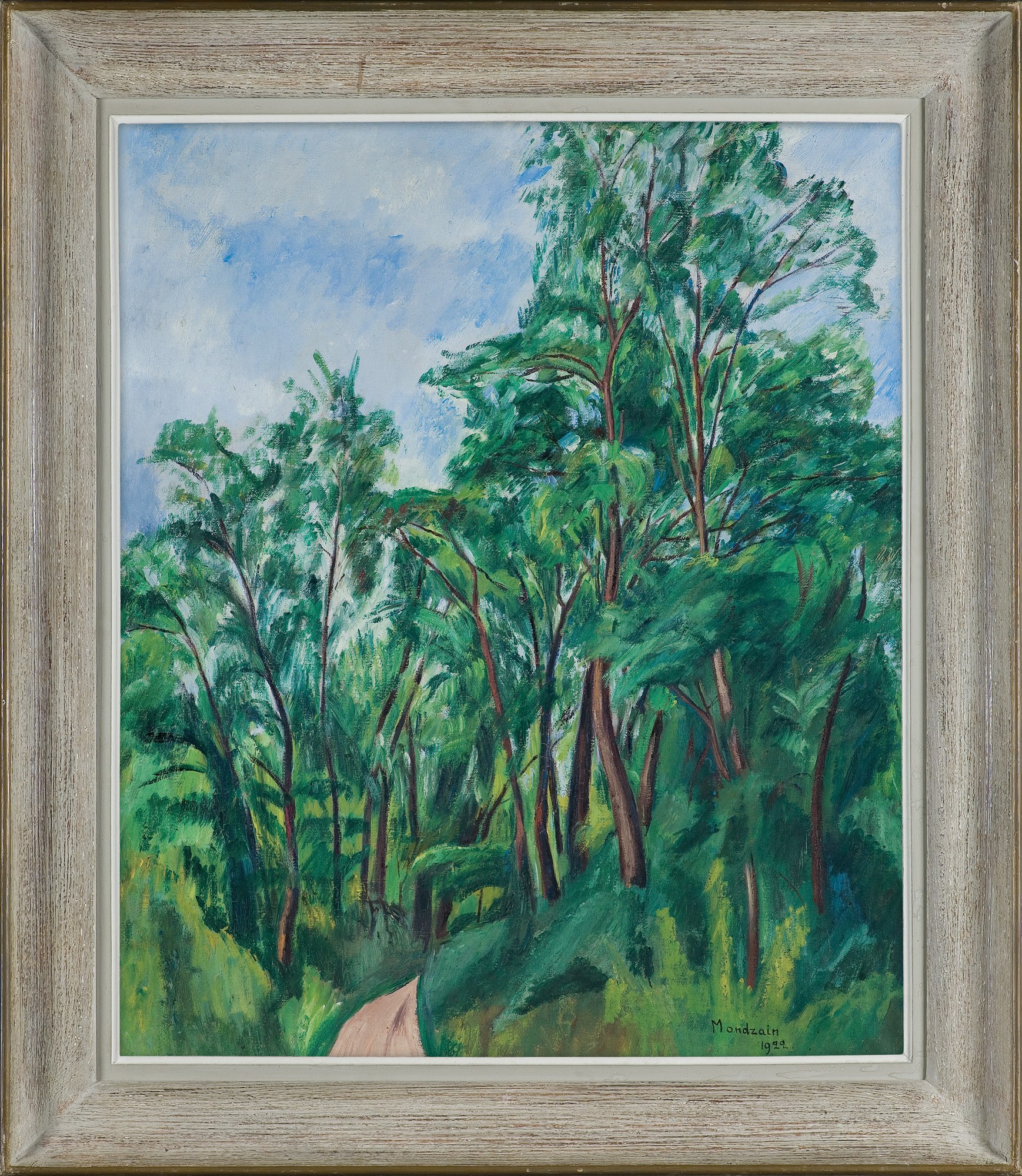
65 x 54.2 cm - oil on canvas
signed lower right: Mondzain | 1922
The painting has been exhibited and reproduced in:
The painting has been exhibited, mentioned, and reproduced, among others, in: – The Urszula and Piotr Hofman Collection, ed. Urszula Hofman, Warsaw 2013, p. 14;
– Szymon Mondzain and the École de Paris. Polish Avant-Garde Painting of the Second Half of the 20th Century. The Urszula and Piotr Hofman Collection, Abbots’ Palace – Modern Art Department of the National Museum in Gdańsk, February 22 – April 22, 2015;
– The Urszula and Piotr Hofman Collection, ed. Urszula Hofman, Warsaw 2018, p. 14.
♣ Droit de suite: ♣ A fee resulting from the right of the artist and his heirs to receive remuneration in accordance with the Act of February 4, 1994, on Copyright and Related Rights (droit de suite) will be added to the Purchase Price.
Szymon Mondzain (Chełm 1888 – Paris 1979) – real name Szamaj Mondszajn – painter, representative of the so-called École de Paris; began his painting studies at the School of Fine Arts in Warsaw in 1905 and, in the same year, was arrested and imprisoned in the Citadel for participating in a school strike. In 1908, thanks to the assistance of the Jewish Community, he left for Kraków, where he began his studies at the Academy of Fine Arts under the guidance of Teodor Axentowicz and Józef Pankiewicz. There he befriended Mojżesz Kisling, Wacław Zawadowski, and Jan Hrynkowski. In 1909 and 1911, he traveled to Paris, and by the end of 1912, he settled there permanently, joining the circle of artists in Montparnasse and befriending, among others, André Derain, Guillaume Apollinaire, and André Salmon. In 1913, he traveled to Switzerland and Brittany. During World War I, he served as a volunteer in the Polish-French units of the Foreign Legion. In 1923, he received French citizenship. He traveled to Italy for plein air painting (1923), and from 1925 onward, he regularly visited Algeria, where he also spent the years of World War II and where he later—with a brief stay in Paris—resided permanently. In 1965, he returned to Paris permanently and reoccupied his former studio on Rue Campaigne Première in Montparnasse. Active in the French-Polish artistic community, he frequently exhibited his works at the Salon Indépendants (from 1911), the Salon d’Automne (from 1913), and the Salon des Tuileries (from 1923). He also participated in other Parisian exhibitions, as well as in exhibitions of Polish art in Paris (1920, 1929, 1935), Pittsburgh (1923–1924), and New York (1933). He also had a series of solo exhibitions in Paris (1922, 1923, 1931, 1926, 1927, 1934, 1937, 1946, 1950), Chicago (1920), New York (1933), Oran (1943), and Algiers (1948). A posthumous exhibition of the artist’s paintings was held at the Musée Granet in Aix-en-Provence in 1983.
Mondzain’s early work is dominated by landscapes and still lifes, revealing clear influences from the art of Paul Cézanne. Later, he also painted geometric compositions inspired by the work of A. Deraine. In 1917, he created "Diabolical Caprices," a series of erotic gouaches. He also produced allegorical and symbolic compositions in dark tones ("Pro Patria," a painting dedicated to fallen soldiers). After World War I, he painted portraits and figural scenes in lighter colors, stylized after Italian Quattrocento painting. After 1925—that is, from the time of his regular trips to Algeria—his work was dominated by landscapes, portraits, still lifes, and genre scenes with Arabic motifs—paintings characterized by precise drawing, vivid color, and a decorative approach.
Note: Mondzain’s date of birth is cited from: E. Grabska, “Simon Mondzain,” in “Paris and Polish Artists Around E.-A. Bourdelle,” MNW Catalog, Warsaw 1997, p. 126. The dates 1887 or 1890 are also found in the literature on the artist.













Utoljára megtekintett
A tételek listájának megtekintéséhez jelentkezz be
Kedvencek
A tételek listájának megtekintéséhez jelentkezz be