


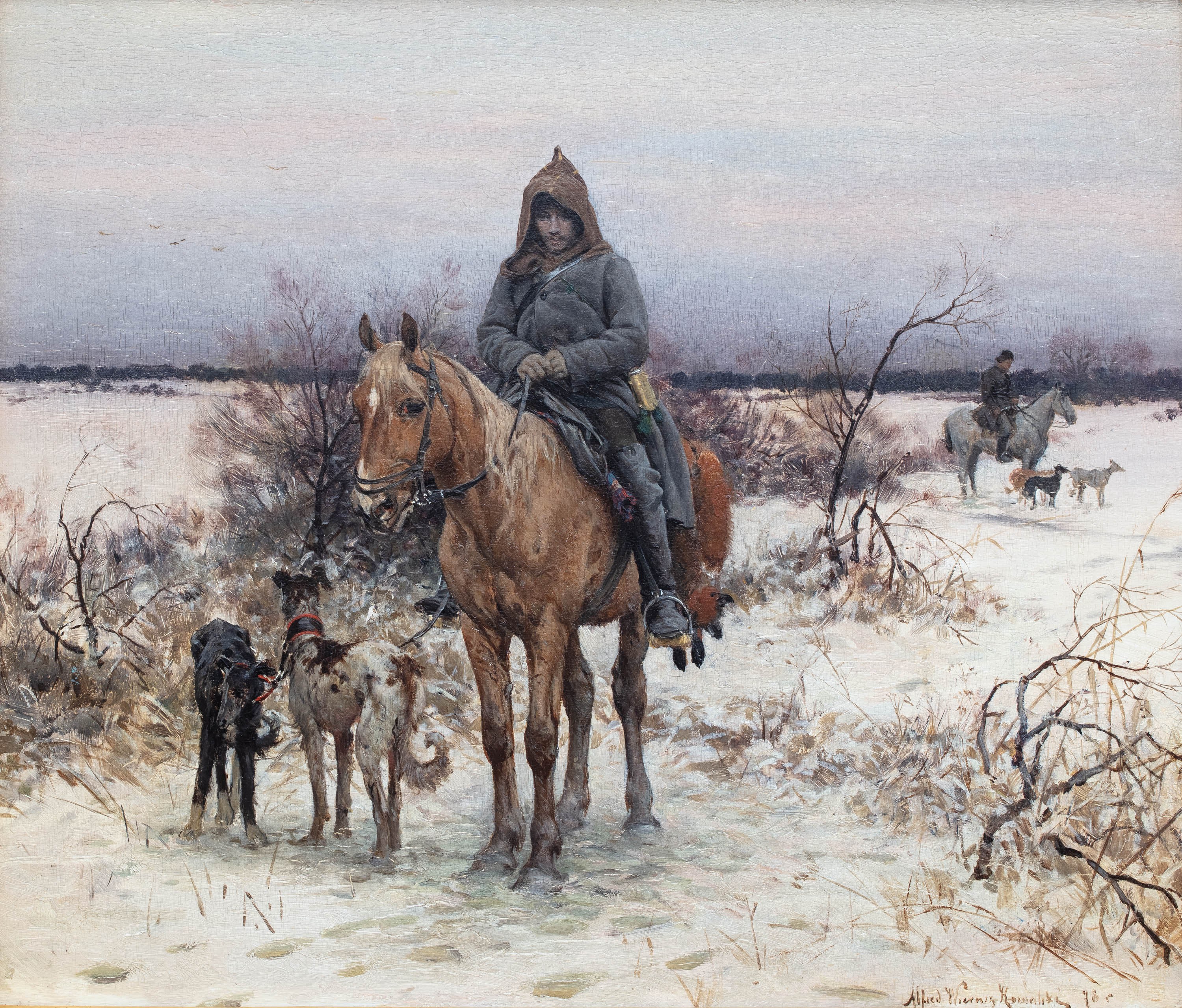
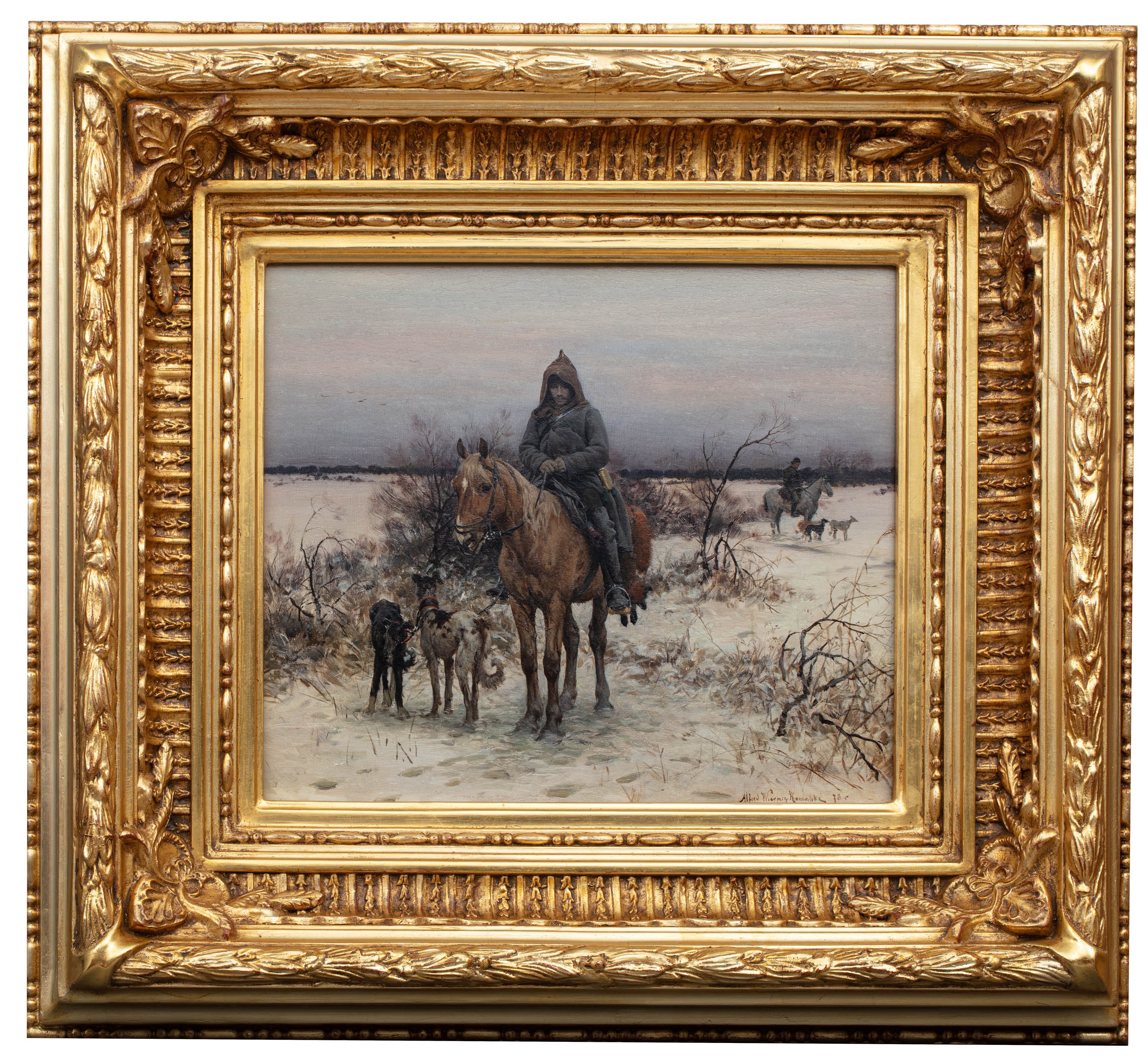
oil, board, 30 × 35 cm
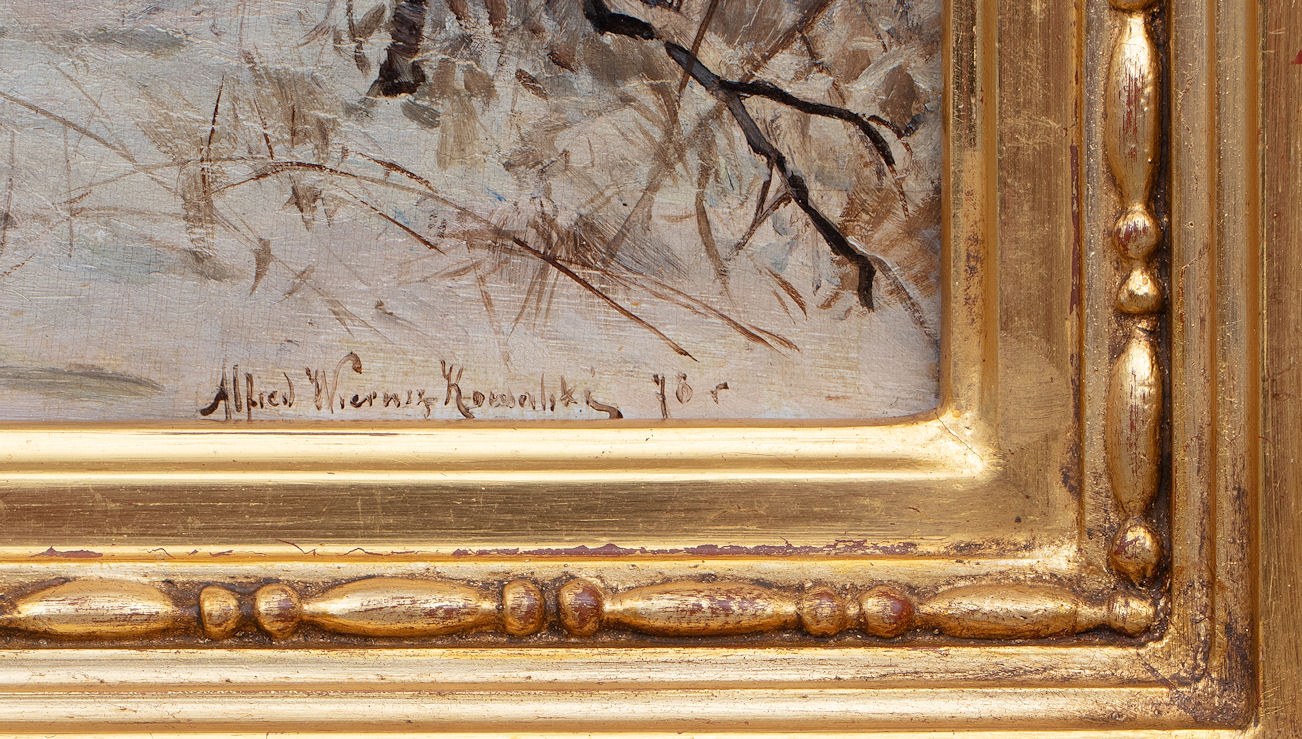
Signed and dated p. d.: "Alfred Wierusz-Kowalski [18]78 [6?] r."
Other titles: "Successful Hunting of the Fox", "After the Hunt with the Greyhounds", "In Position,
"Return From The Hunt"
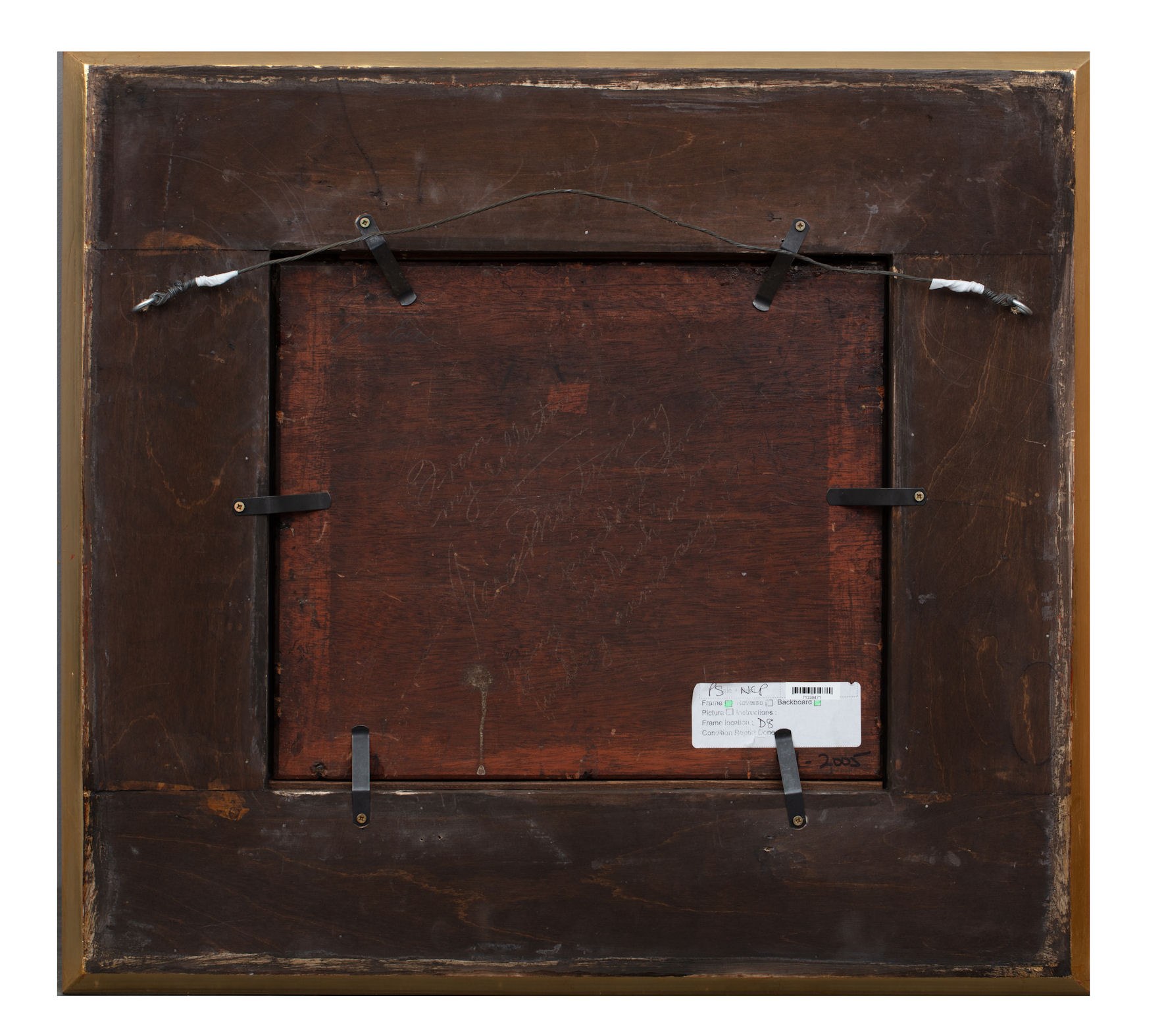
On the reverse, in the middle a handwritten inscription in English:
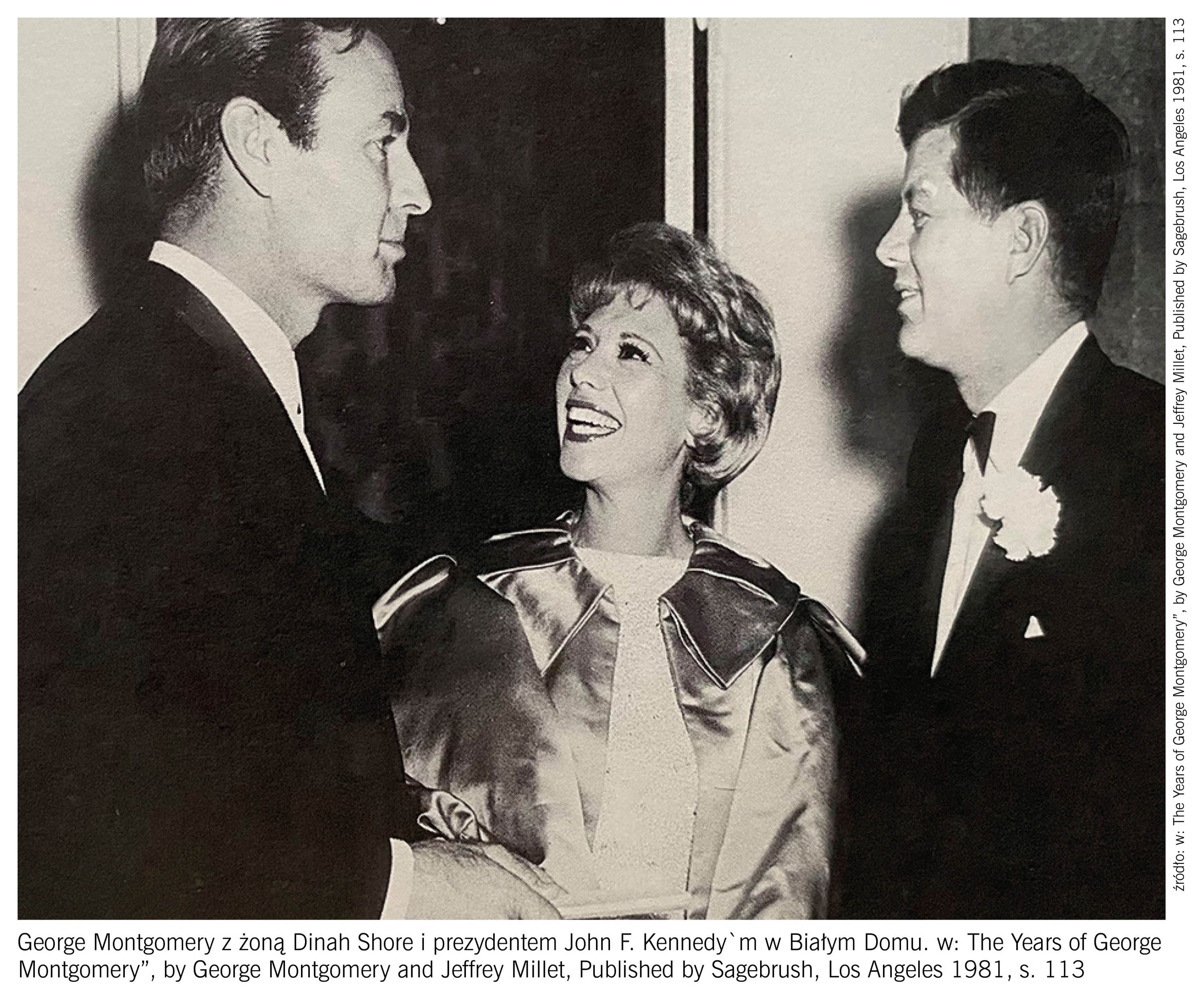
"From/my collection/George Montgomery/purchased for me/by my wife "Dinah" on our 1st/wedding anniversary 1944" and in the lower right corner an inscription "44-2005" (inventory number from the Palm Springs Art Museum in California).
Provenance:
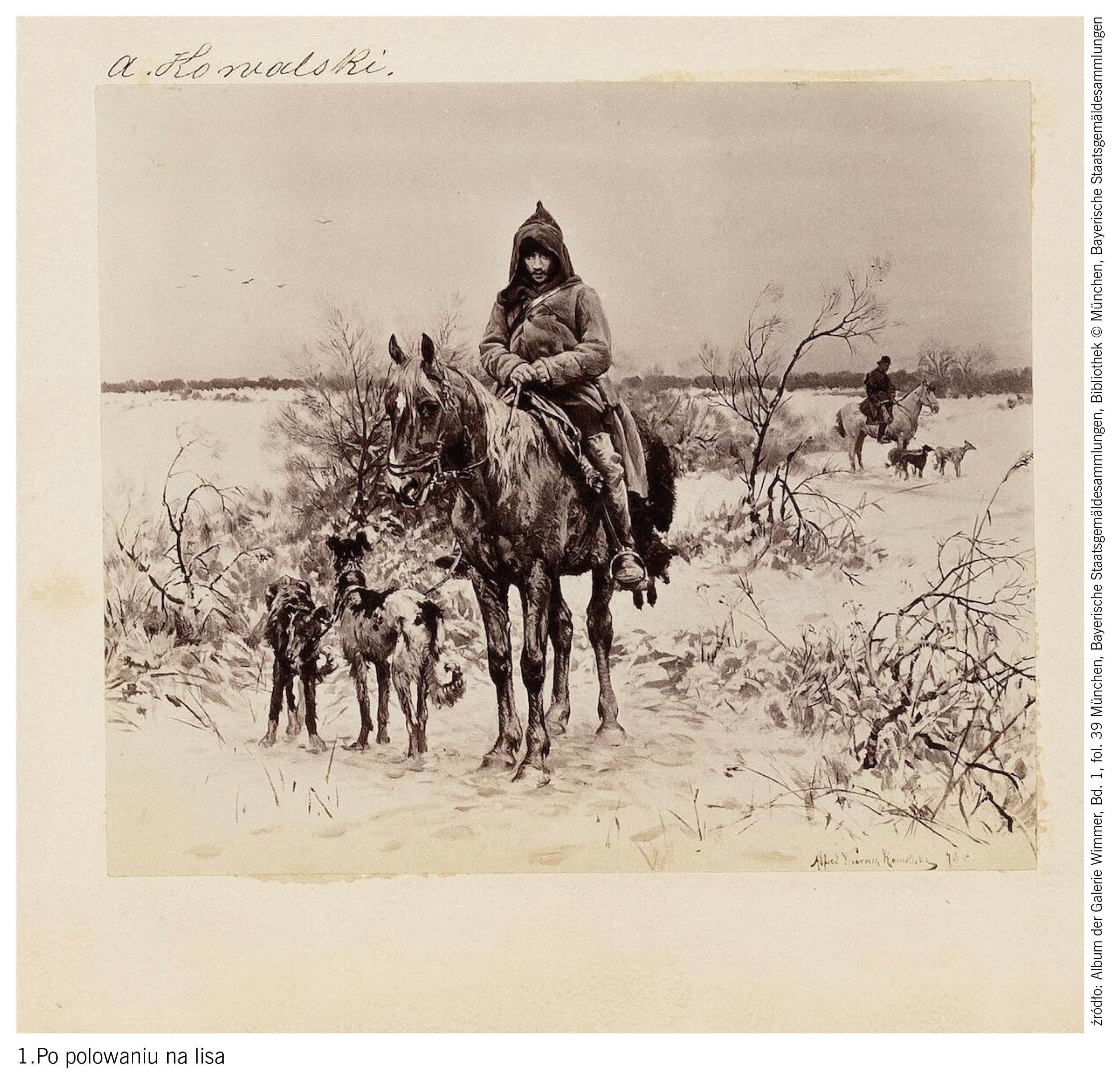
- Wimmer Gallery in Munich (the gallery catalog is in the collection of the Archives of the New Pinakothek in Munich). It is likely that the painting was purchased by the Wimmer Gallery immediately after it was painted.
- The collection of Georg Montgomery (1916-2000). American actor, known for his western films and series. He was also a painter, director, producer, writer and sculptor. He was honored in the "Avenue of the Stars" in Hollywood.
- Palm Springs Art Museum collection from 2000-2021 (donated by the George Montgomery Trust to the museum's collection).
- Leslie Hindman Auctioneers, Chicago, 4.11.2021, item 322
- UK private collection until 2025.
- Dorotheum, Vienna 22.10.2025, item 530
- private collection, Poland
Reproduced and described:
- Catalog of the Wimmer Gallery, card no. 39 (in the collection of the Archives of the New Pinakothek in Munich).
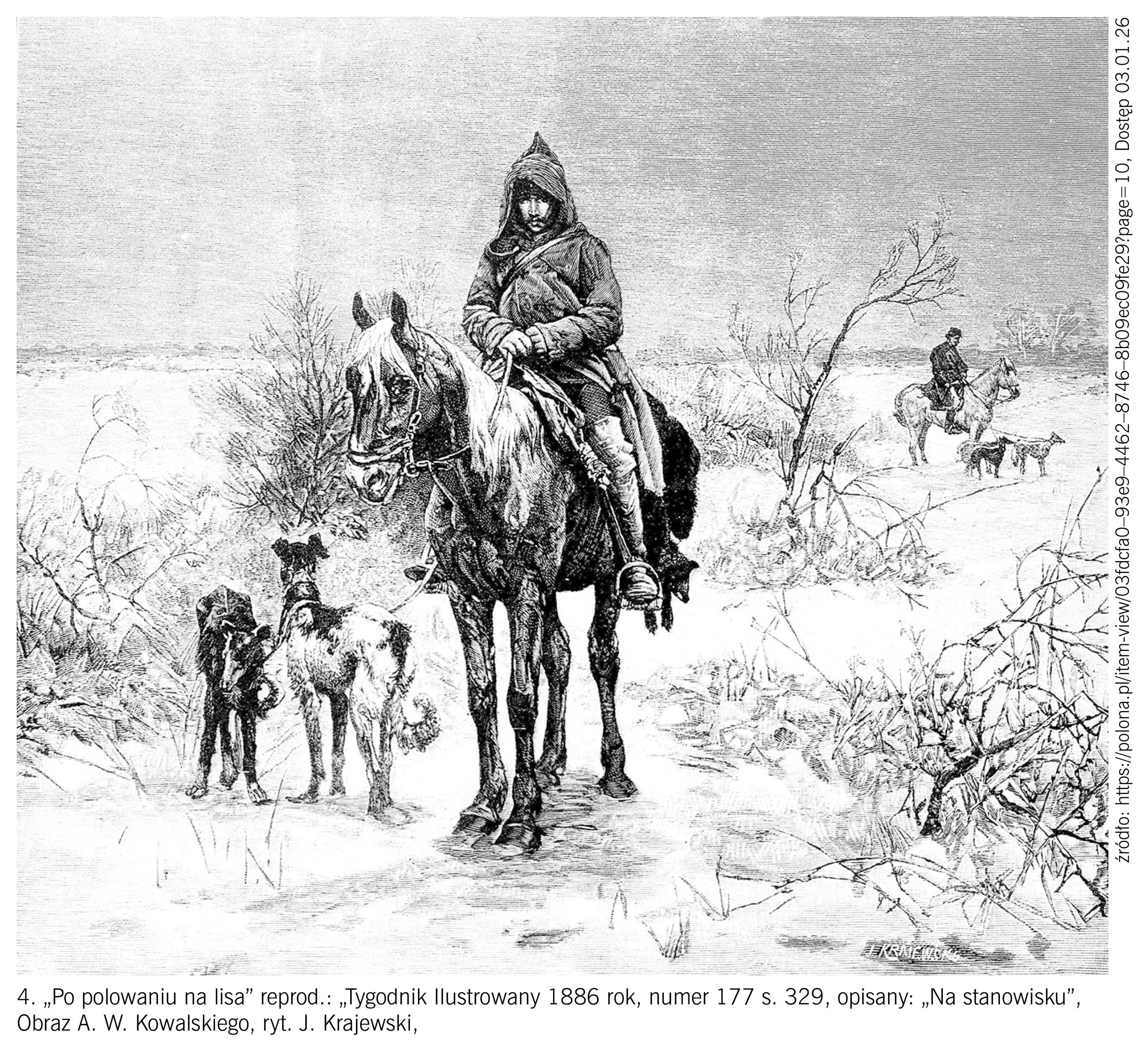
- "Tygodnik Ilustrowany", 1886, issue 177 pp. 329, described: "In Position, Painting by A. W. Kowalski, ryt. J. Krajewski
- "The Years of George Montgomery", by George Montgomery and Jeffrey Millet, Published by Sagebrush, Los Angeles 1981, p. 214, reproduction of painting with description: "Return From The Hunt, Alfred Wierusz-Kowalski".
- E.Ptaszyńska "Obrazy w drewnie żłobione.Creativity of Alfred Wierusz-Kowalski in woodcuts", Collection of the District Museum in Suwałki, Suwałki 2009, item 48, pp. 79, 142 (described "At the post").
Attached to the painting is an expert report by Eliza Ptaszyńska (expert and author of many publications on the work of Alfred Wierusz-Kowalski, curator of the Suwałki Regional Museum in possession of an extensive collection of "Wieruszaines").
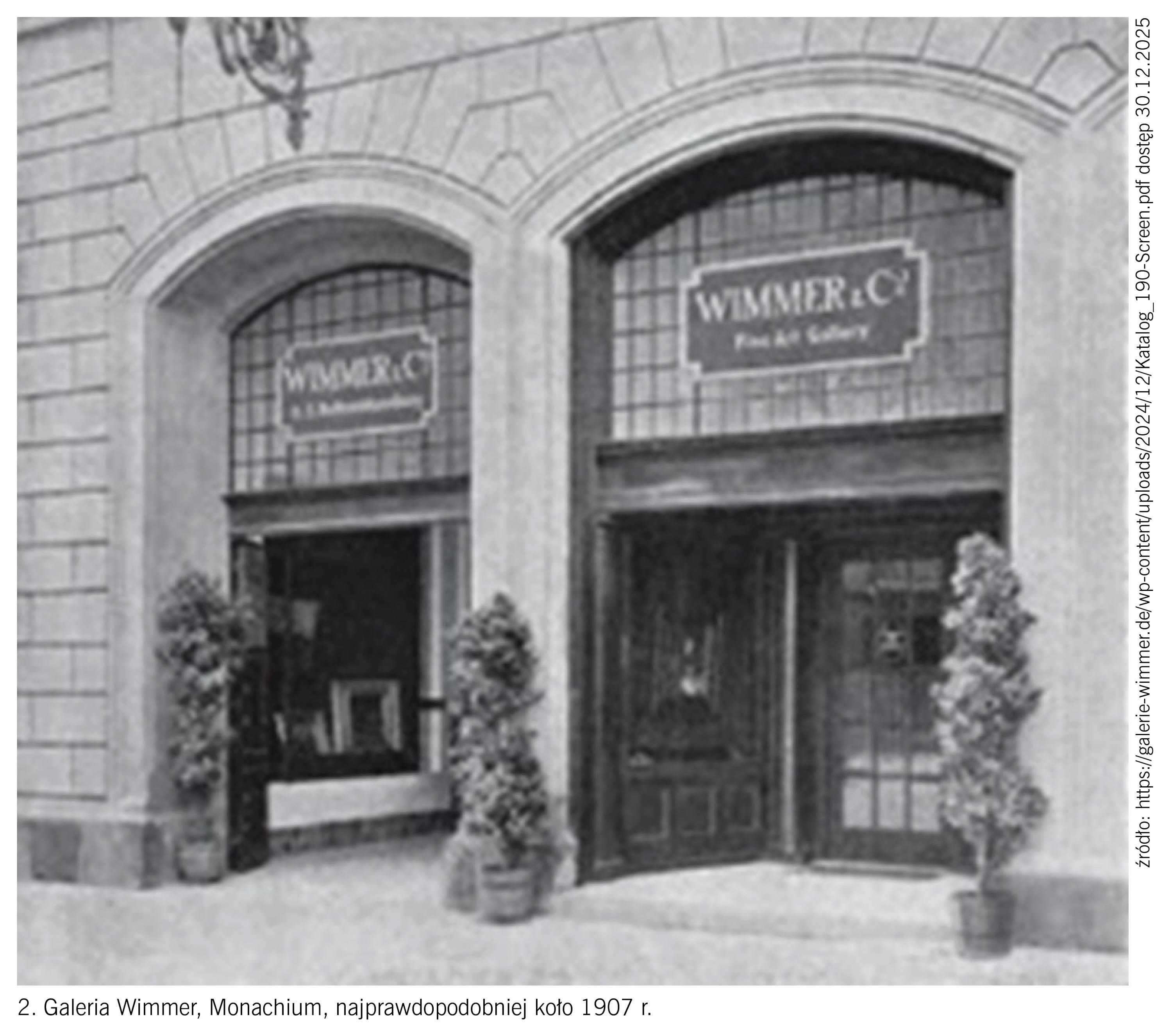
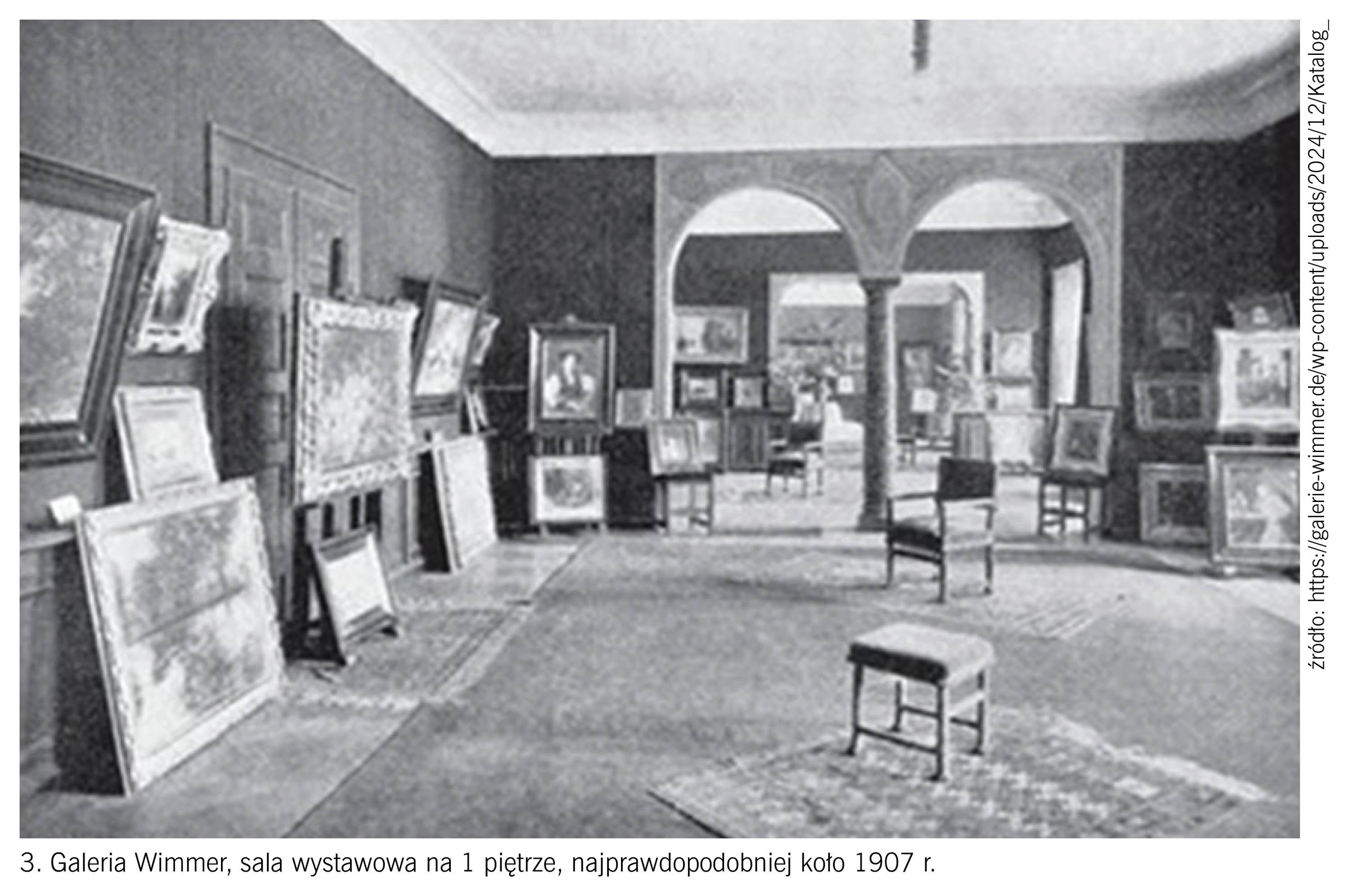
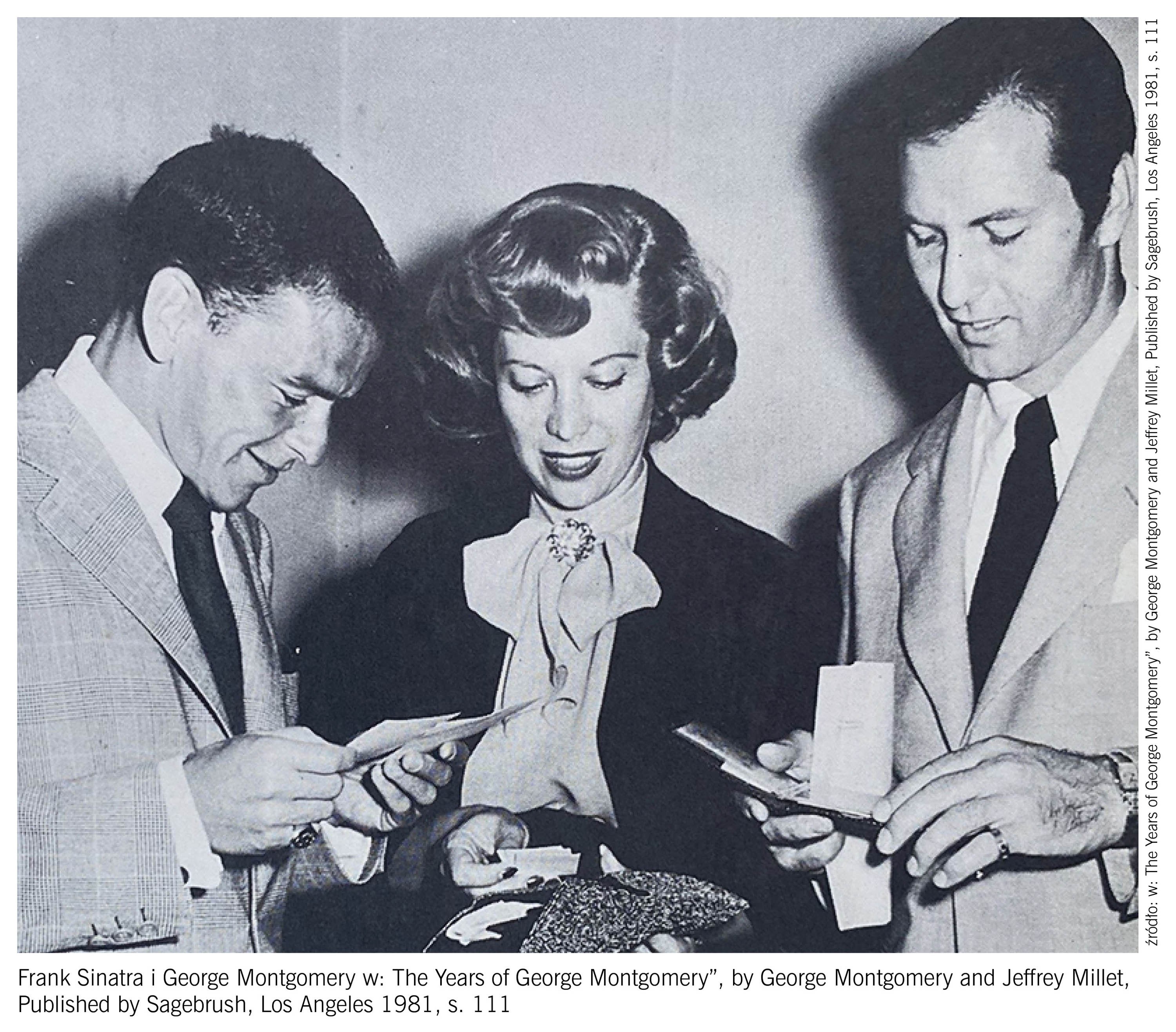
Alfred Wierusz-Kowalski's artistic genius was recognized and appreciated from his early years. He quickly gained recognition in Munich - the artistic capital of the time. The subject matter of Wierusz's works, and above all the masterful rendering of mood and realism, attracted the attention of the most demanding connoisseurs. The featured painting, "After Hunting a Fox," most likely went to the highly prestigious Wimmer Gallery in Munich shortly after painting (illustrations 1, 2,3).
Founded in 1825, it was located on Brienner Strasse (the Wittelsbacher Platz section of Odeonplatz), a few dozen meters from the court gardens. In 1925, the gallery celebrated 100 years, invariably presenting masterpieces by the most renowned painters. "The gallery celebrated its centennial anniversary with an exhibition showing three paintings by Wierusz-Kowalski (...). The sale of paintings in a gallery of this stature added prestige equal to or greater than participation in exhibitions. "Spikes" correspondent Edward Porębowicz wrote: "The Kunsverein by no means exhibits the best things, the excellent things find immediate buyers in merchants: Fleischmann, Ackermann, Wimmer (...). Polish paintings enjoy buying. They appear rarely in the Kunstverein, but gather in the galleries of the named merchants: Kowalski, Kozakiewicz, Kochanowski the landscape painter, Streit... it is impossible to list them all" (E.Ptaszyńska, Alfred Wierusz- -Kowalski 1849-1915, Warsaw 2011, p.125). "It was the art trade and the important salons of kunsthaendlers that shaped the tastes of buyers, created fashions" (H.Stępień, Artyści polscy 1856-1914...p.115). "In addition to Alfred Wierusz-Kowalski, paintings by other Polish painters appear in the Wimmer Gallery: most by Jozef Brandt, and less frequently by Wladyslaw Czachórski, Bohdan Kleczynski, Zygmunt Ajdukiewicz, Wladyslaw Szerner, Jozef Chelmonski. It seems that the history of the Wimmer Gallery is an important contribution to the history of Polish in Munich (...). Wierusz-Kowalski thus had reason to be proud, as he was one of the artists more prominently displayed there. (....). Wierusz-Kowalski's compositions were among the highly valued." (E.Ptaszyńska, op.cit. p.127).
Stanislaw Tomkowicz, editor-in-chief of "Czas" in the "Polish Review" in 1889 aptly described the place of our artist in the Munich milieu: "A similar path to Brandt was followed by another Pole settled in Munich: Alfred Wierusz Kowalski, and he has already come very far. He is now a fashionable and favorite painter in the capital of Bavaria, which is also one of the capitals of the artistic world. You will meet Kowalski's paintings at every exhibition, they are the lure of the larger art stores, reproductions of them adorn all the better German illustrated magazines. The artist himself is said to be already enjoying a very fine material position, and as I write this, news reaches me of huge commissions he was just about to receive from America. The two paintings he gave for the Munich exhibition completely justified this fame." (...) The second painting by the same painter depicts, in contrast to its pendant: peace, quiet solitude. Again snow on the ground, but snow hard, frozen. Riding along (again, directly at the viewer) is a hucul, armed with hunting gear, on horseback. All around him, no one is visible, nothing moves; he himself, focused and attentive, even his steed grimly paces slowly along the mountain road. The simple subject is rendered with such vividness and strength of truth that on display it struck the eye looking through the door from the other room. One seemed to be looking at a reality that was touchable and close, only concentrated through the lens of a diminishing glass. I myself witnessed how educated and less educated gathered around these two paintings, arrested by their compelling visuals." (Stanislaw Tomkowicz, "Polish Painters and Religious Painting at the Munich Exhibition in 1888," in Polish Review, 1889, Volume 91, Quarter III, Cracow, in the printing house of "Czas" Fr. Kluczycki and SP., pp. 346-348). The featured painting, "After Hunting the List," from 1876 (8), relates in mood to the work presented at the Munich exhibition in 1888. The vast winter landscape and the severity of the surrounding nature enhance the mood of silence and concentration. The seemingly static composition is enlivened by formal treatments in the form of a repetition of a group of horses with greyhounds in the background. As in his best works, in "After the Fox Hunt" the artist does not strive for richness of color, but places emphasis on the subtleties of valor. The tonality of the color palette used blends perfectly with the aura of the representation.
The painting in question was presented in the "Illustrated Weekly" of 1886 in the form of a woodcut, described: "In Position (il.4). According to the greatest expert on Wierusz's work, Ms. Eliza Ptaszyńska: "Reproductions published in the press were an important source of income for Alfred Wierusz-Kowalski, as money was constantly in short supply. He led his life with vigor. An increasingly large family, a beautiful and richly furnished apartment, a social life, guests, a studio, hunting, assistance given to younger colleagues, contacts with people high in the social hierarchy - all this cost crores. Of course, he earned a lot at the time. Woodcut reproductions placed in the press and painting albums simultaneously popularized his work and facilitated the sale of his canvases." (E.Ptaszyńska, Alfred, op.cit. p. 129). In Poland, Wierusz cooperated with the art-promoting "Tygodnik Ilustrowana", "Wędrowiec" (cooperation in 1884-1887) with "Kłosy", "Tygodnik Powszechny", with "Biesiada Literacka". In Germany, "Die Gartenlaube", "Daheim", "Vom Feld zum Meer", "Über Land und Meer" or with the Bruckaman publishing house which published a periodical: "Kunst für Alle". Alfred Wierusz Kowalski was an unsurpassed master in creating atmospheric paintings, satisfying the most demanding collectors. The offered work, "After a Fox Hunt," found its way into the collection of American actor George Montgomery (1916-2000) in 1944. He had a collection of artworks, which he began to increase intensively from 1962. He made purchases at Hammer Galleries in New York, Peterson Gallery in Beverly Hills, Baltimore Galleries, Newhouse Galleries in New York, among others. His collection also included his own paintings and bronze sculptures. Alfred Wierusz Kowalski's painting "After a Fox Hunt" held a special place in his collection. He received this work in 1944 from his wife Dinah Shore on their first wedding anniversary. He included a handwritten description of the circumstances of receiving this gift on the back of the painting. His wife Dinah Shore (1916-1994) was an American singer and actress, she was also a photographer and painter, and hosted her own TV show. On the occasion of their fourth wedding anniversary, Dinah gave her husband as a gift a portrait of his parents painted by New York portraitist Evelyn Lyons. Both the unique Wierusz-Kowalski painting and the portraits can be considered gifts of exceptional value, not only artistically but also sentimentally. Montgomery particularly singled out the Wierusz painting, placing its stately reproduction in his book The Years of George Montgomery, published in 1981, at the beginning of a chapter on collecting. And although Goerg divorced Dinah Shore in 1962, this painting was particularly valuable to him. It was only after the actor's death in 2000 that the painting was donated by the George Montgomery Trust to the Palm Springs Art Museum in California. After more than two decades, the museum put Alfred Wierusz Kowalski's work up for auction to raise additional funds for the care of the collection. Then the painting went on the art market again becoming private property.
In the works of Alfred Wierusz-Kowalski, the motif of the horseman returns with remarkable consistency, becoming more than just a recognizable iconographic subject. The horseman in Wierusz- -Kowalski's work is not an anonymous figure in motion - he is a hero immersed in a harsh landscape, exposed to the elements, often alone, straining between movement and stillness, danger and hope. The repetition of this motif does not lead to monotony. On the contrary - each successive equestrian scene reveals another dimension of the same idea.
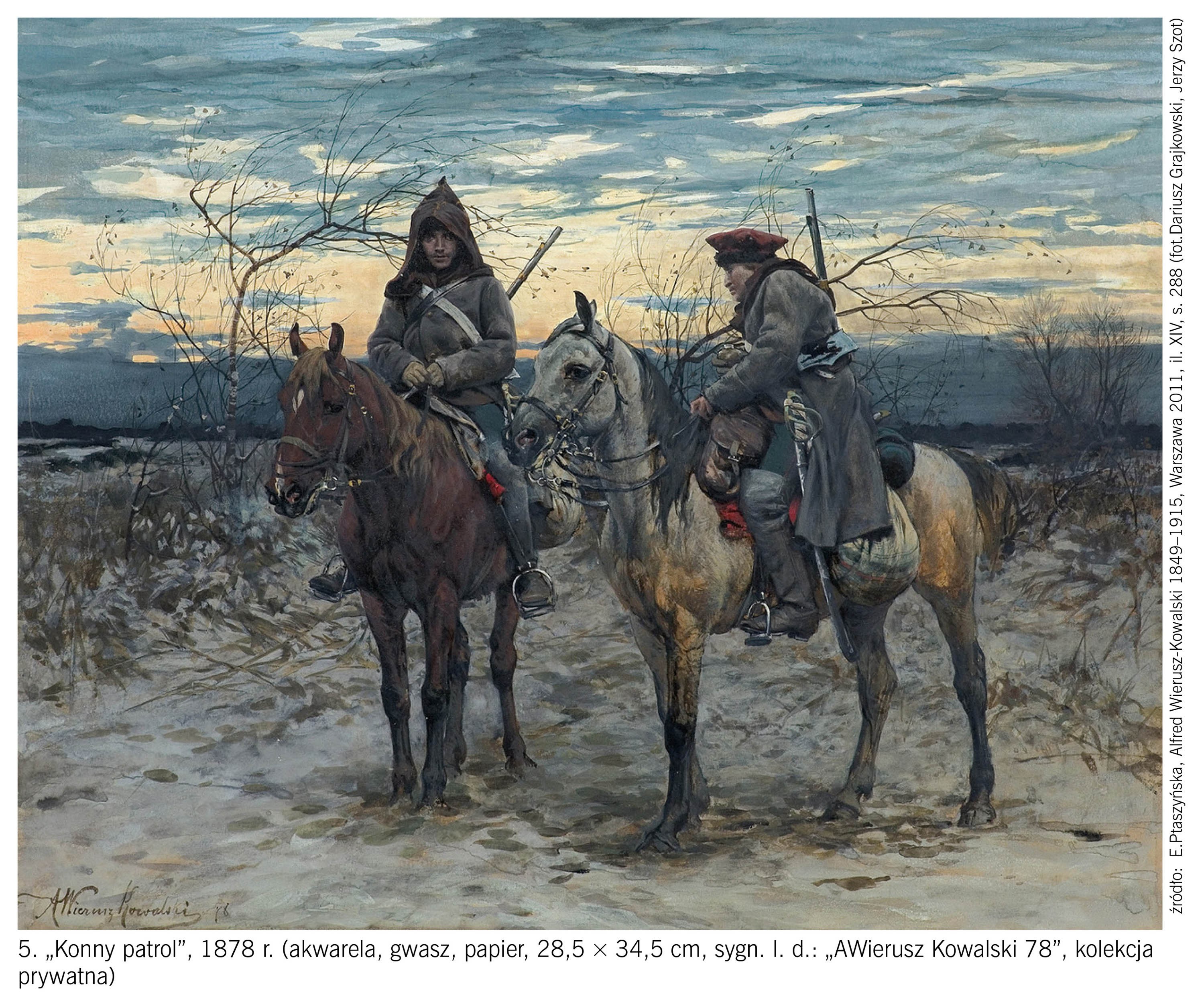
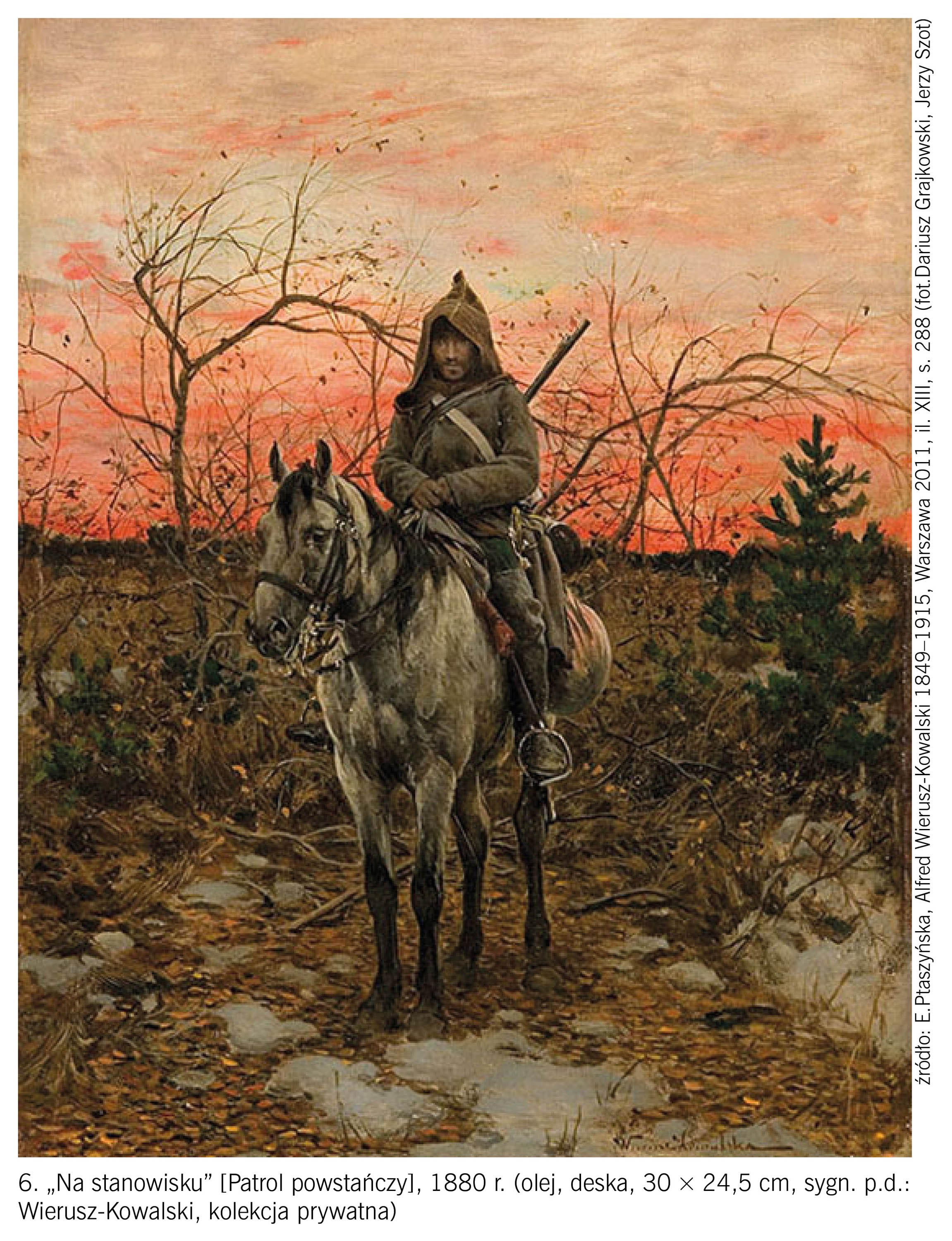
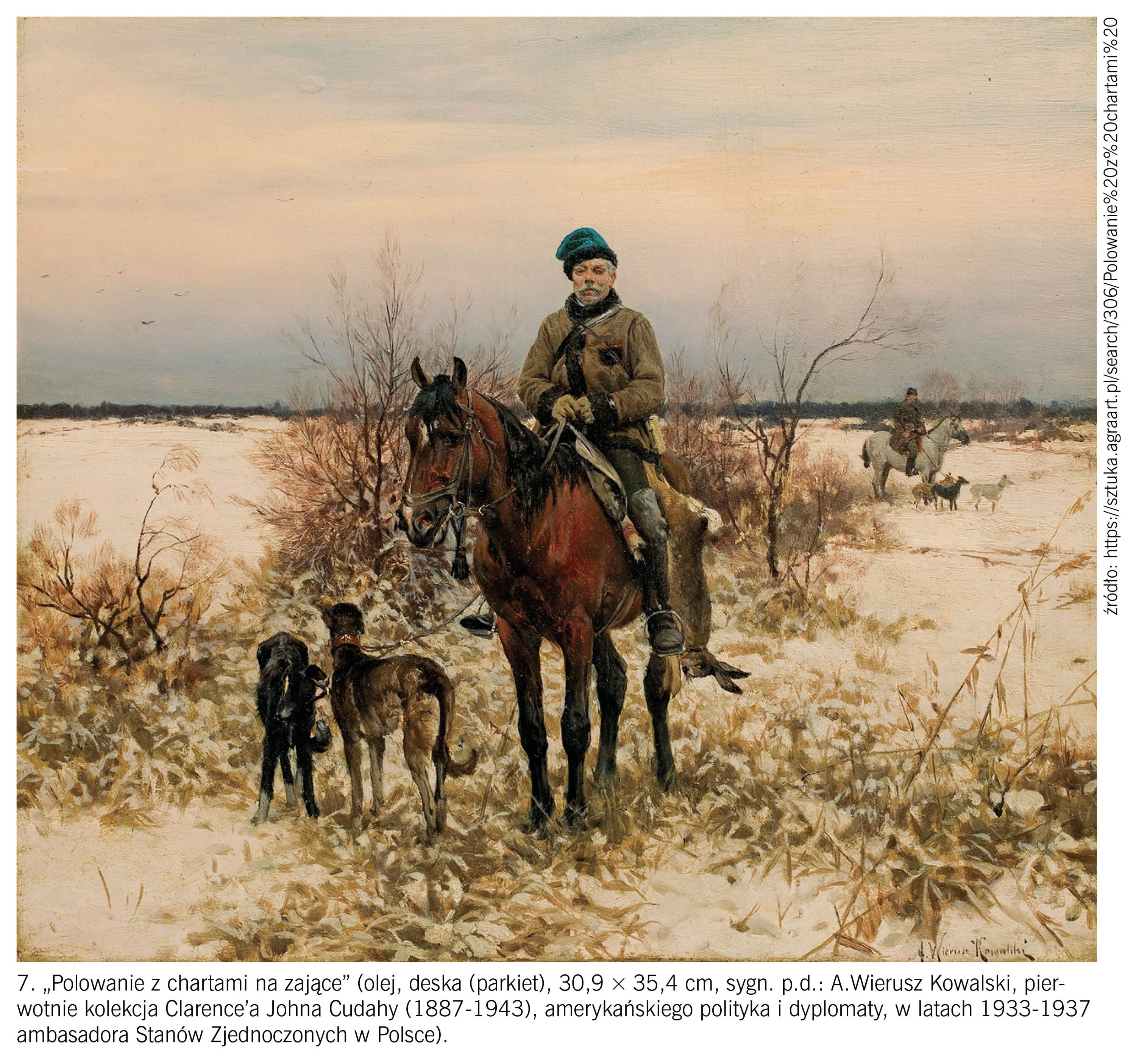
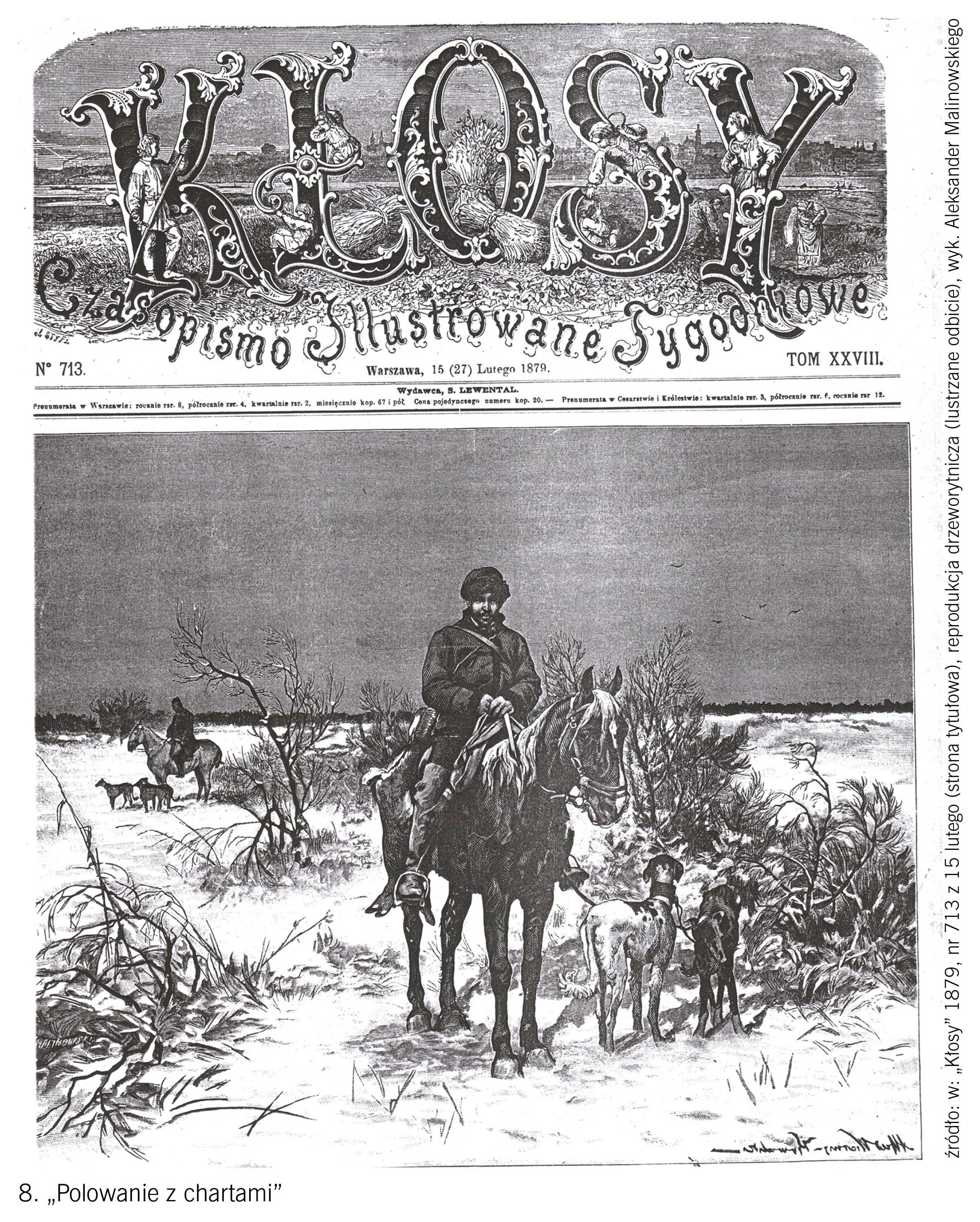
The artist, too, in this case, repeated the motif of the foreground horseman from the painting in question in a later watercolor" Horse Patrol" from 1878 (fig. 5) and in the 1880 painting "At a Stand (fig. 6). Another compositional repetition was in a painting from the 1880s: "Hunting with Greyhounds for Hares" (il.7), which was in the collection of Clarence John Cudahy (1887-1943), an American politician and diplomat, and between 1933 and 1937 the United States ambassador to Poland. Another compositional version is also known from a woodcut in the weekly newspaper "Kłosy" published in No. 713 in 1879 (il.8). It is a mirror image of the auction original "After the Fox Hunt" [Successful Hunting of the Fox], with a change in the foreground rider.
Presented at auction, "After the Fox Hunt" [Successful Hunting of the Fox], plays a key role, as it serves as a reference point for subsequent realizations of the same motif - including: "Horse Patrol," "At the Post" [Insurgent patrol], "Hunting with greyhounds for hares".
Repetition of the theme does not mean a lack of originality in his work, but a conscious deepening of meanings and refinement of form. Each successive version of the motif brings new nuances of mood, light or movement, so that the original retains its importance as the foundation of artistic exploration. As a result, it allows us to better understand both the painter's intentions and the evolution of his style. The recurring motif of the horseman thus becomes not so much a repetition as a certain variation. It is thanks to him that Wierusz-Kowalski's work gains coherence and recognizability, while remaining alive, full of emotion and open to interpretation.










Utoljára megtekintett
A tételek listájának megtekintéséhez jelentkezz be
Kedvencek
A tételek listájának megtekintéséhez jelentkezz be