


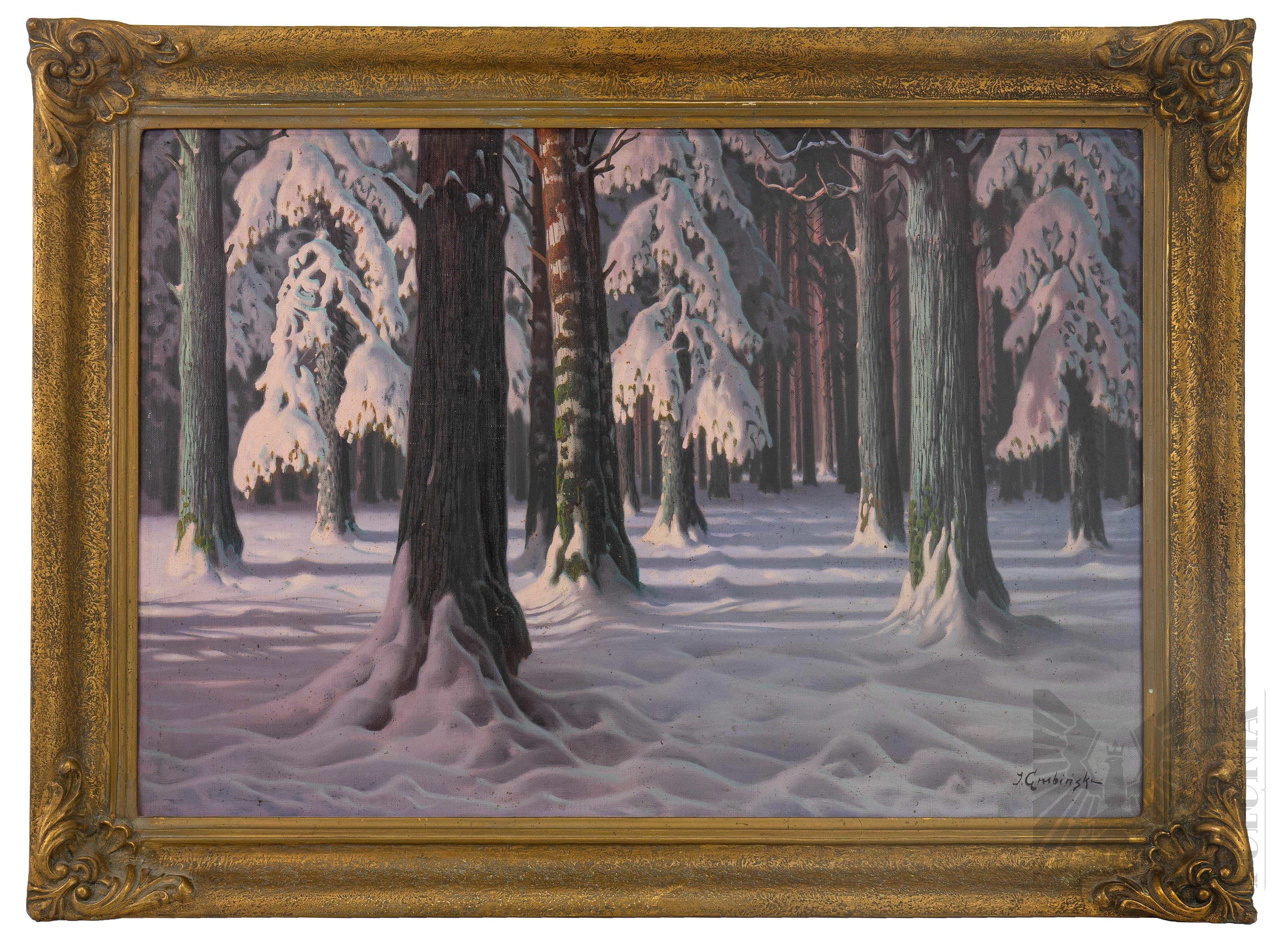
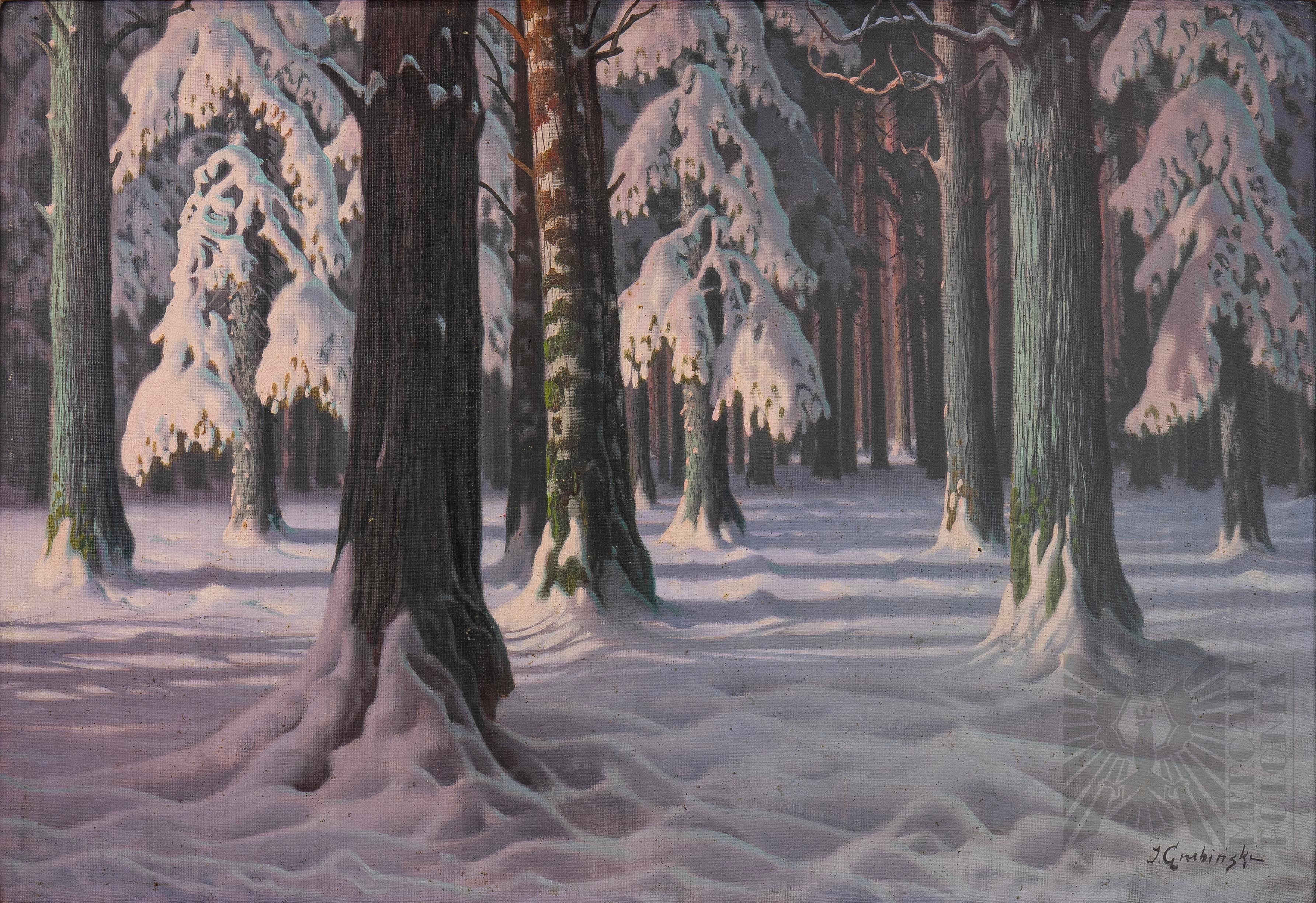
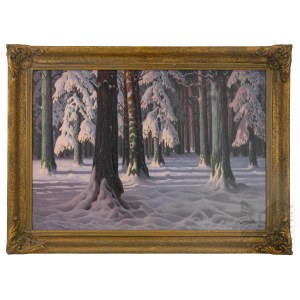
Jan Grubiński (1874, Warsaw – 1945, Rabka-Zdrój), “Winter Landscape”
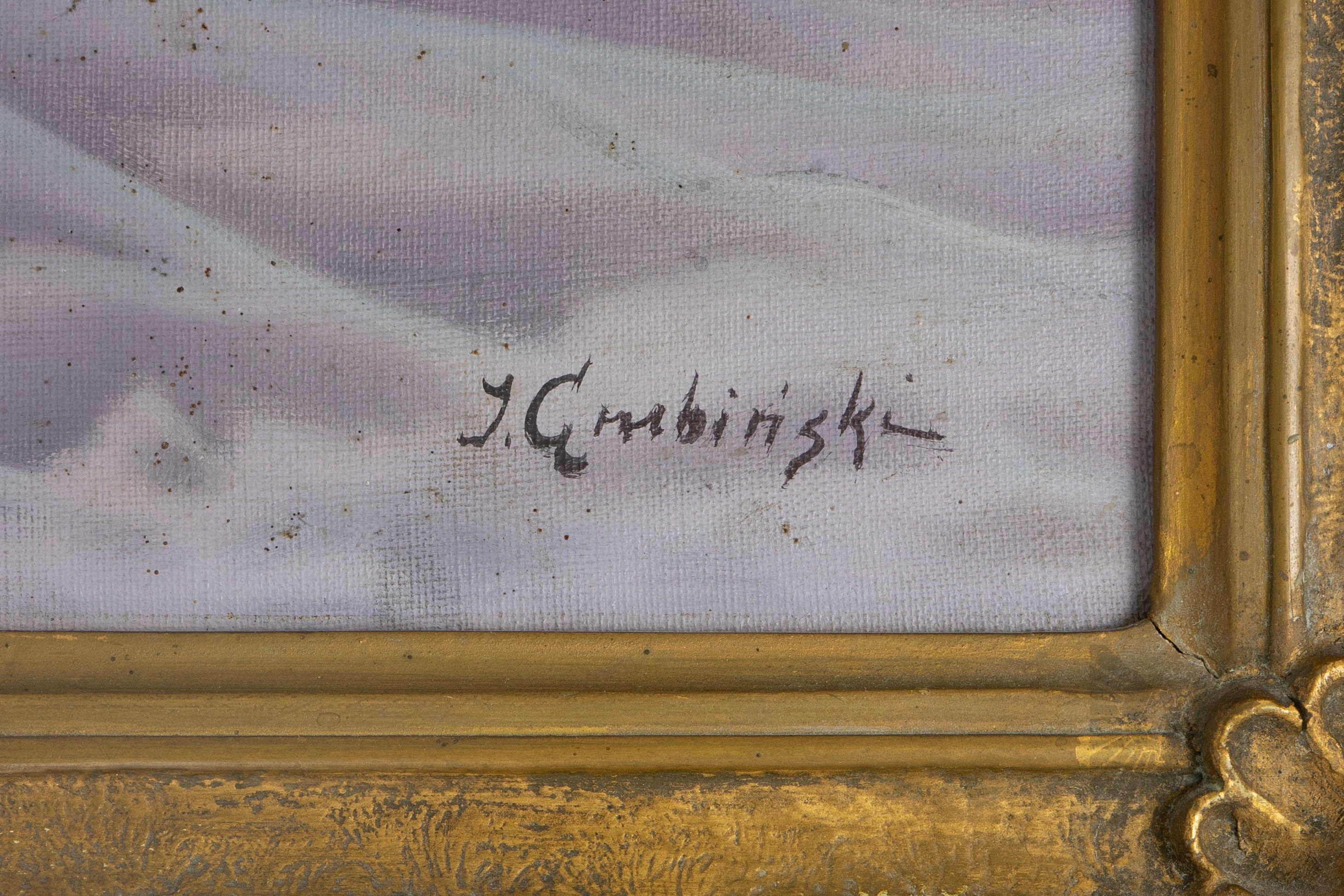
Painting measuring 73 × 52 cm. Oil on canvas. Signed in the lower right corner: “J. Grubiński.” Framed in a molded frame measuring 84 × 63 cm.
A landscape depicting a winter scene, rendered in the atmospheric landscape style characteristic of Jan Grubiński. The snow-covered landscape serves as the primary vehicle for conveying the light and atmosphere of the scene. The subdued color palette, presumably based on whites, grays, blues, and muted brown tones, serves to convey the cool air and silence of a winter day. This subject is among those most frequently explored by the artist—Grubiński repeatedly painted winter views of forests, country roads, riverside plains, and small settlements, depicted at various times of day.
Grubiński’s compositions combine realistic observation of nature with the Young Poland concept of atmospheric landscape painting. The artist did not limit himself to a topographical reproduction of the scene; rather, through diffused light, subtle tonal transitions, and a limited palette, he created an atmosphere of calm, melancholy, and stillness. Of particular significance in his work were the effects of twilight, sunrise and sunset, moonlight, and the reflections appearing on snow and the surface of water.
Jan Grubiński was born in 1874 in Warsaw. In 1896–1897, he studied at the Kraków School of Fine Arts under the guidance of Jacek Malczewski. This was a period of transformation at the Kraków school linked to the reforms of Julian Fałat and the emergence of Young Poland art. Malczewski, one of the most important representatives of Polish Symbolism, placed great emphasis on both the technical discipline of drawing and the emotional and symbolic impact of nature.
Grubiński continued his studies in Paris under Raphaël Collin, a renowned French academic painter and educator. His stay in France allowed him to encounter modern approaches to light and color as well as to experience plein air painting. After completing his education, he returned to Poland and settled in Warsaw.
Beginning in 1899, he exhibited his works at the Society for the Encouragement of Fine Arts in Warsaw, with which he remained associated for decades to come. His paintings were featured in the Society’s exhibitions in 1899, 1900, 1925–1927, and 1933, among other years. The artist’s work focused primarily on landscapes. He painted vast plains, forests, heaths, riverside views, and winter landscapes, often devoid of elaborate figurative elements. He particularly favored those times of day and year that allowed him to observe the changing effects of light and the gradual blurring of objects’ contours.
His painting remained rooted in the tradition of realistic studies from nature, yet at the same time showed connections to Young Poland symbolism and atmospheric landscape painting. Grubiński employed broad swaths of color, soft modeling, and subtle tonal variations. He avoided stark contrasts and dramatic narrative, focusing instead on silence, space, and the emotional impact of the landscape. His elaborate winter compositions, among the most distinctive works in the artist’s oeuvre, are particularly highly regarded.
Jan Grubiński’s works are found in museum collections and private collections. The collection of the National Museum in Warsaw includes, among others, “Landscape at Sunset,” dated 1909. The artist died in 1945 in Rabka-Zdrój.
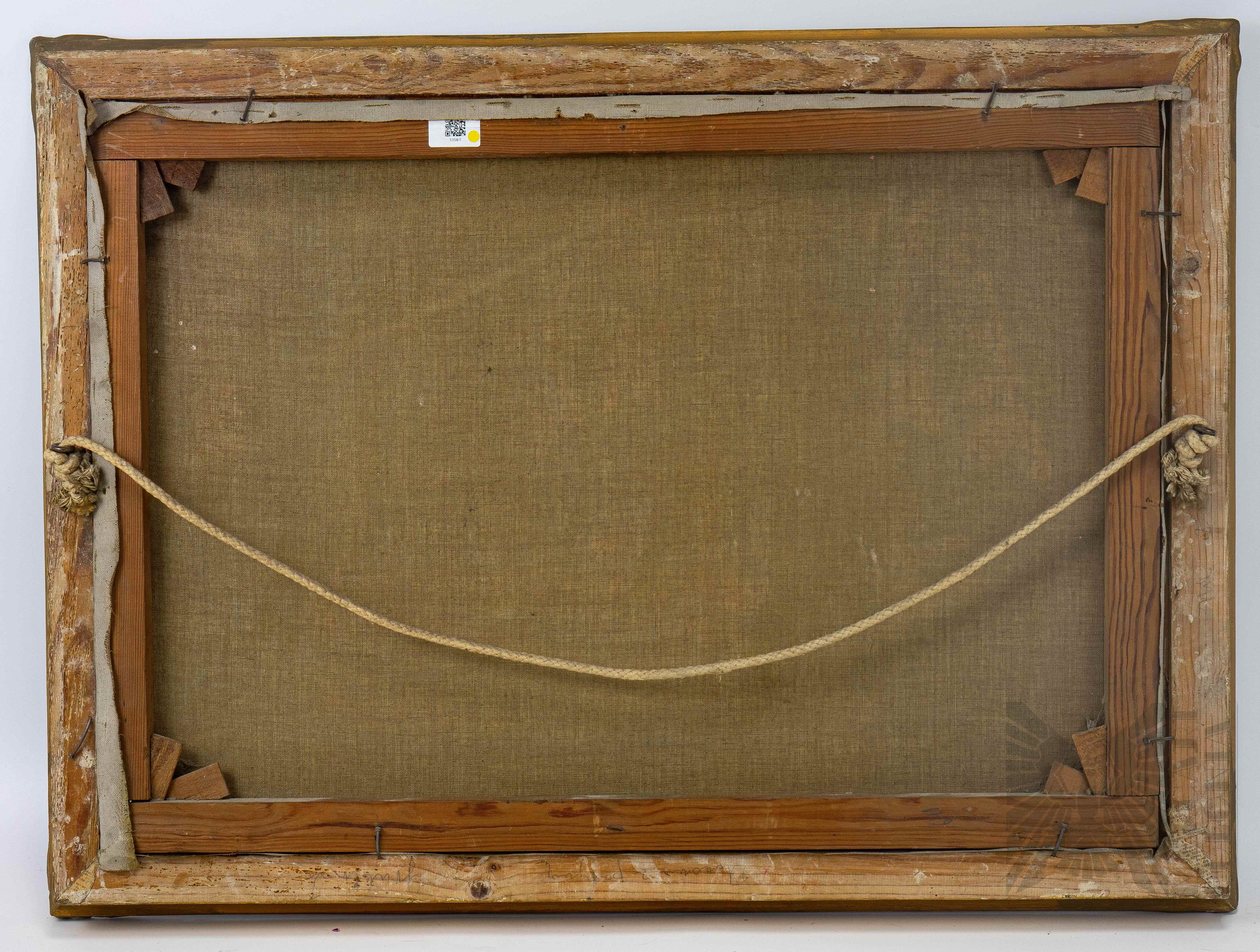
Condition: as shown in the photos.











Utoljára megtekintett
A tételek listájának megtekintéséhez jelentkezz be
Kedvencek
A tételek listájának megtekintéséhez jelentkezz be