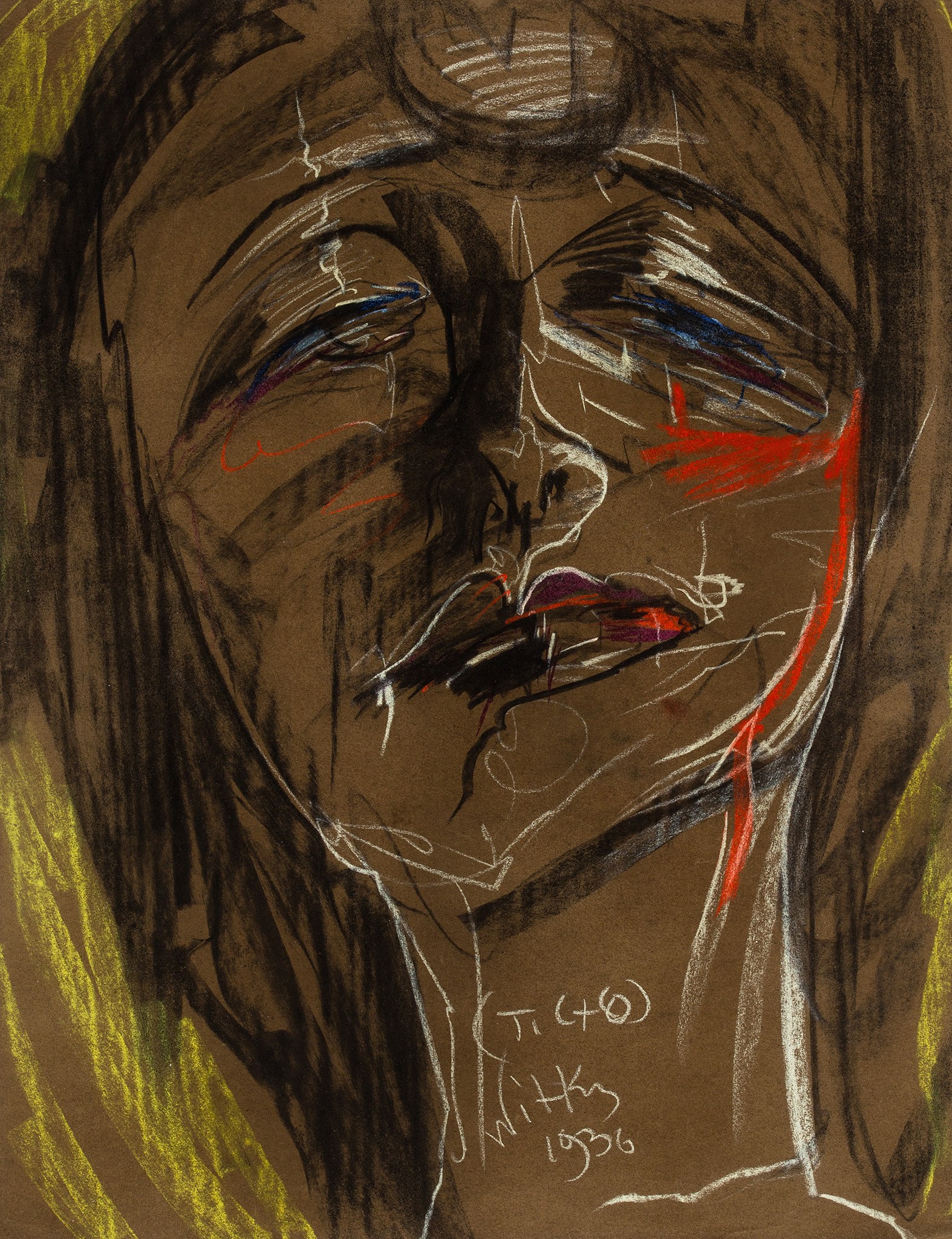
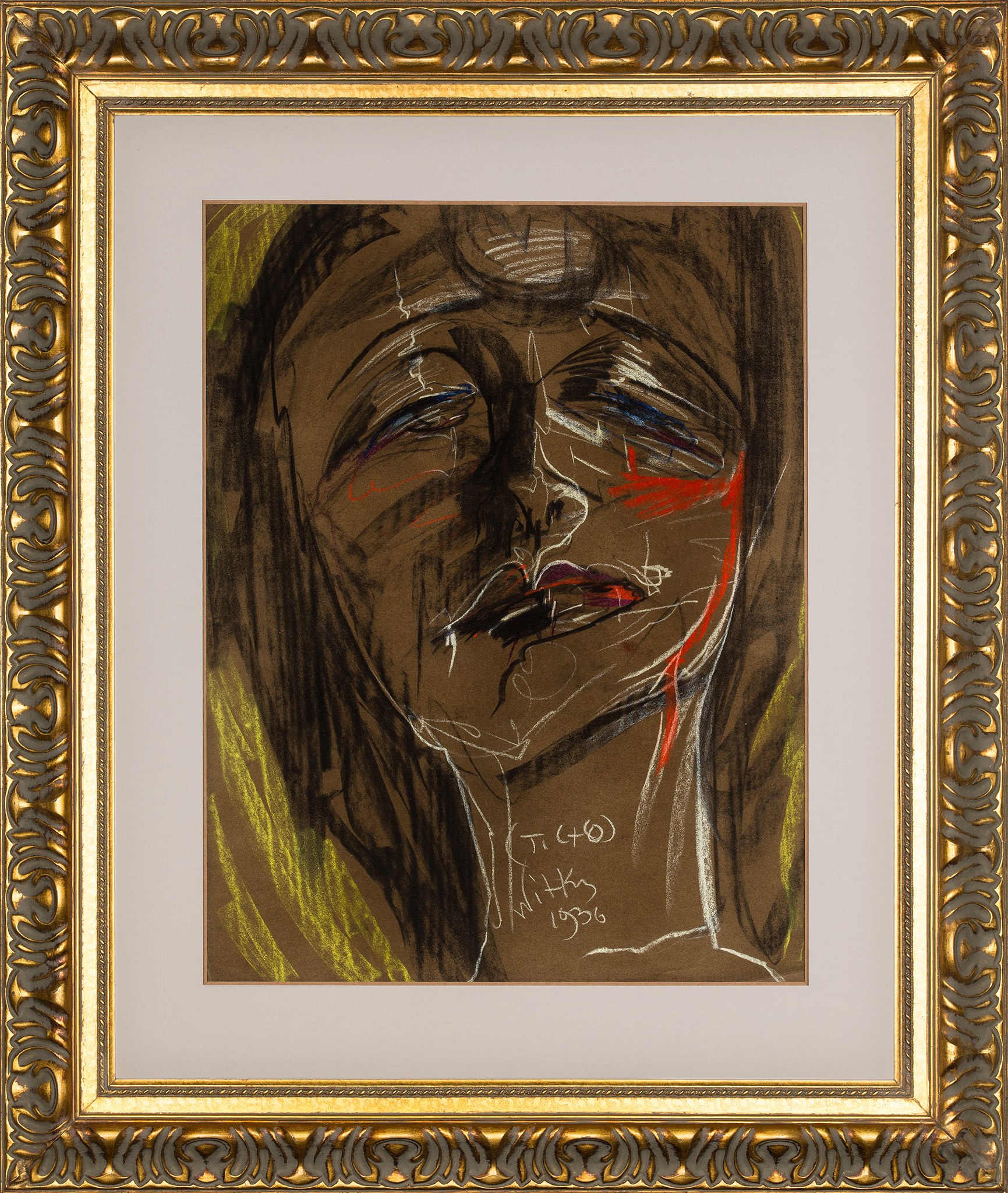
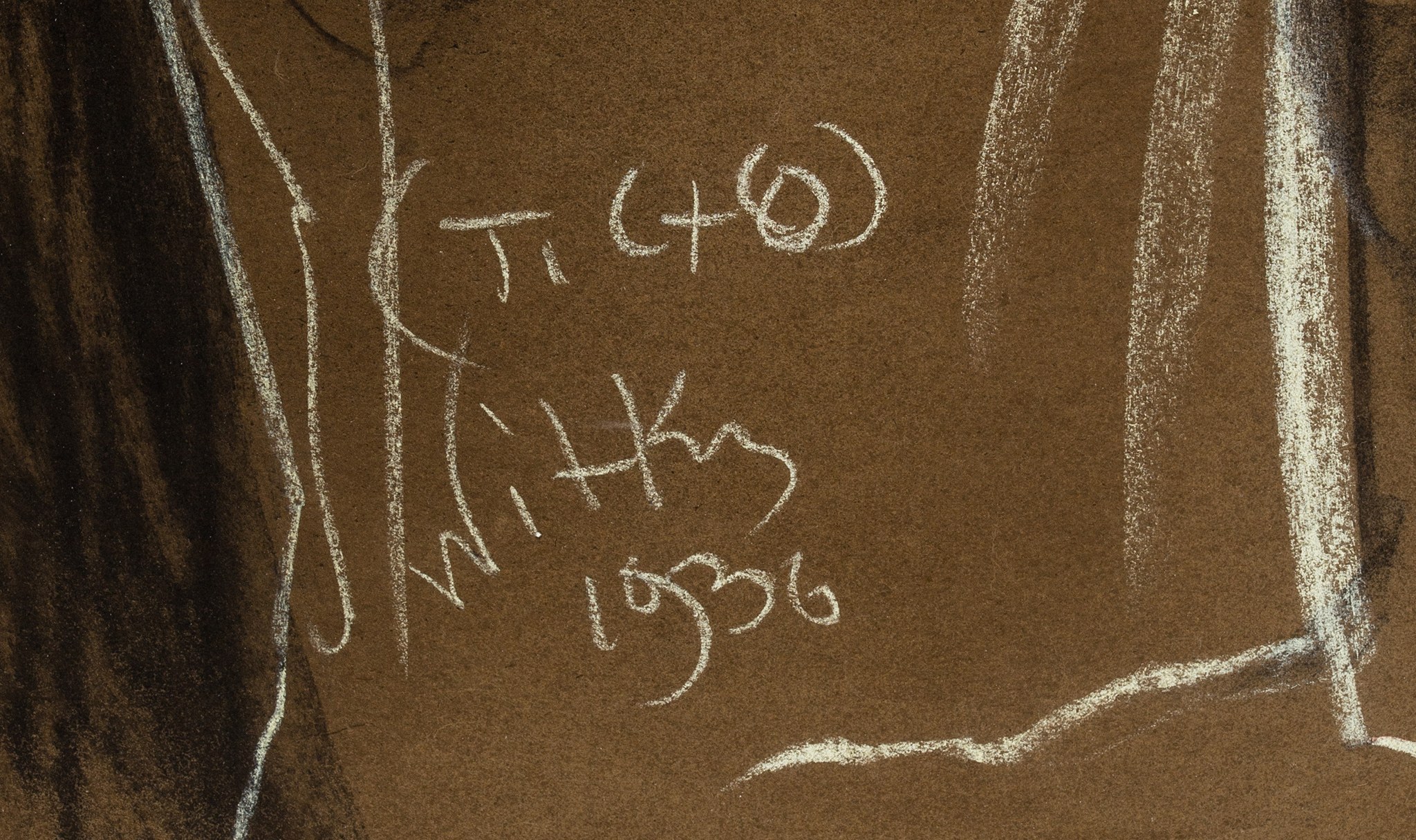
pastel on dark brown velour paper, 1936, 63 x 48 cm, signed in the lower, central part of the composition "(T.C+Co) / Witkacy / 1936".
Witkiewicz's relationship with Janina (Inka) Turowska began at the end of 1928 with the artist's deep affection, which prompted him to make serious matrimonial plans and prepare his wife for divorce. Between 1929 and 1933, the painter created more than twenty extremely intimate, rule-free portraits of the girl, onto which he poured his own love dilemmas. The chances of a relationship were thwarted by Witkacy's student and friend Jan Leszczynski, who secretly married Inka in the spring of 1933, which shocked the artist and led to a break in social contacts for more than three years. After the reconciliation in 1937, Witkacy returned to close relations with the Leszczynski couple, finding creative harmony in their estate in Tarnowiec and painting more portraits of his former love, already marked by progressive illness and suffering. Witkacy's portrait of Inka from the early autumn of 1936, from the collection of Jan Leszczynski, is a work created on gray-golden paper with intense psychological expression reminiscent of Munch's Madonna. The painting was executed in pastels, crayon and charcoal using concrete sculptural streaks and thin bright lines precisely modeling facial features and shimmering light. The composition is based on the sharp contrast between the cool brown, black and venomously lemony yellow of the background and the cinnabar alizarin red of the cheeks and lips and the deep blue of the eyes hidden under heavy eyelids. Strong chiaroscuro, edgy contouring and a glistening protuberance on the forehead give the model a dawning expression constituting a painterly record of the artist's emotional reconciliation with a former love.
Provenance:
- Collection of the Leszczynski Family, Krakow.
- Deposit at the National Museum in Cracow (since 1961).
Literature: Irena Jakimowicz (cooperation Anna Żakiewicz), Stanisław Ignacy Witkiewicz 1885-1939, Catalogue of paintings, National Museum in Warsaw, Warsaw 1990, p. 139, cat. no. 2055.