




Denarius of Geta (AD 198–209 as Caesar), struck at the Rome mint, belongs to issues from the initial phase of his public career, when the son of Septimius Severus was consistently promoted as heir within the Severan dynastic program.
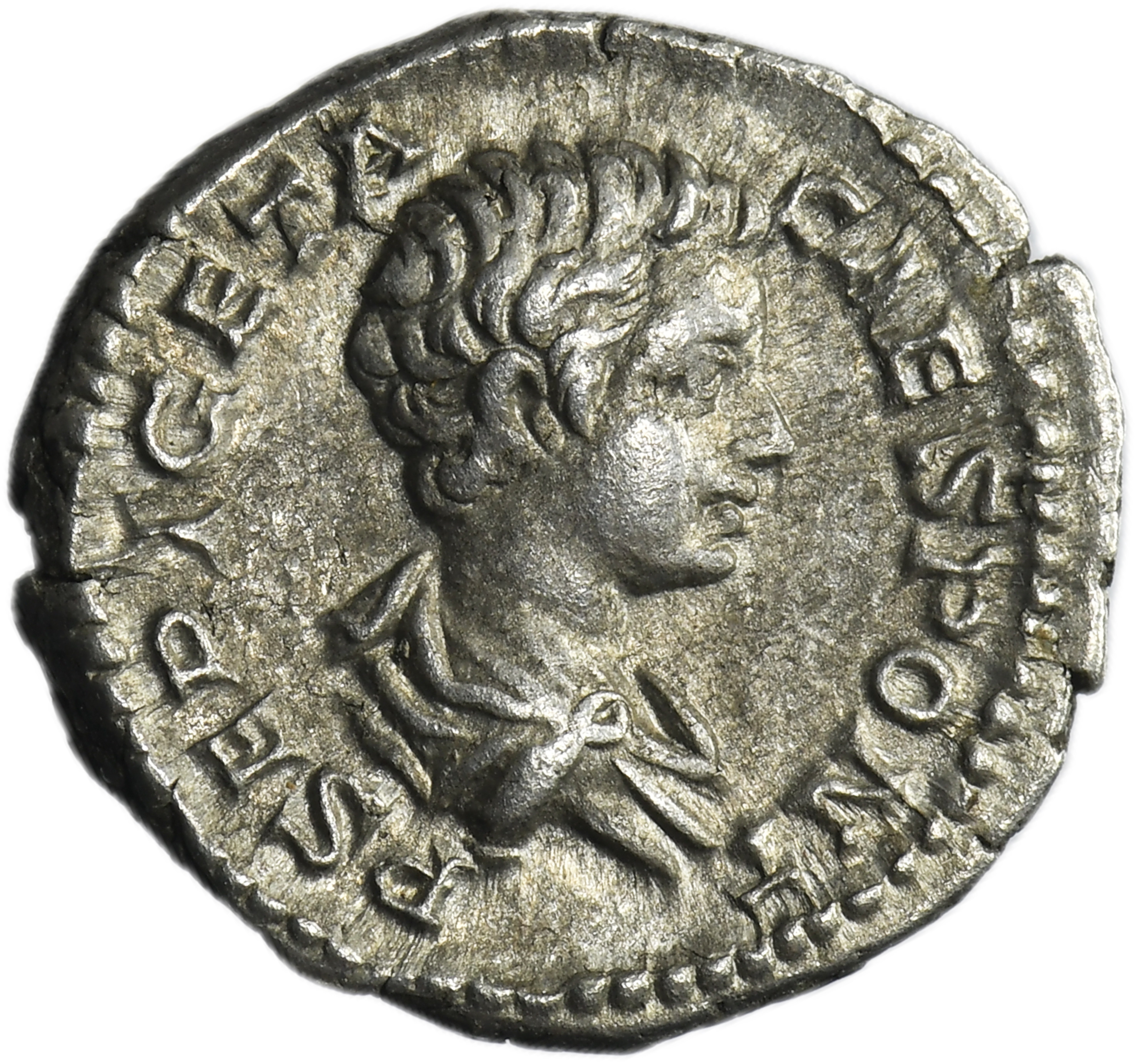
The obverse presents a bust of the young Caesar facing right, with the legend P SEPT GETA CAES PONT, indicating both his political status and his priestly function (pontifex), an essential component of the public image of an imperial prince.
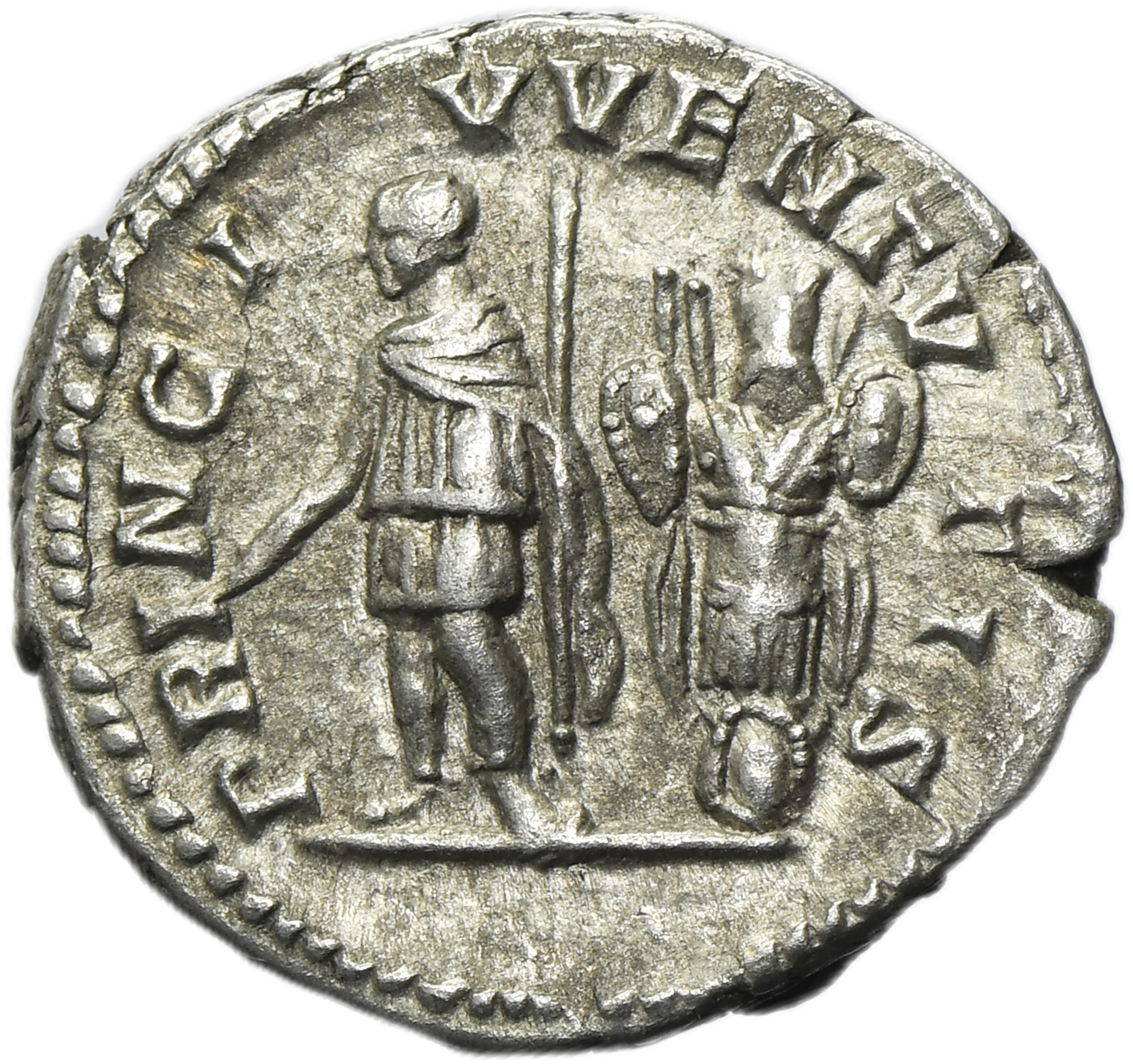
The reverse shows Geta standing left, holding an olive branch and a spear, with a trophy set behind him, accompanied by the legend PRINC IVVENTVTIS. The title Princeps Iuventutis was one of the most important distinctions granted to heirs, clearly signaling their future role as leaders of the state and the army. The iconographic composition is deliberate: the olive branch conveys peace and prosperity, while the spear and trophy refer directly to military success and imperial strength.
This type forms part of a well-established and documented series in which imagery and titulature combine to articulate the ideology of succession and continuity under the Severan dynasty.
Roman Imperial
Geta (as Caesar, 198-209), Denarius, Rome mint
Obverse: Bare-headed and draped bust of Geta to right, seen from behind
P SEPT GETA CAES PONT
Reverse:
Geta, as prince of the youth, standing front in military attire, head
to left, holding baton in his right hand and scepter in his left, behind
to right, trophy
PRINC IVVENTVTIS
Diameter 19 mm, weight 3.85 g











