


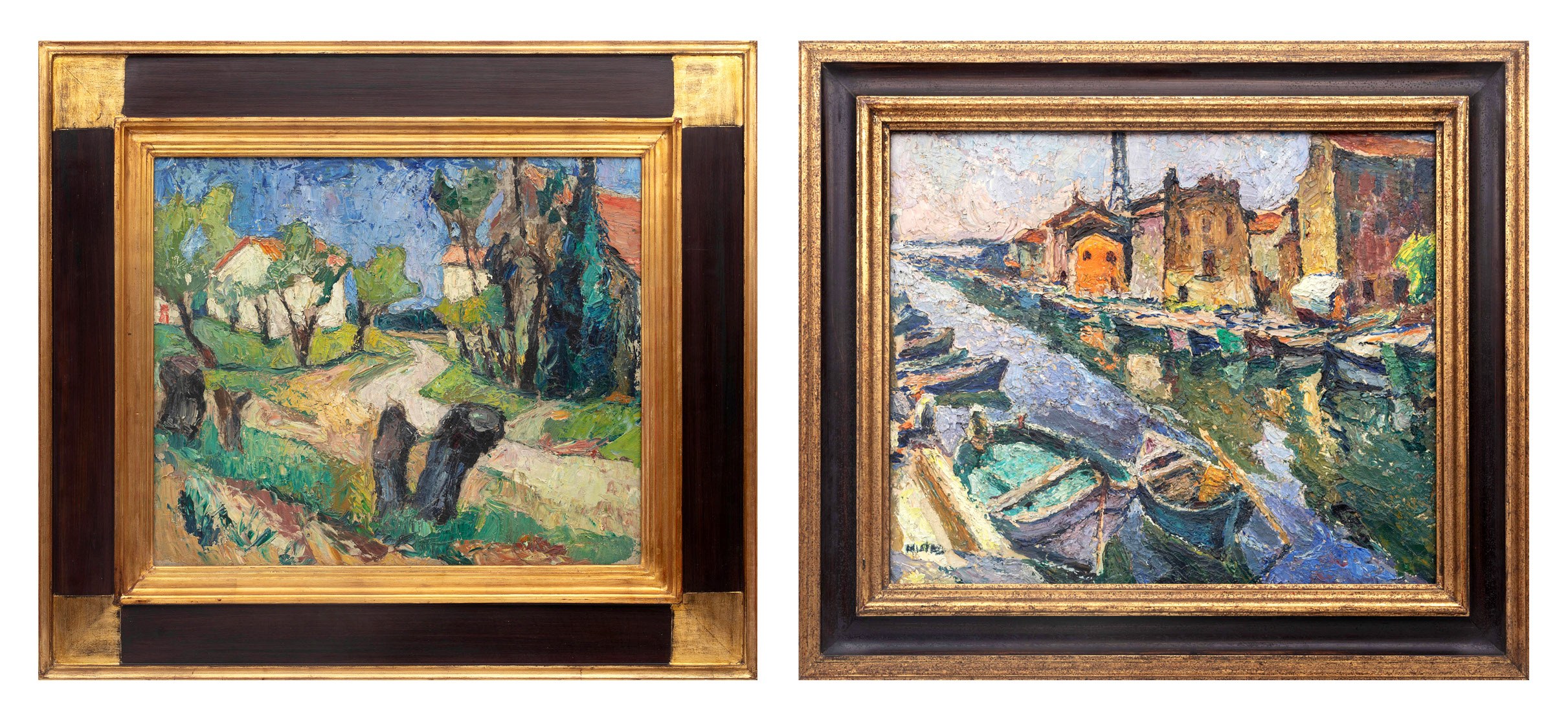





Landscape
oil on plywood, 45 x 53 cm (inside frame)
Boats on the Banks of the Rhône, 1936
oil on plywood, 44.5 x 53.5 cm (inside frame)
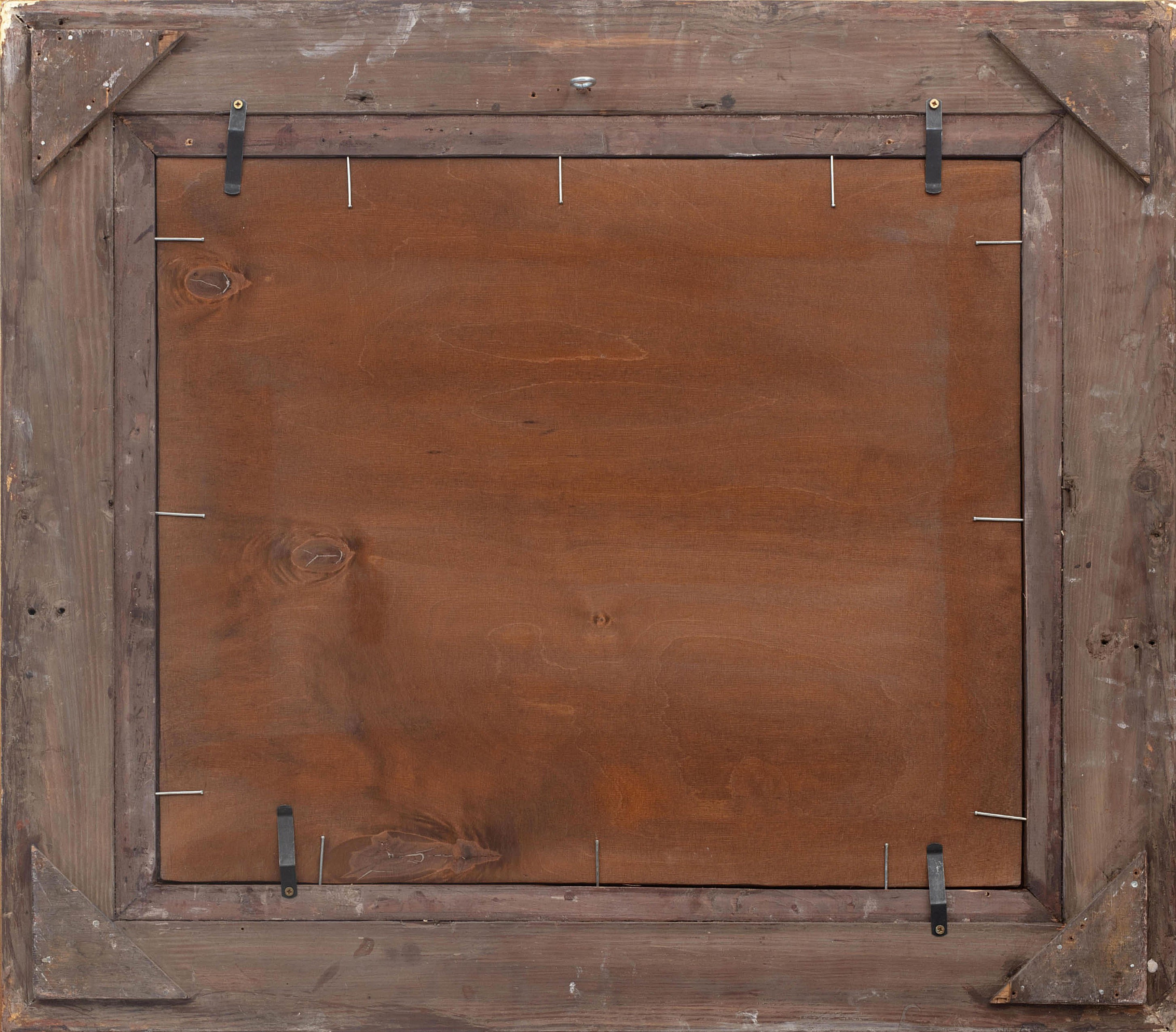
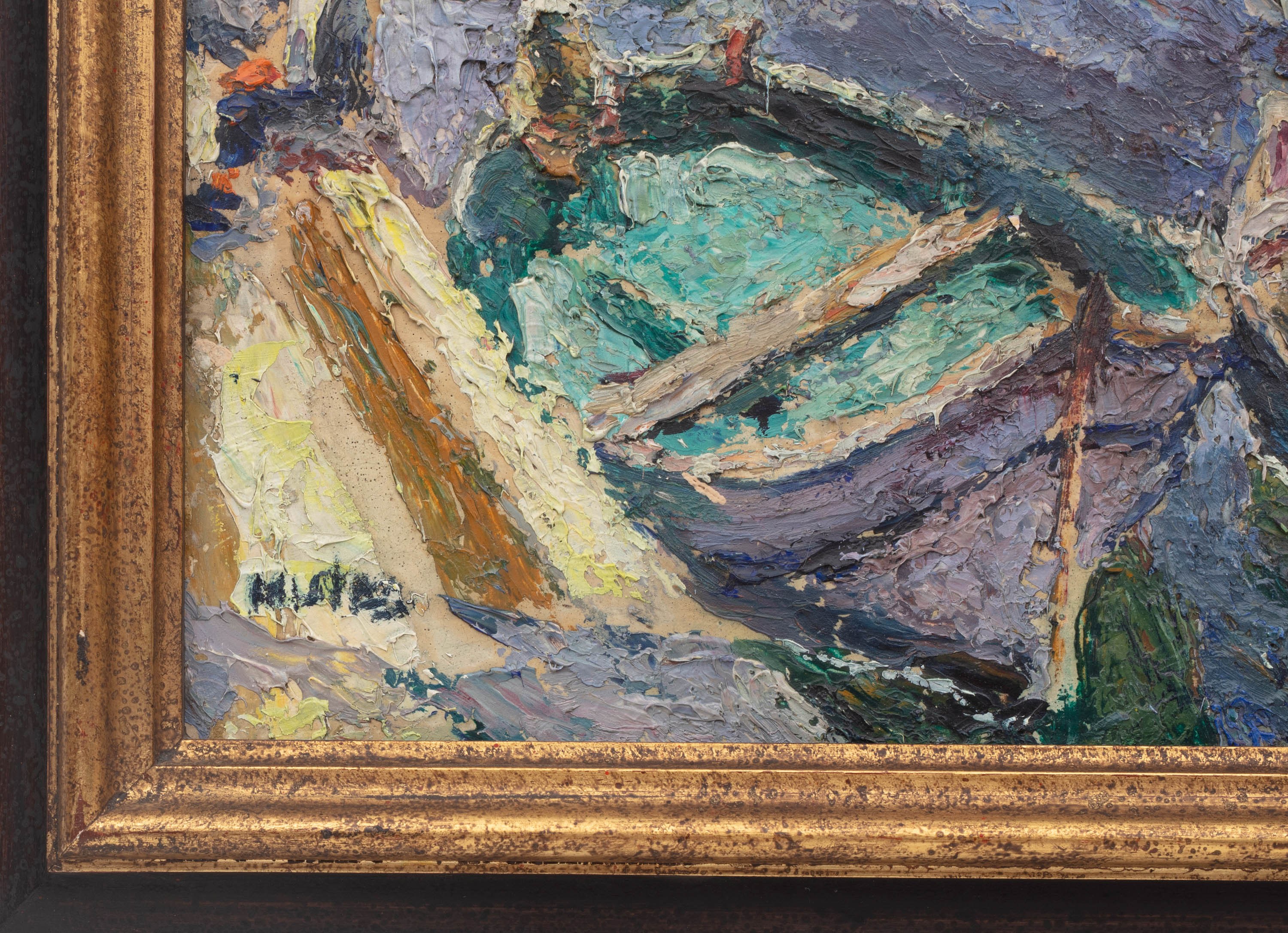
signed lower left: “MUTER”; on the reverse, a label with a handwritten inscription: “MELA MUTER/ ‘Rhône’ 1936”
Mela Muter is a leading figure among the Polish artists who helped shape the legendary Parisian bohemian scene in the 20th century. “Among nearly all the women who came to France to study art, Ms. Mütermilch stands out distinctly. For when she arrived to study under our masters, she brought with her the necessary background that allows her to truly benefit from these teachings—teachings that a student lacking talent would be unable to understand. That is why Ms. Mütermilch has already achieved such outstanding results. Her paintings appeal for two reasons: they are composed according to the rules of painting and radiate healthy and genuine poetry.” (J. d’A., Mme Mütermilch, *Bruits de Paris*, June 19, 1904, in: E. Bobrowska, “Emancipated Women? Polish Female Artists in Paris at the Turn of the 19th and 20th Centuries,” Toruń 2012, p. 25.). She was a painter of extraordinary talent, profound aesthetic sensibility, and a magnetic personality. She actively participated in the cultural life of Paris and remained at the center of the social circles of the elite of her time. Her numerous travels, especially her repeated plein air painting trips to Brittany and Spain, were a significant inspiration for her artistic evolution. “Beautiful landscapes are so captivating that one feels the urge to reproduce them exactly, without any personal interpretation. In the case of ‘uncooperative nature,’ however, one attempts to interpret it, to shape it according to one’s will. One does not lose one’s head then and remains level-headed, so as to highlight the appropriate qualities and place the colors in the right spots, as dictated by art.” (M. Muter, “Memoirs” [1965], in: J. Malinowski, B. Brus-Malinowska, “Jewish Painters from Poland in the Circle of the École de Paris,” Warsaw 2007, p. 40.). Her soft modeling and bold use of flat patches of color mean that some of her works evoke associations with the paintings of Paul Gauguin. Her mature style also clearly echoes the paintings of Vincent van Gogh and Paul Cézanne—particularly evident in her landscapes. Through a synthesis of these inspirations, Mela Muter created her own, instantly recognizable painterly language. “In her landscapes, she seeks the same [as in her portraits] inner truth of things, their deeply hidden character; she often imposes her own spiritual physiognomy—sadness, solemnity—upon the landscape. Just as in her earlier paintings of small Polish towns or in her compositions on motherhood, she is drawn not to the joy of life, but to its neglected, forgotten fragments. (M. Sterling, “From Parisian Studios: August Zamoyski – Mela Muter,” *Głos Prawdy*, 1929, no. 6, p. 3.)











Utoljára megtekintett
A tételek listájának megtekintéséhez jelentkezz be
Kedvencek
A tételek listájának megtekintéséhez jelentkezz be