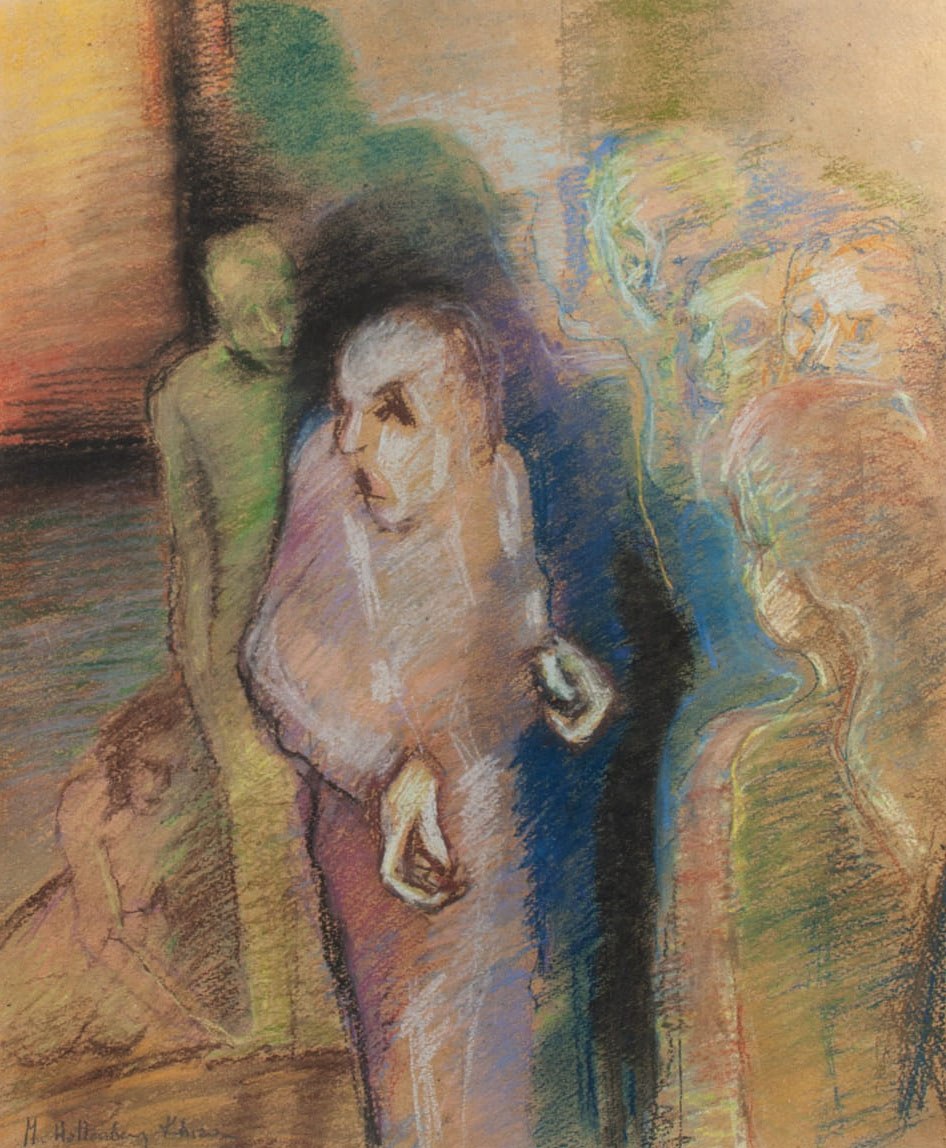
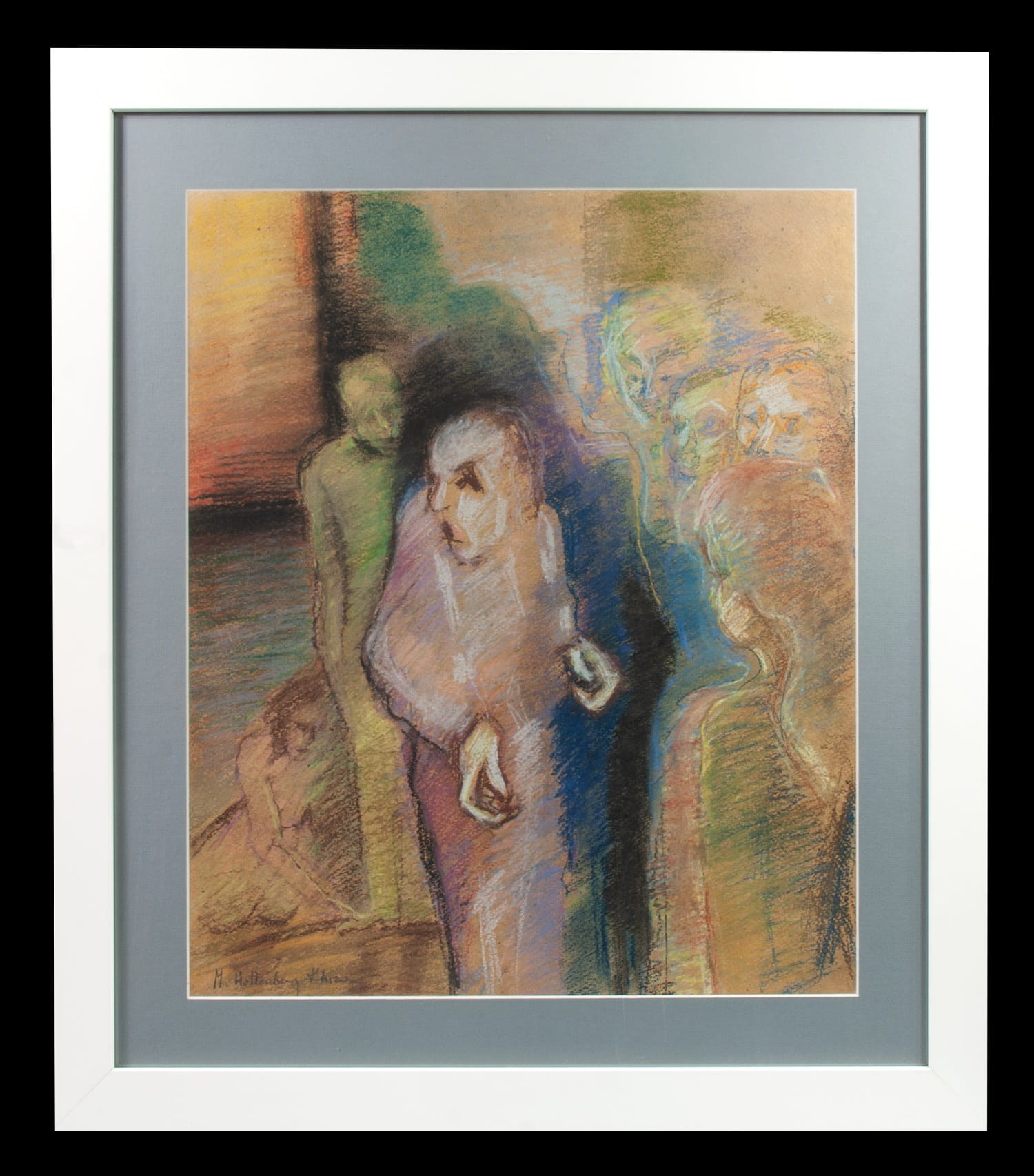
Pastel on paper, signed l.d. "M. Wollenberg-Kluza."
Dimensions in frame: 79x69 cm (59x49 cm)
Maria Wollenberg-Kluza (born 1945 in Puławy) is a Polish painter, precursor of the contemporary trend of reflective painting, originating from and referring in her work to Polish Colorism and Symbolism. She lives and works in Warsaw. Author of numerous publications on art and curator of exhibitions. She is the daughter of painter Piotr Wollenberg. The family home was often frequented by her father's colleagues, graduates of the Warsaw Academy of Fine Arts, such as: Michał Boruciński, Halina and Leon Michalscy, Stanisław Poznański, Piotr Potworowski, and the circle of painters from Lublin and Kazimierz Dolny: Antoni Michalak or Zenon Kononowicz. In 1967, Maria settled in Warsaw with Professor Stanislaw Szczepanski, a painter from the Kapist group. There she could often meet Jan Cybis and Hanna Rudzka-Cybisowa. This period was very important for the artist's development. He formed a stronger interest in Polish Colorism. From 1967 to 1973 she studied at the Faculty of Painting at the Academy of Fine Arts in Warsaw. In 1973 she received a diploma with distinction, in painting in the studio of the well-known colorist Tadeusz Dominik, and an annex to the diploma in artistic textiles under Wojciech Sadley. In 1973-1975, she completed an assistantship at the Academy of Fine Arts in Warsaw. She held a great many solo exhibitions at home and abroad. The first one took place in 1967.She took part in numerous group exhibitions - national and international, as well as in presentations of Polish art abroad.Her paintings represent reflective painting, permeated by other forms of artistic expression, i.e. music, poetry, philosophy, theater, dance, etc. The artist's work shows an interest in antiquity. It remains in strong connection with Greek and Roman culture. In the canvases of Maria W. Kluza one can clearly find a fascination with Norwid's poetry, as well as many contemporary Polish poets and writers. As a pupil of Tadeusz Dominik, Maria Wollenberg-Kluza continues her interest in colorism. She modifies it somewhat through elements of expressionism and symbolism. She paints mostly monothematic series of 20-30 works, such as: "People in the City", "Man and Machine", "Cathedrals", "Poetic Impressions", "Imagination Game", "Mother's Pets", Spanish Impressions" "SALIGIA - Seven Deadly Sins", "Meditations and Prayers", "Polish Landscapes". Using metaphor in his works, he takes up the themes of human life. She also refers to sacred themes. She is the author of, among others, the image of the Mother of God in the Sanctuary in Warsaw's Siekierki and two paintings related by theme to the revelations that took place in 1943-1949 in Warsaw, as well as a number of paintings for the church in Duczki and others, such as "Tree of Life", "Fatima Triptych", "Fr. Jerzy Popieluszko". Jozef Szajna, a painter and prominent theater director, president of the Polish branch of the Venice-based European Culture Association, spoke highly of Maria Wollenberg-Kluza.