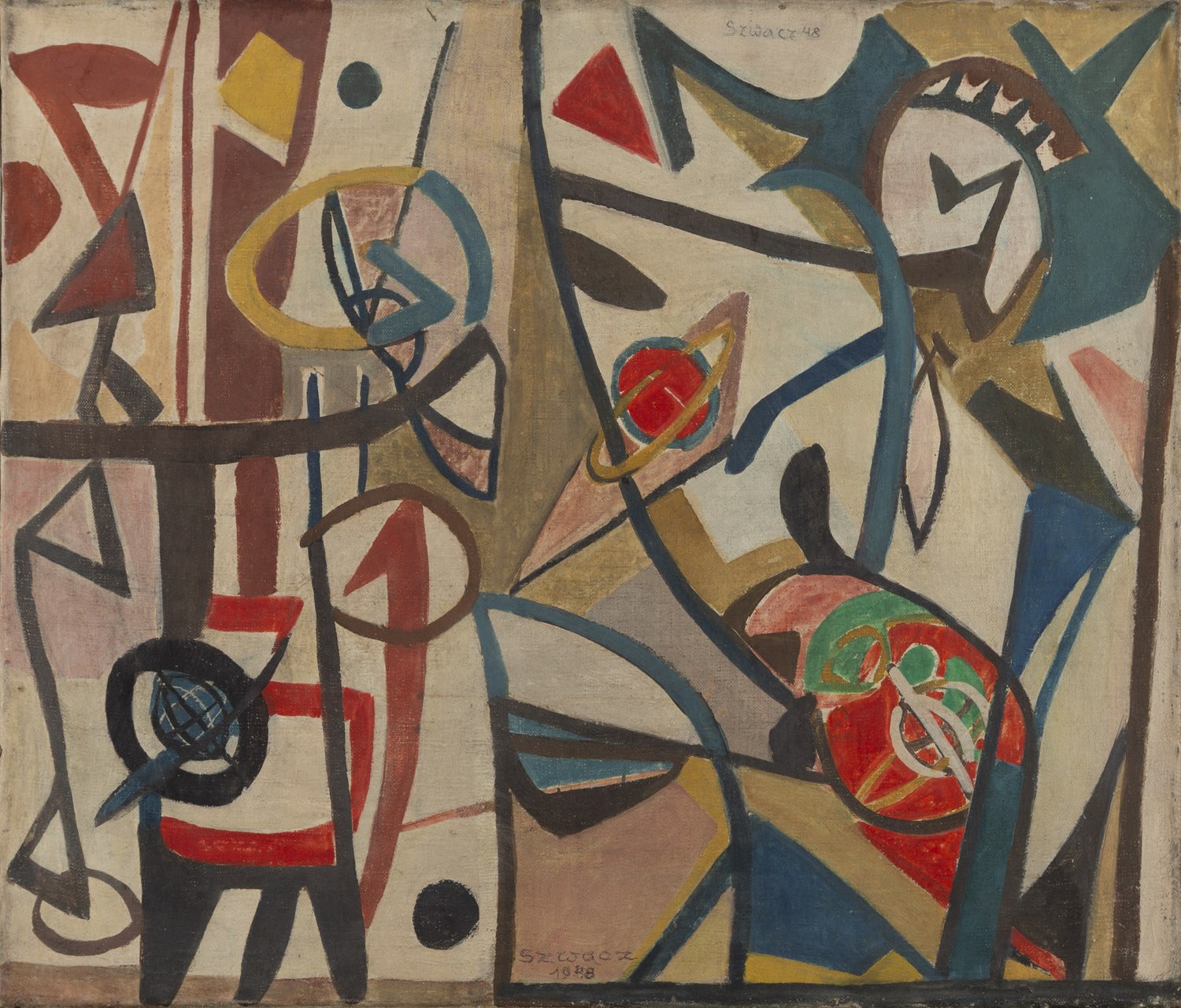
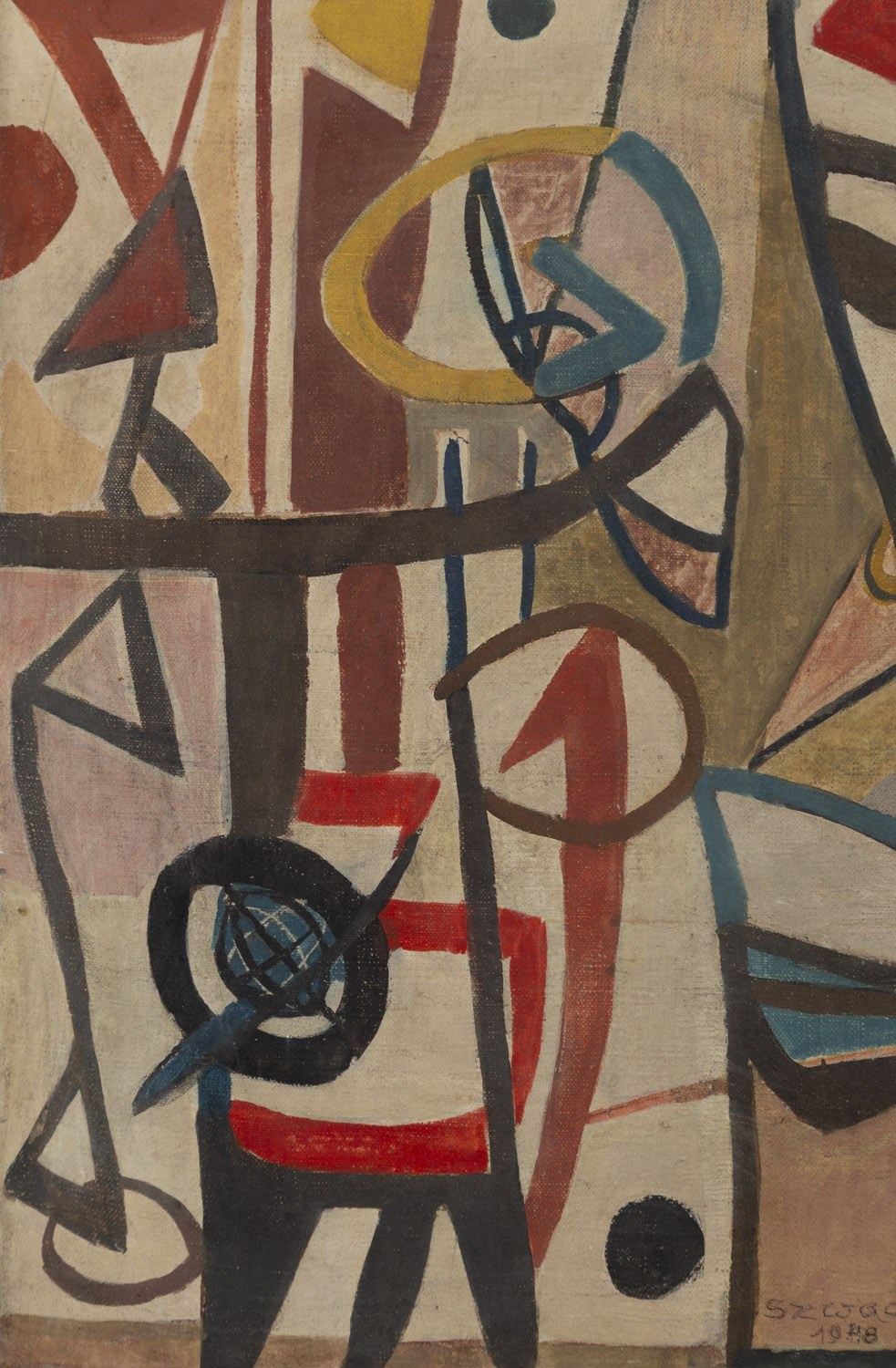
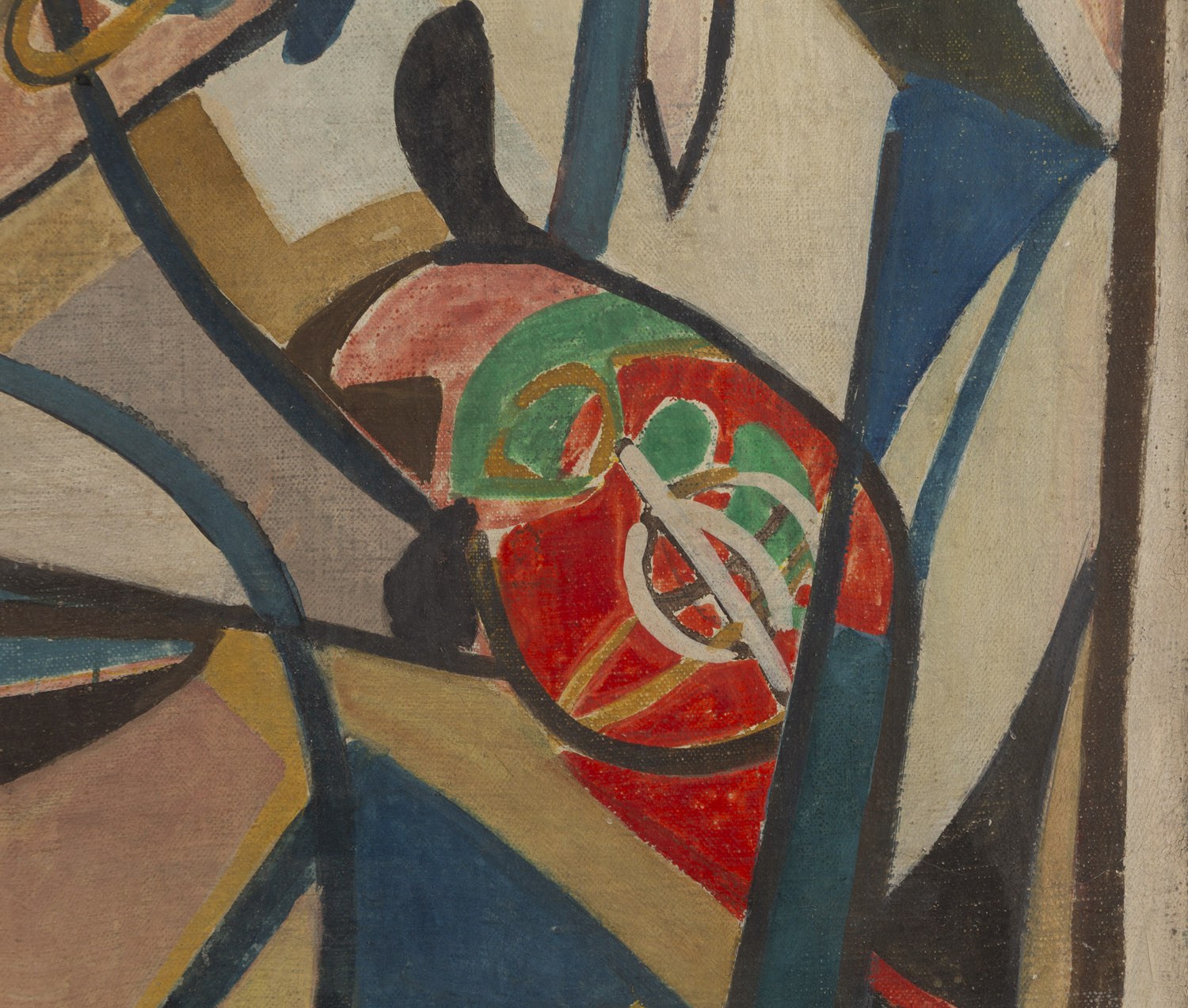
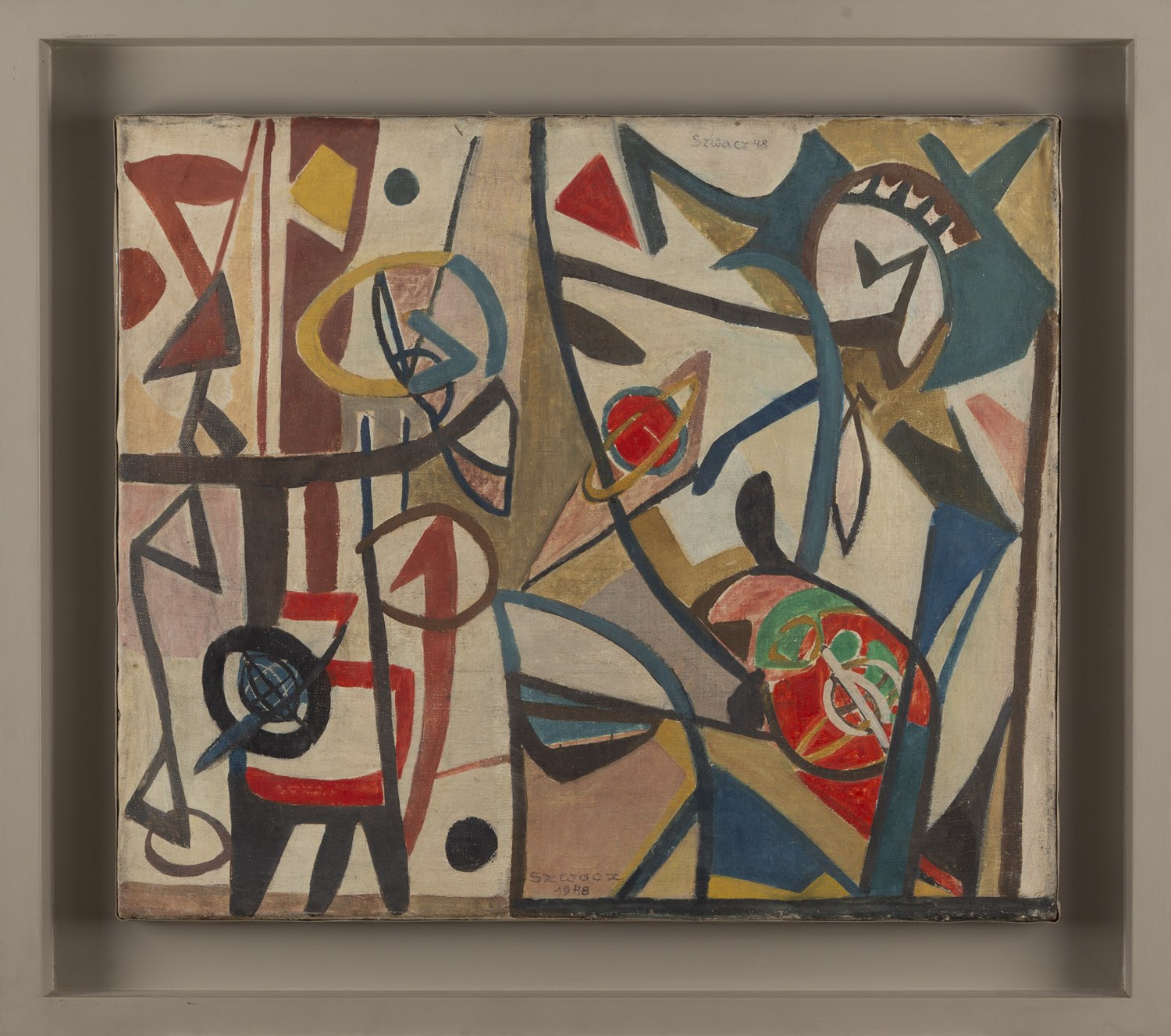
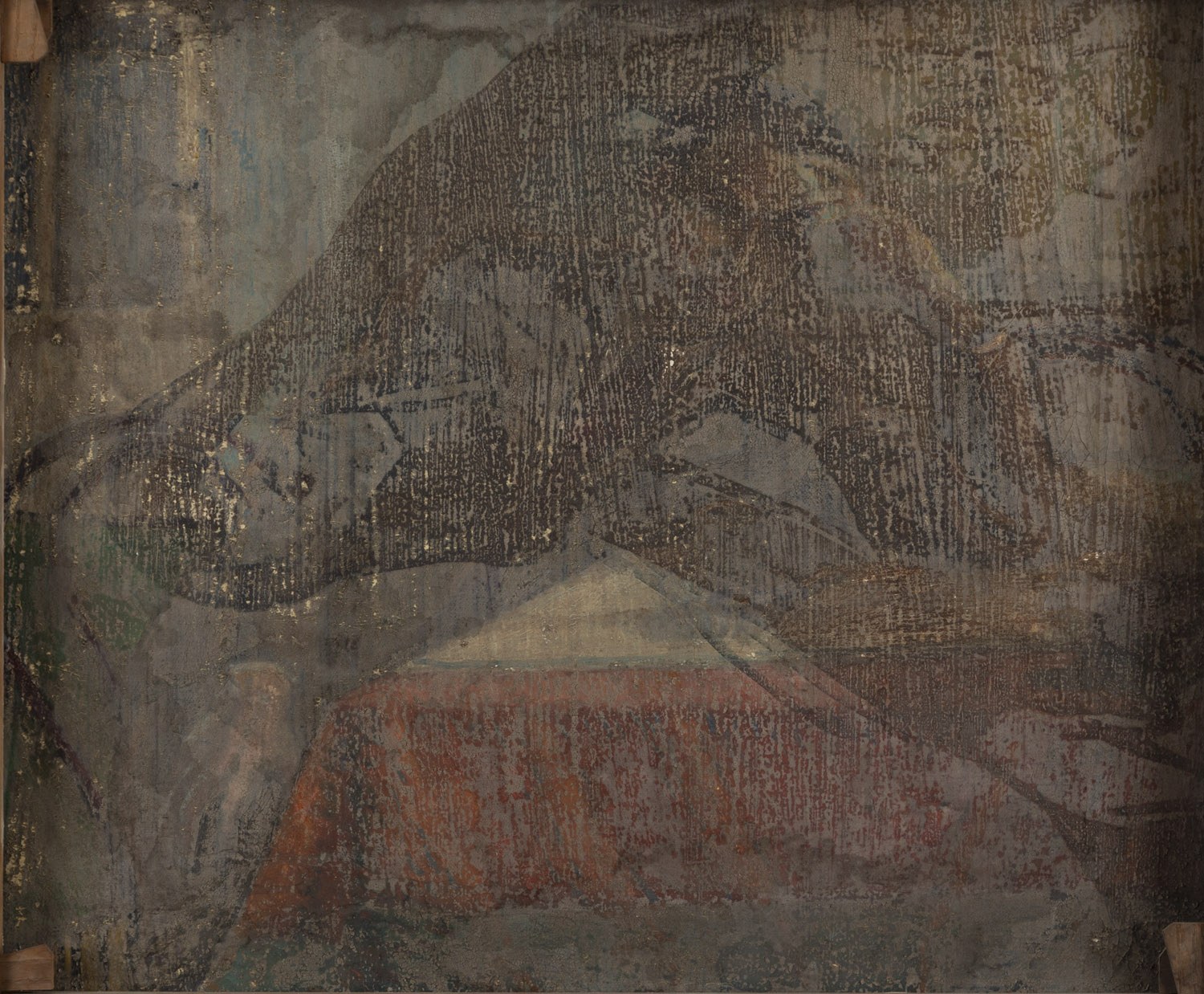
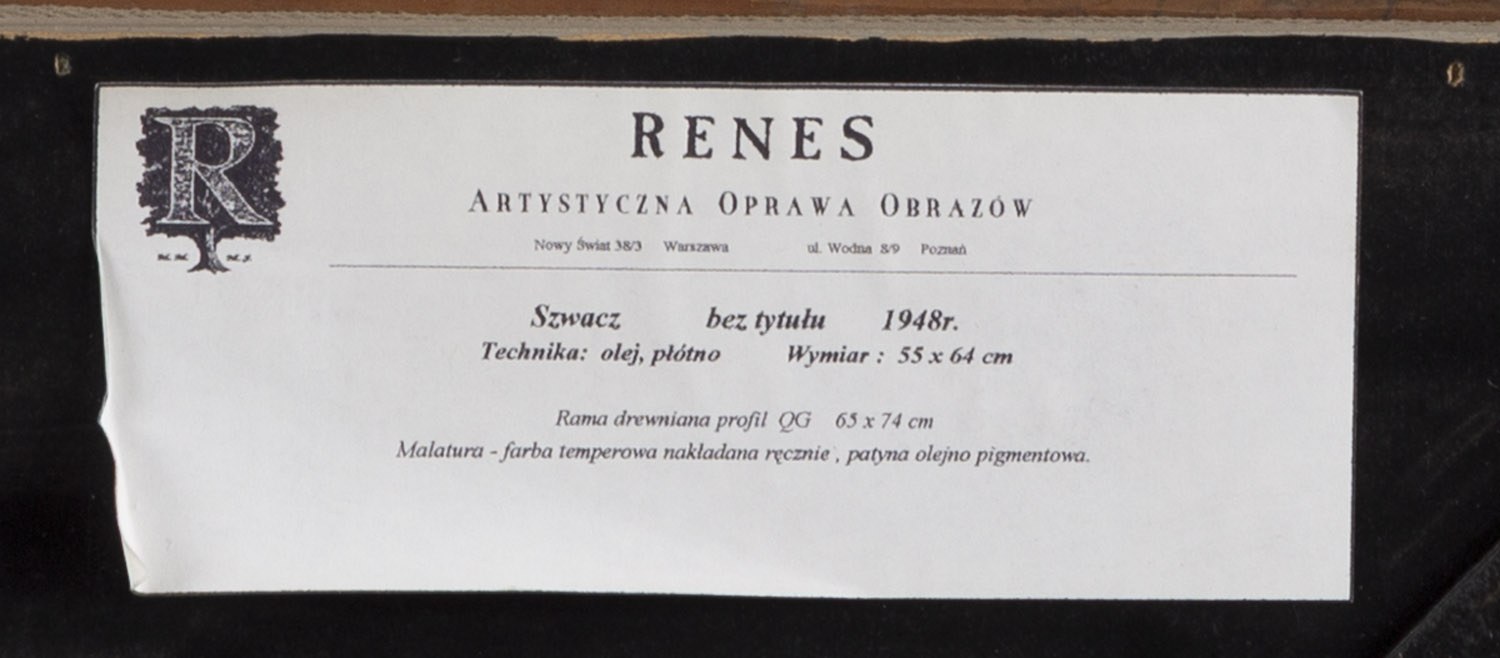
Dimensions: 56 x 65.5 cm
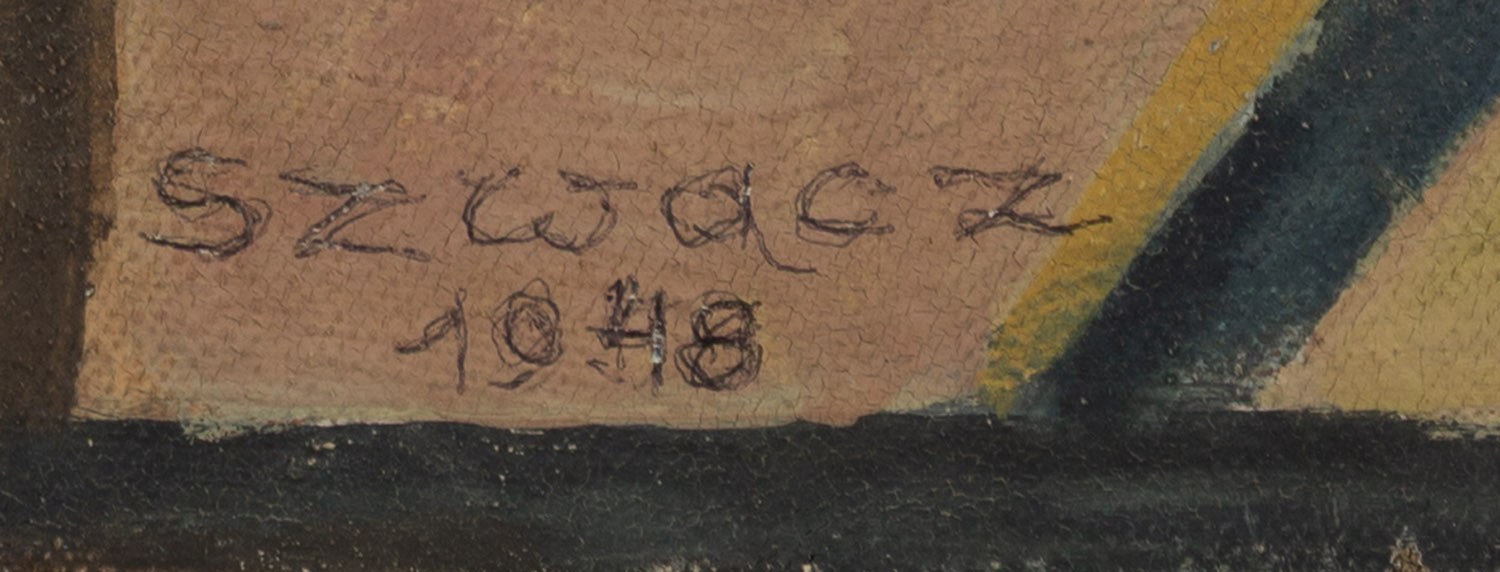
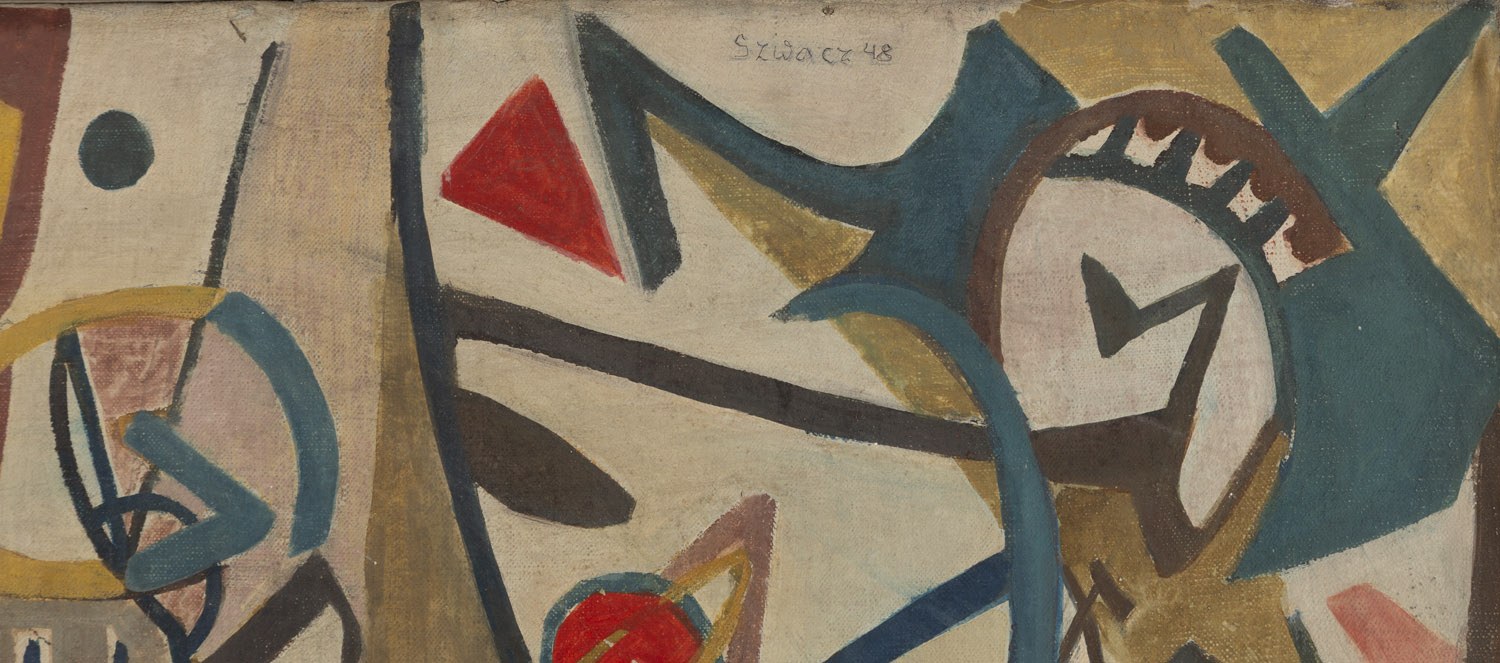
Signed and dated twice p.g.: 'SZWACZ 48', d.ś.: 'SZWACZ | 1948'
Provenance
private collection, Poland
Exhibited
"Szwacz: Experiences of the 1940s," Piekary Gallery, Poznań, 2004.
"Boguslaw Szwacz. Only abstraction counts! Works from the 1940s and 1950s", Piekary Gallery, Poznań, 06.05-10.06.2016
Literature
Szwacz: Experiences of the 1940s, invitation to the exhibition, Piekary Gallery, Poznań, 2004, (cover image)
Boguslaw Szwacz. Abstraction is all that matters! Works from the 1940s and 1950s, exhibition catalog, ed. Magdalena Piłakowska, Emilia Chorzępa, Piekary Gallery, Poznań 2018, cat. no. 12, p. 12 (il.)
Biography
Studied at the Academy of Fine Arts in Cracow from 1931 to 1937 with, among others, Teodor Axentowicz and Xawery Dunikowski, making his debut in 1939 at the exhibition of the "Kapists" group at the Cracow House of Artists. After World War II, he co-organized the circles of the "Young Visual Artists" and the "Moderns," and in Paris was active in the circle of Fernand Léger and the group "Le Surréalisme révolutionnaire." He participated in the "Confrontations" at the Crooked Circle gallery and in the First Biennial of Spatial Forms in Elblag. From the late 1950s, he developed the Ars-horme concept, finally formulated in the 1977 manifesto. Its basis was a systematic analysis of universal writing codes - from the Arabic, Aramaic and Chinese alphabets to musical notation and other notational systems. The artist studied their morphology, function and symbolic potential, extracting from them elementary structures of meaning. Captured in the form of palimpsest notations, usually on paper, they became a multi-layered reflection on the construction of the contemporary image of reality.