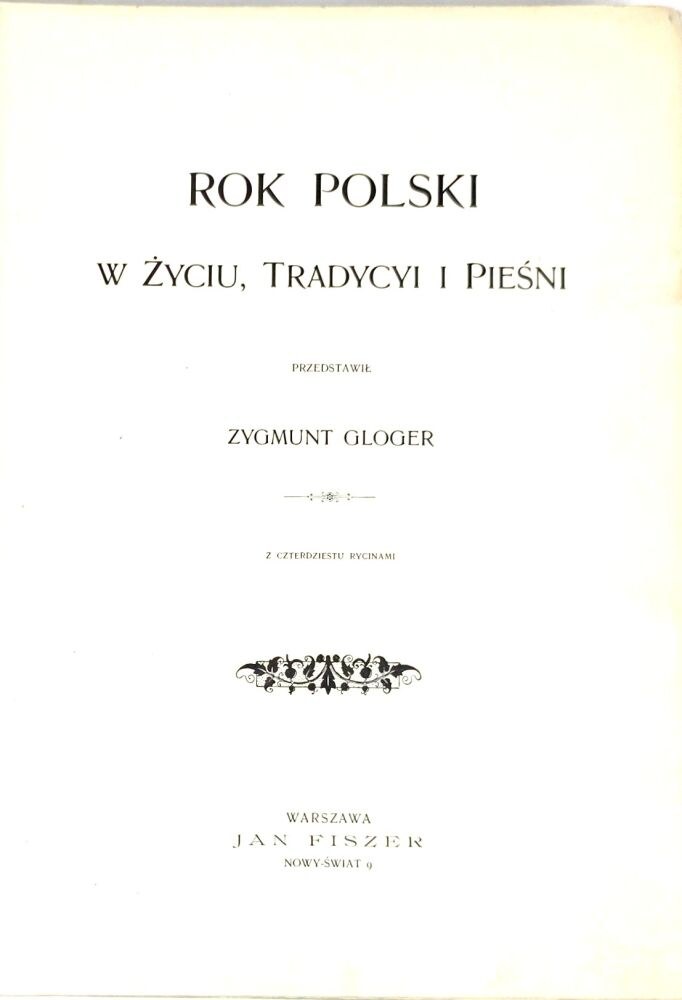

Zygmunt GLOGER
A Year in Poland: Life, Traditions, and Songs
Warsaw, 1900. Jan Fiszer, p. [4], 384, [2], illustrations: 40 (in the text and outside the text); format 20.5 x 28 cm
One of the most important ethnographic and cultural works of the turn of the 19th and 20th centuries, providing a comprehensive overview of the Polish ritual year: customs, folk traditions, and songs associated with the life cycle and the calendar of holidays. Gloger, as a scholar of old Poland, combines historical erudition with ethnographic documentation here, creating a monumental record of traditional culture that remains a primary source for folklore researchers to this day.
The author documents both the symbolic and religious dimensions as well as the practical aspects of rural and bourgeois life in old Poland. Of particular value are the songs, proverbs, and descriptions of customs passed down orally and preserved in literary and illustrative form.
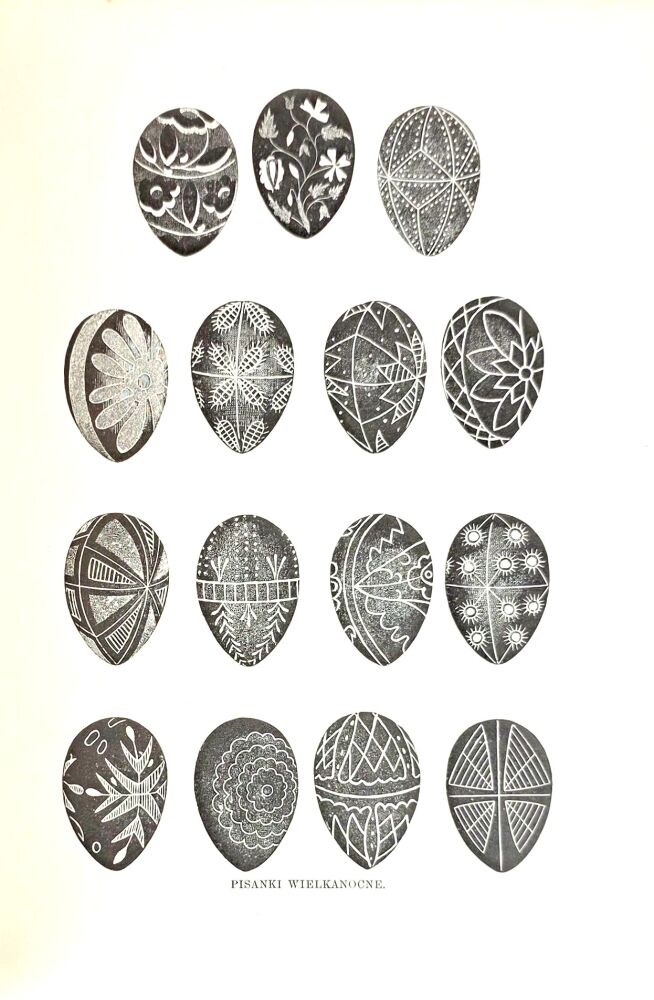
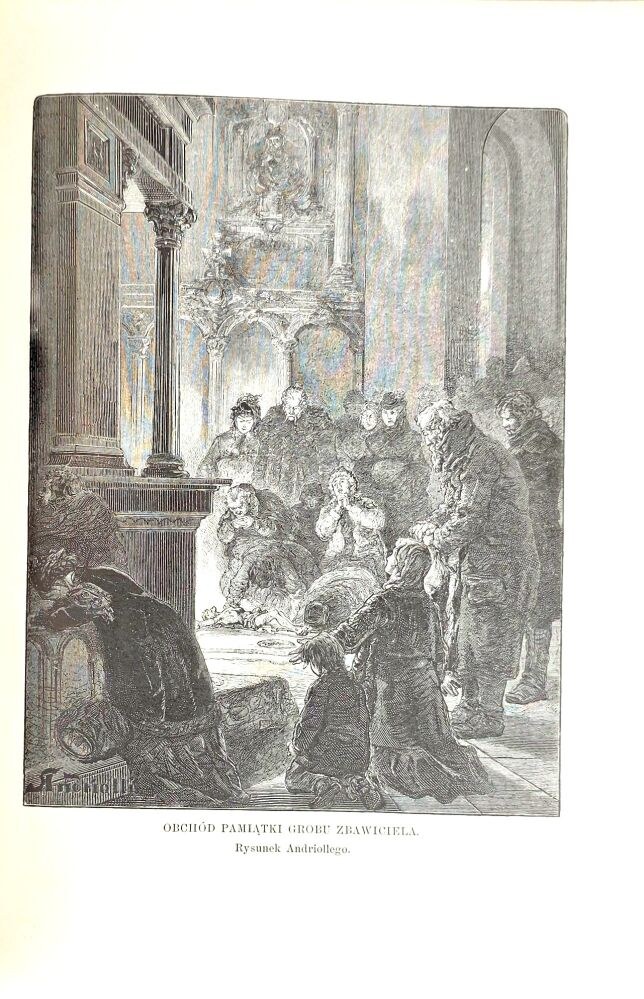
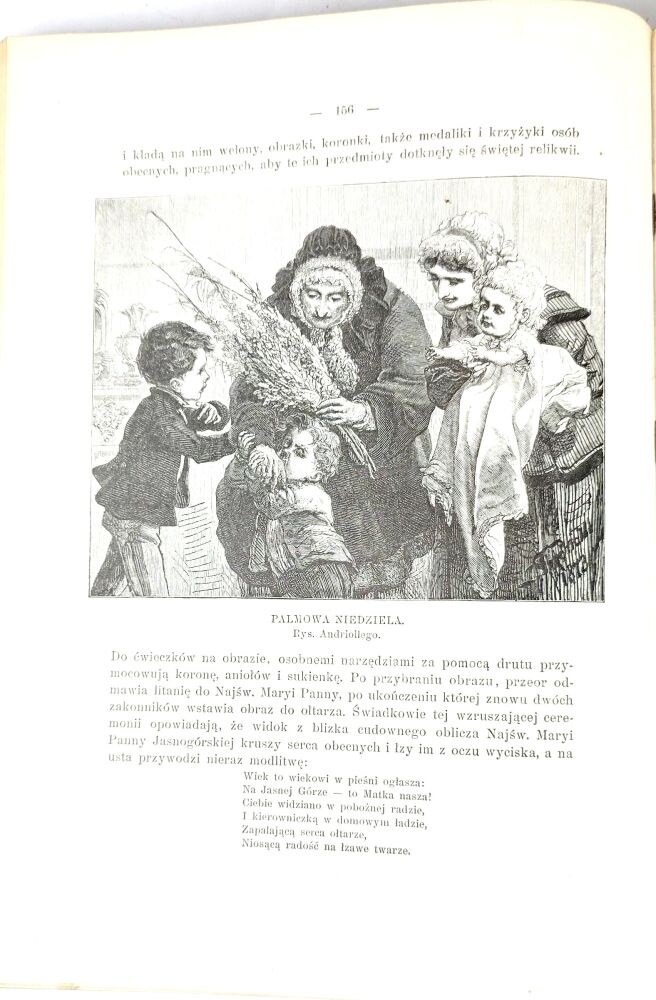
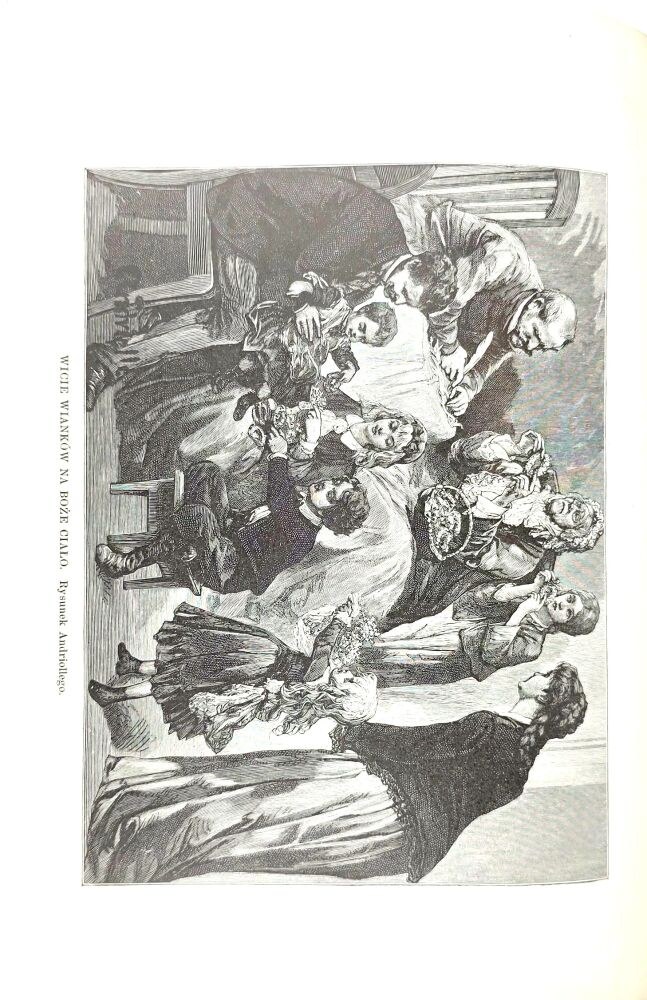
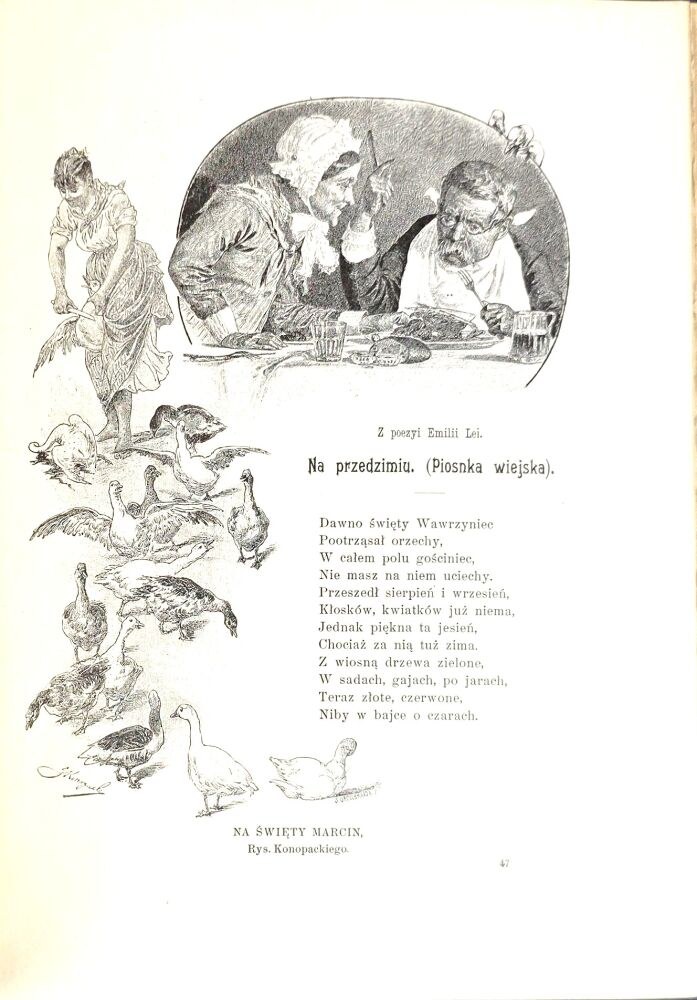
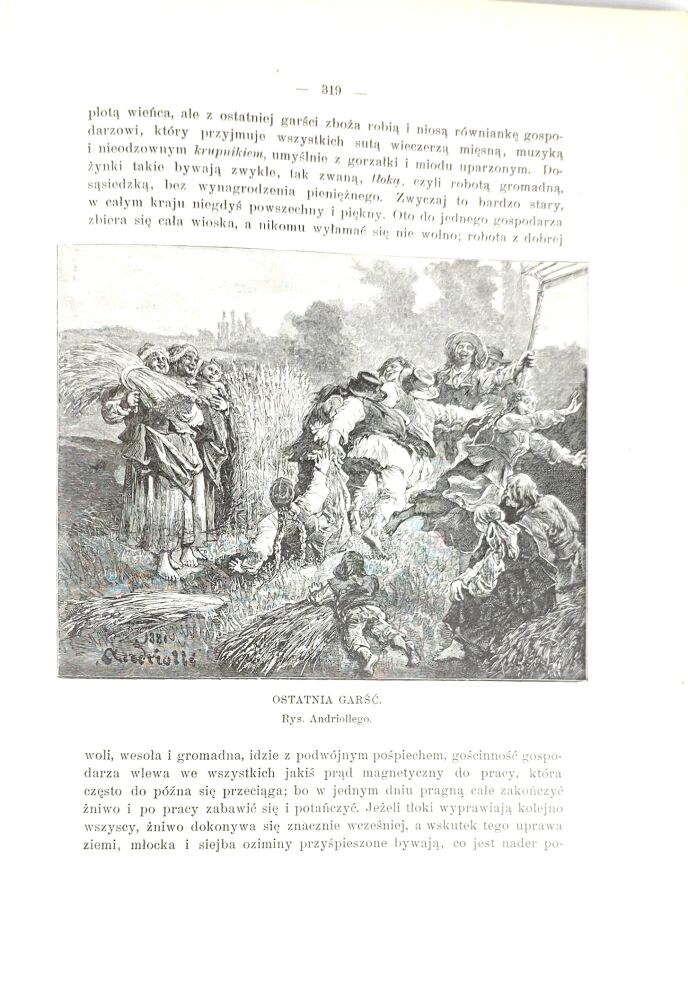
The first edition, published in Warsaw in 1900 by Jan Fiszer, is among the most comprehensive and highly regarded editions. It includes a wealth of illustrative material— 40 engravings by leading artists of the era, including Andriolli, as well as Stasiak, Pociecha, Juliusz Kossak, and others
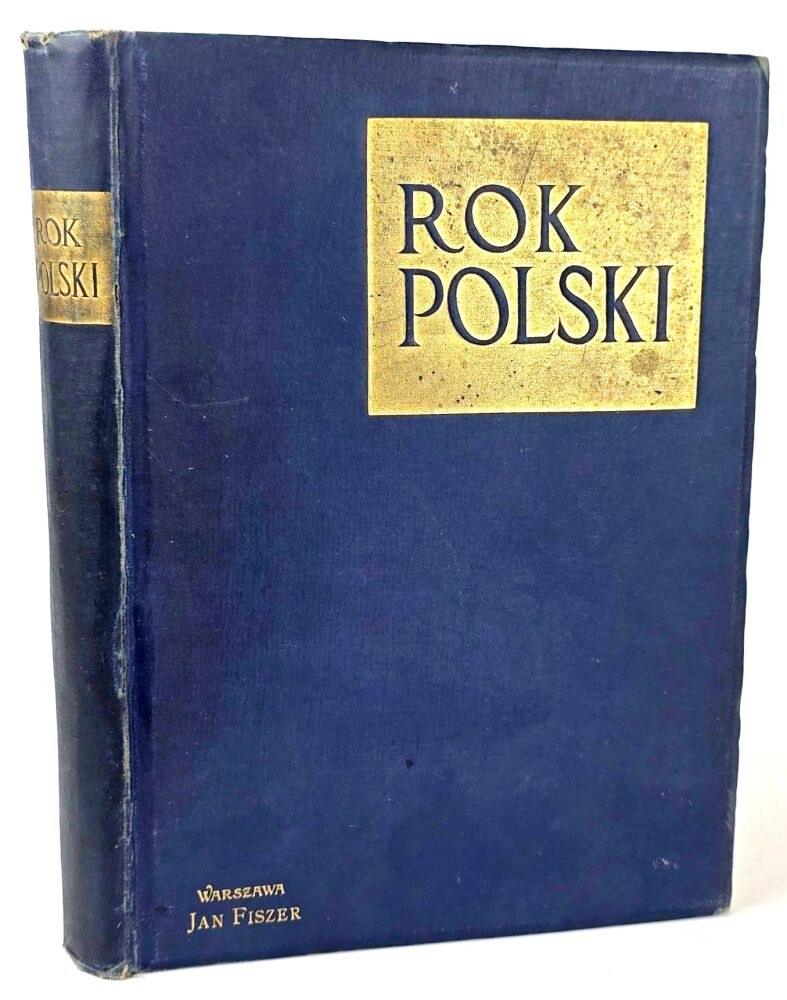
HARDCOVER BINDING FROM THE PERIOD, DECORATIVE END PAPER.
Binding signed “J. Puget, Warsaw.”
The J. Puget Workshop —in Warsaw—was among the city’s bookbinding and artistic workshops operating at the turn of the 19th and 20th centuries, specializing in the production of high-quality book bindings for Warsaw publishing houses and private bibliophile commissions. The mark “J. Puget, Warsaw,” appearing on endpapers and book covers (as in this piece of Zygmunt Gloger’s *Rok polski*), indicates a workshop that produced both functional and decorative bindings, often featuring decorative endpapers, embossing, and elements designed specifically for particular editions.
“In the second half of the 19th century and at the beginning of the 20th century, several specialized bookbinding workshops operated in Warsaw, producing book bindings of a high standard of craftsmanship and aesthetic quality, signed with the names of master bookbinders, which served as an important indicator of a book’s quality.”
— Elżbieta Pokorzyńska, studies on the history of Warsaw bookbinding in the 19th and 20th centuries.
Condition: Minor scuffs on the binding, a few minor stains