


tempera, wood panel, chalk-and-plaster ground, silver leaf glazed with gold; 9 x 7.1 x 1.5 cm.
Russia, 19th century.
A half-length portrait of the saint, viewed from the front, blessing with his right hand, clad in dark monastic robes featuring cross motifs. The saint’s nimbus is framed by a beaded ornament; at shoulder height, in separate panels, there are faded explanatory inscriptions in Cyrillic.
The background and border are silvered and glazed in gold, decoratively punched; the frame, featuring a geometric braided motif, is enclosed by a brown and red band.
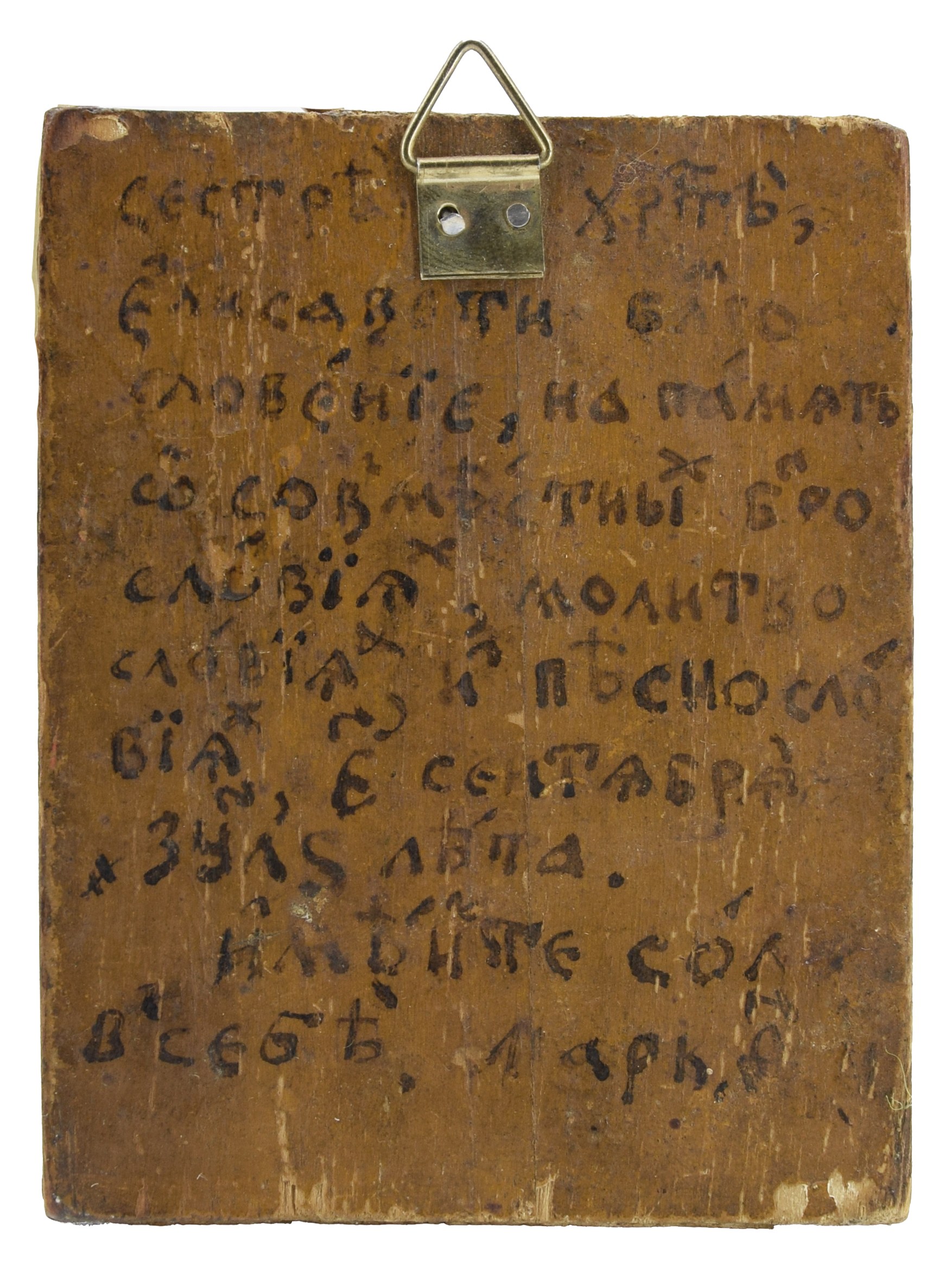
On the reverse are numerous inscriptions in Cyrillic; the entire text can be translated as: “To our sister in Christ, Elizabeth, a blessing in memory of our shared worship, prayers, praise, and liturgical hymns, [on] September 1945?. The inscription concludes with a quote from the Gospel according to St. Mark (9:50): ‘Have salt in yourselves and keep peace among yourselves.’
Saint John of Damascus (c. 675–749) was a monk, theologian, and the last of the great Church Fathers, venerated as a saint by both the Catholic and Orthodox Churches. After resigning from a high-ranking government post at the caliph’s court, he became renowned as a fervent defender of icon veneration and the author of key doctrinal and liturgical works still used in the Orthodox Church today. Tradition attributes to him the miraculous healing of his severed hand, which made him the intercessor for those suffering from paralysis of the hands and the patron saint of pharmacists and icon painters.
Travel icons arose from the needs of the faithful, giving them a sense of security for body and soul; they helped them focus on prayer and accompanied pilgrims and travelers.











Utoljára megtekintett
A tételek listájának megtekintéséhez jelentkezz be
Kedvencek
A tételek listájának megtekintéséhez jelentkezz be