Franciszek Turek (1882–1947)
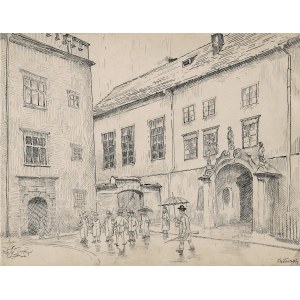
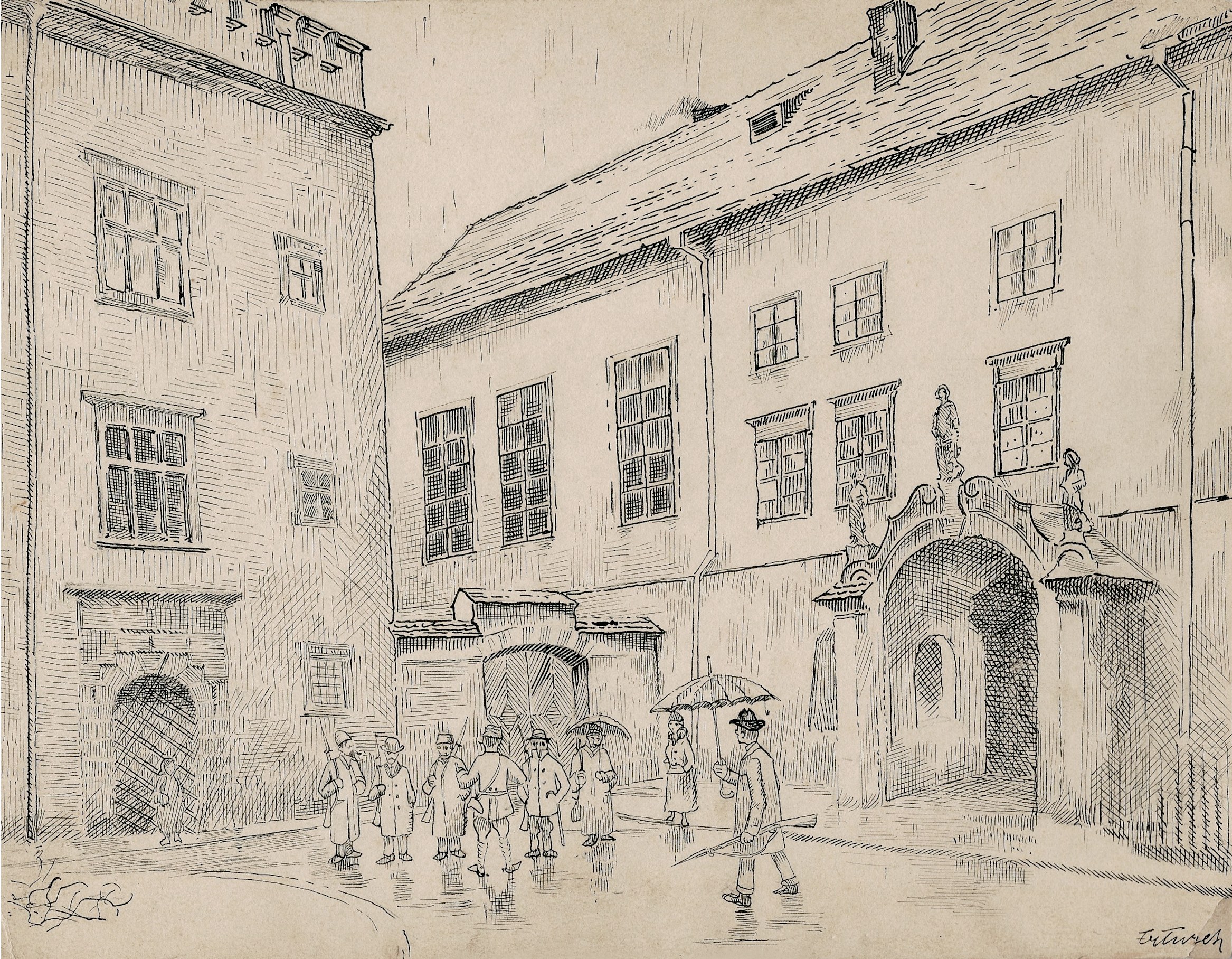
Franciszek Turek, In Front of City Hall, November 10, 1918
ink on paper, 23 x 29.8 cm
signed lower right: Fr Turek
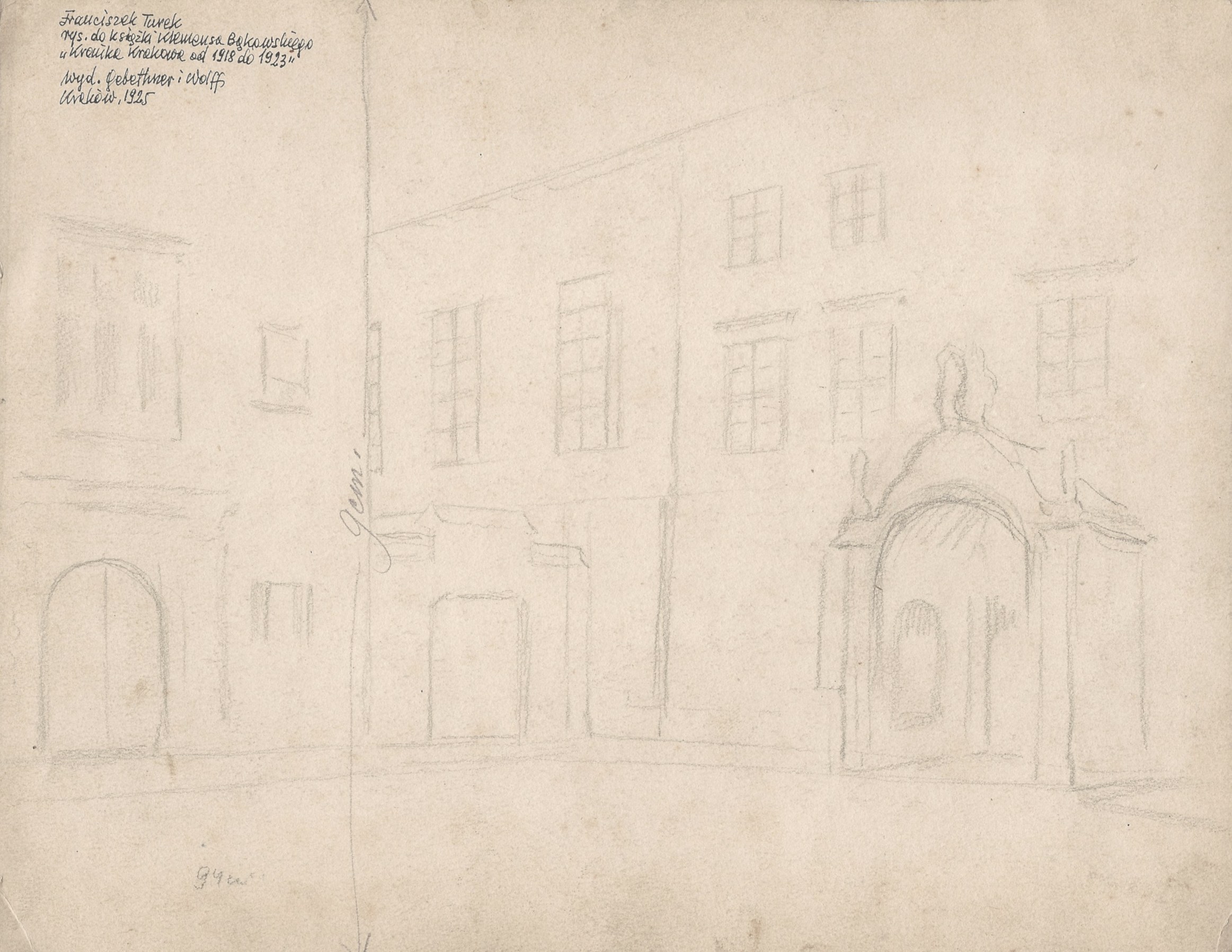
Drawing for Klemens Bąkowski’s book,
*Chronicle of Kraków from 1918 to 1923*, published by Gebethner and Wolff, 1925
From 1895 to 1899, he attended St. Anne’s Gymnasium in Kraków; he did not graduate from that school, however, and turned his attention toward art. In 1899, he was admitted to the State Industrial School in Kraków, where, at the Faculty of Applied Arts, he received a thorough education in various fields of the visual arts and design.
In 1902, he began his studies at the Academy of Fine Arts in Kraków, which he completed five years later. He was a student of Józef Unierzyński, and for a time also of Józef Mehoffer, Stanisław Wyspiański, and Leon Wyczółkowski. Unierzyński was an advocate of academic art, and it is likely that it was under his influence that Franciszek Turek showed little interest in the latest trends in painting. The artist was a master of watercolor—he painted still lifes, floral compositions, landscapes, and portraits, all executed in a realistic style. Turek also documented old Kraków houses and tenement buildings threatened with demolition or extensive reconstruction, as well as their architectural details. At that time, a vast number of buildings disappeared from the streets of Kraków as a result of the 1906 Building Act, whose provisions granted investors an 18-year exemption from property tax on new real estate. Franciszek Turek captured many of these structures before their demolition with a sense of mission and enthusiasm. The artist’s favorite location for outdoor painting was Kraków’s Kazimierz district, particularly its neglected, yet mysterious and picturesque, Jewish quarter. Turek’s works are distinguished by their high artistic merit and serve as an important—and sometimes the only—iconographic record of Kraków in the early 20th century. In his curriculum vitae, compiled in 1927, the artist stated that by that time he had produced over 1,765 works, 60 percent of which depicted “old Kraków.”
The National Archives in Kraków hold nearly 100 drawings by Franciszek Turek depicting the iconography of Kraków. They were added to the archive thanks to Adam Chmiel, an archivist, director of the Archive of Historical Records of the City of Kraków, and an enthusiast and promoter of the heritage of the “Polish Heartland.” Chmiel was a friend of Franciszek Turek; the artist created illustrations for Chmiel’s publications. The two knew each other well through the Society of Lovers of Kraków’s History and Monuments and were committed to promoting knowledge of Kraków’s heritage and to its preservation. It should be emphasized that no other Kraków artist of the first half of the 20th century left behind a similar, such extensive body of work. Turek’s architectural drawings stand out in his body of work and place him among the leading painters specializing in the iconography of Kraków.
Franciszek Turek exhibited his works many times in various galleries and received awards for them; he died prematurely on July 12, 1947, at the height of his creative activity.