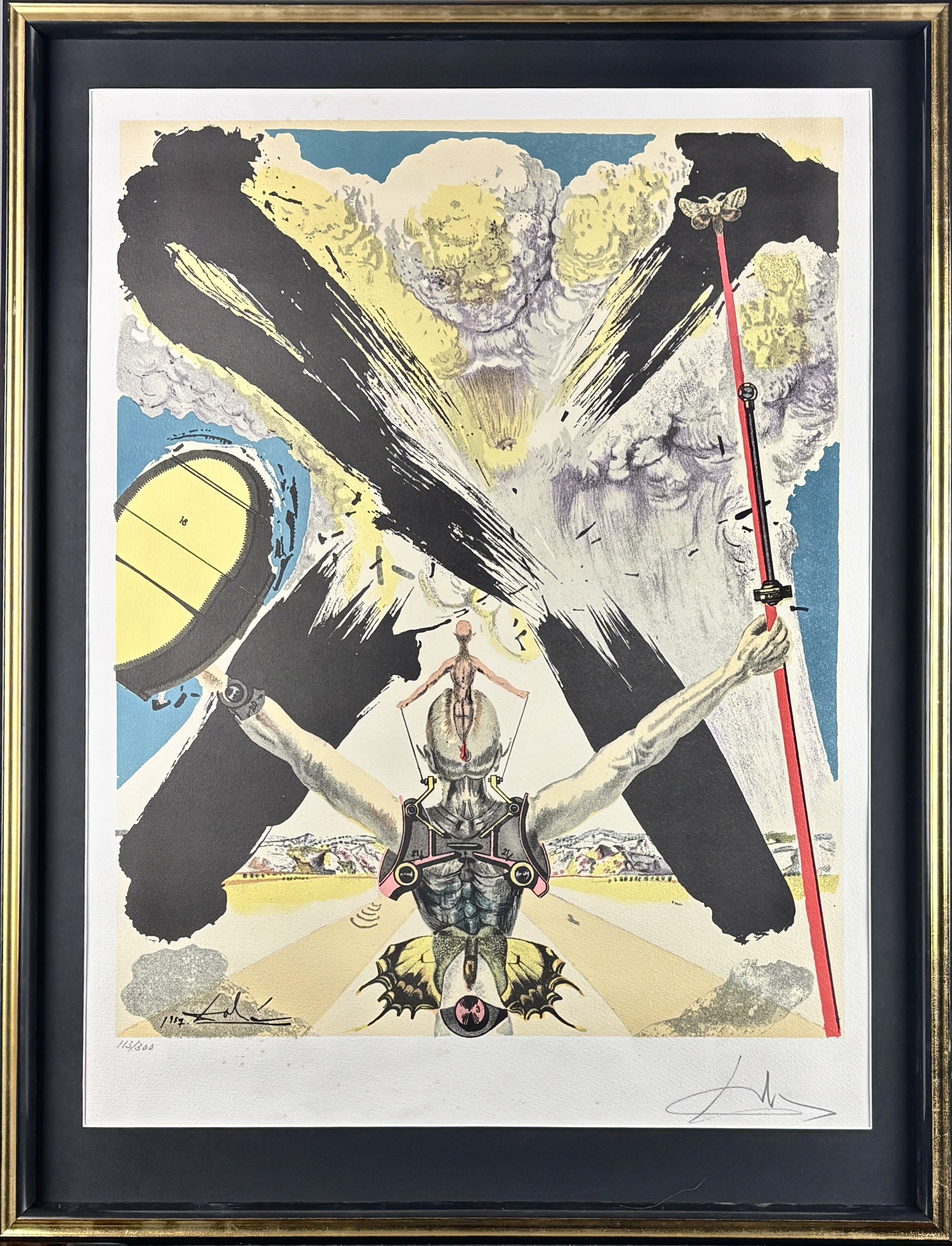

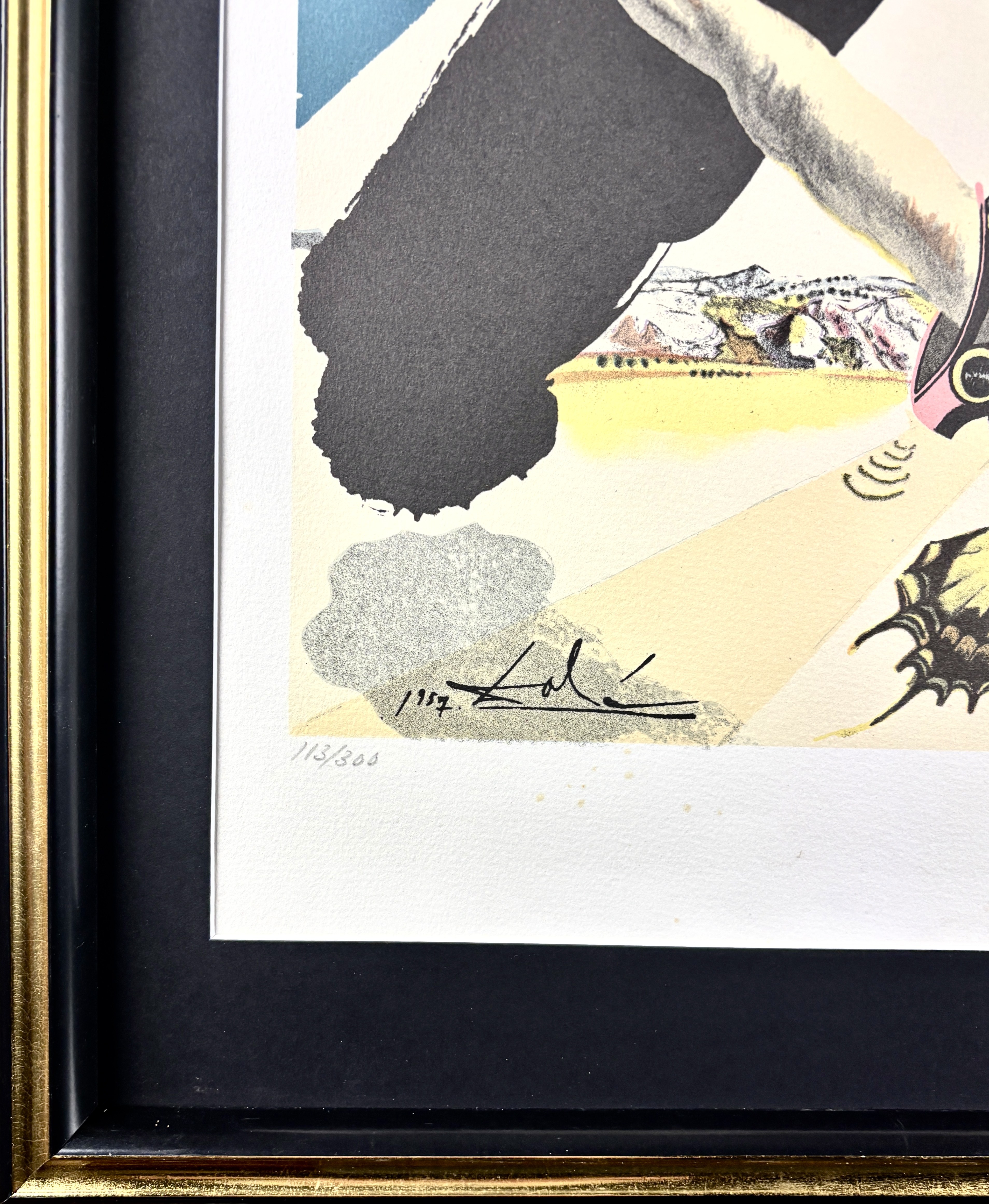
Color lithograph on Arches Velin paper, Arches paper, framed, 78 x 61 cm
Limited edition, hand-numbered (75/300)
Signed and dated on the plate, lower left (within the composition): "1957 Dali," signed in pencil by the artist.
Publisher: Levine & Levine / Dalart (New York/Curacao)
Works published by Levine & Levine are well documented in the catalogs raisonné (the most important inventories of Dalí’s works), including those by Albert Field.
Bibliography:
Catalog by Michler, Ralf Löpsinger, and Lutz W.; p. 1117.
Provenance: private collection, Paris
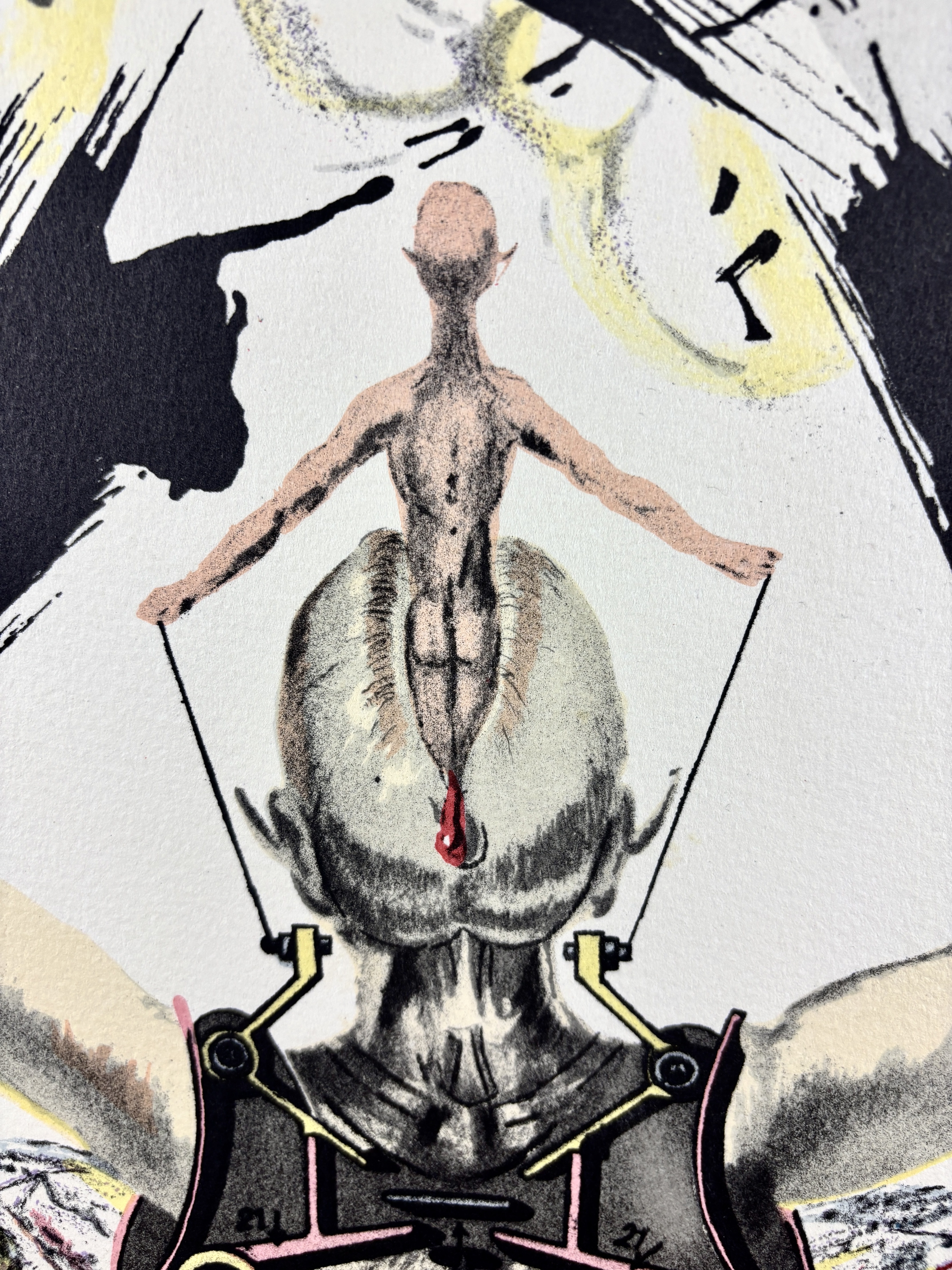
One of Salvador Dalí’s most famous lithographs from the "Don Quijote de la Mancha" from 1957, for which Dalí used a sculpture of a rhino horn filled with ink, which he then threw onto a lithographic stone. The work combines Dalí’s classic fascination with the figure of Don Quixote with the technique of tachism (expressive, almost random brushstrokes forming an “X”). The large, black “X”-shaped form is a deconstruction or abstract representation of a massive figure that could symbolize a windmill or the giant Don Quixote battles. This motif of chaos and destruction perfectly captures Dalí’s paranoid-critical method, while also alluding to the madness and idealism of Cervantes’s hero.
We see a silhouette that appears to be breaking free from armor or a cocoon. At the bottom and top of the staff, a butterfly appears—for Dalí, a symbol of the soul, metamorphosis, and transience. In the background looms a rugged Catalan landscape (near Port Lligat), which is the artist’s trademark.
The frames shown in the renderings are for illustrative purposes only and do not constitute a commercial offer.