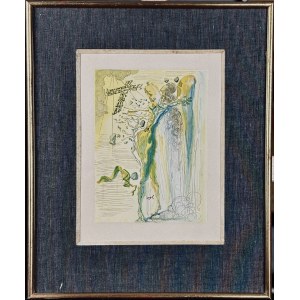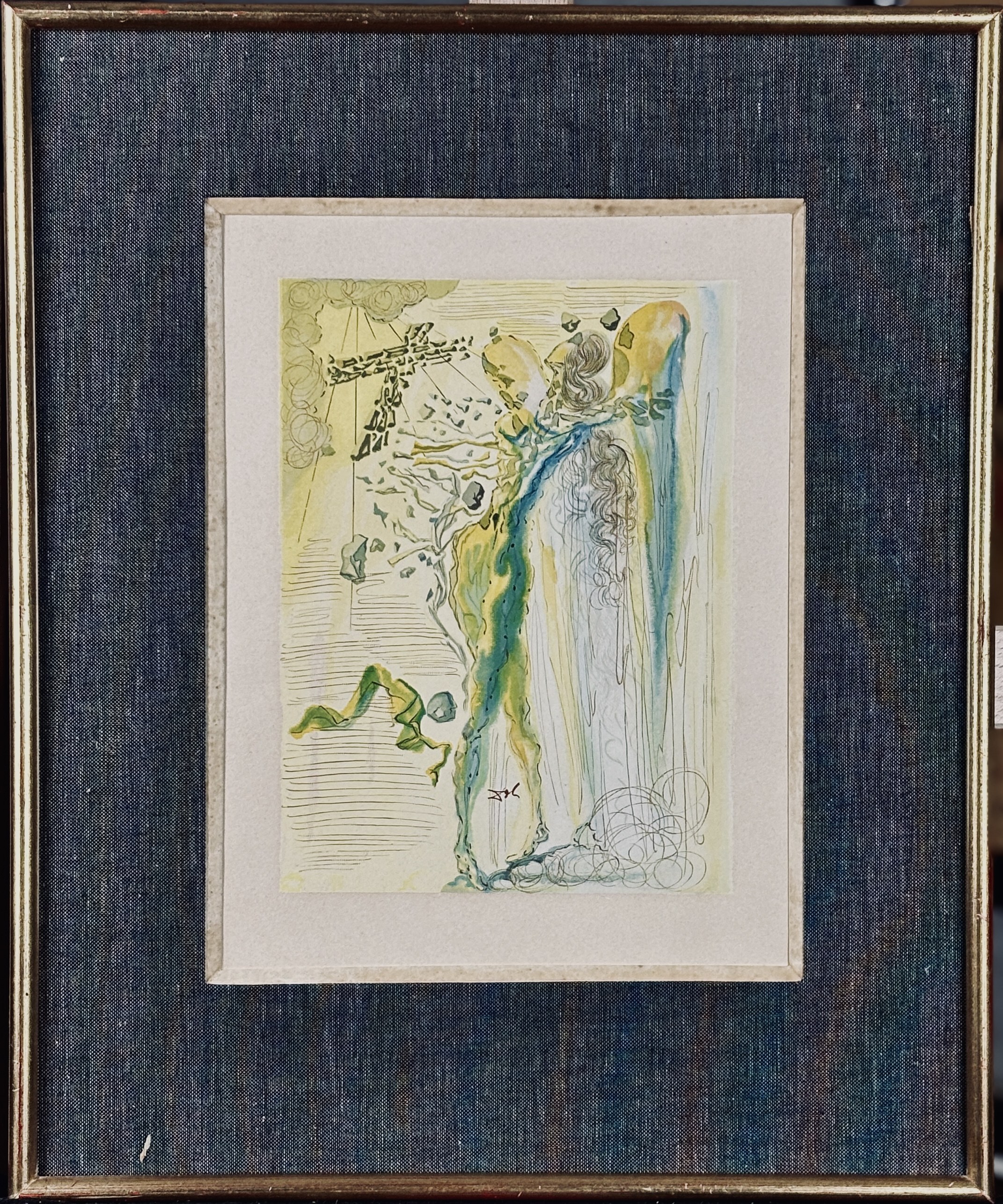
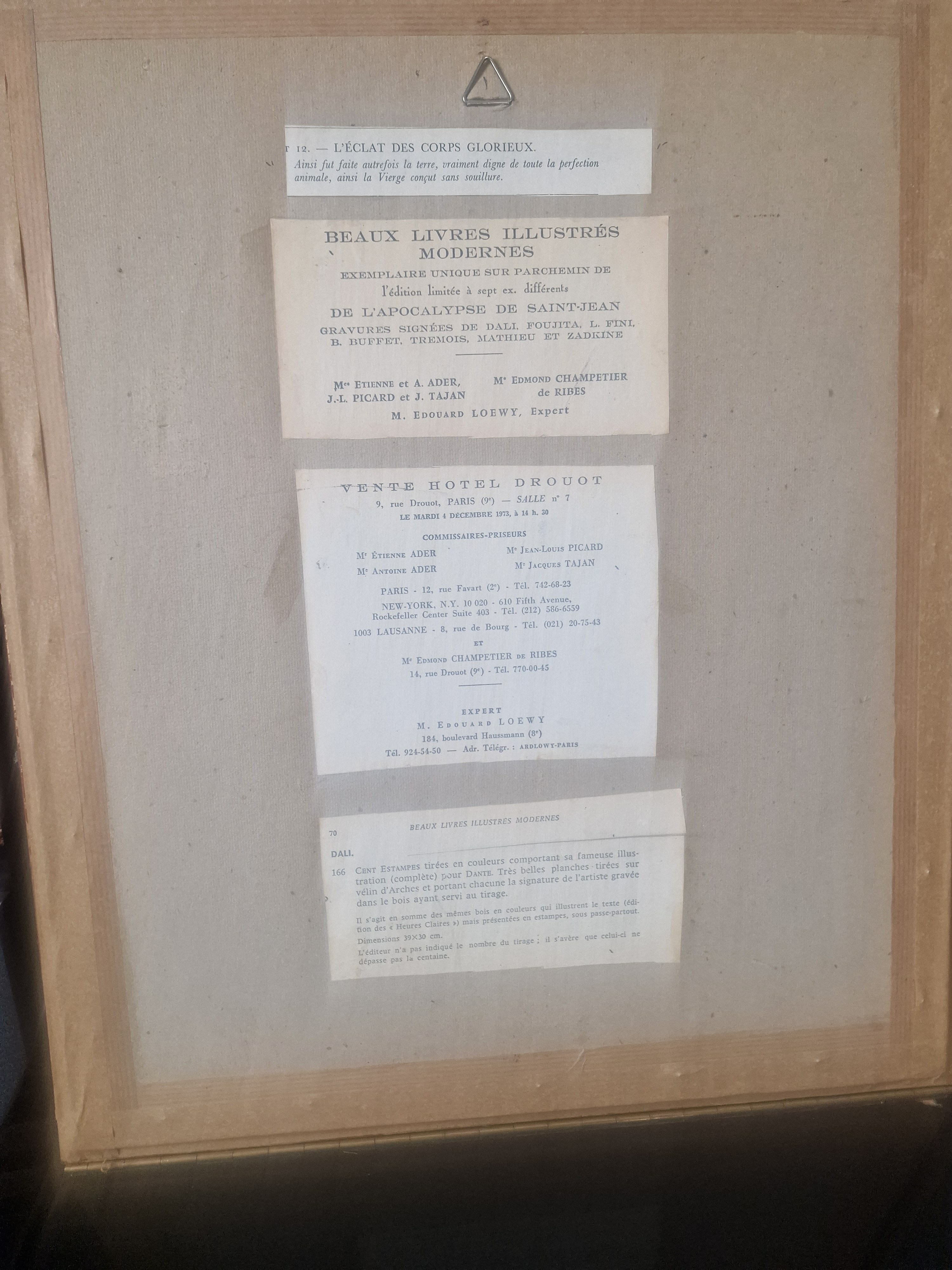
Color woodcut on Velin Rives cotton paper, 40 x 23 cm (inner dimensions of the mat), mounted in a frame measuring 48 x 39 cm;
Limited edition; individual woodcuts are unnumbered;
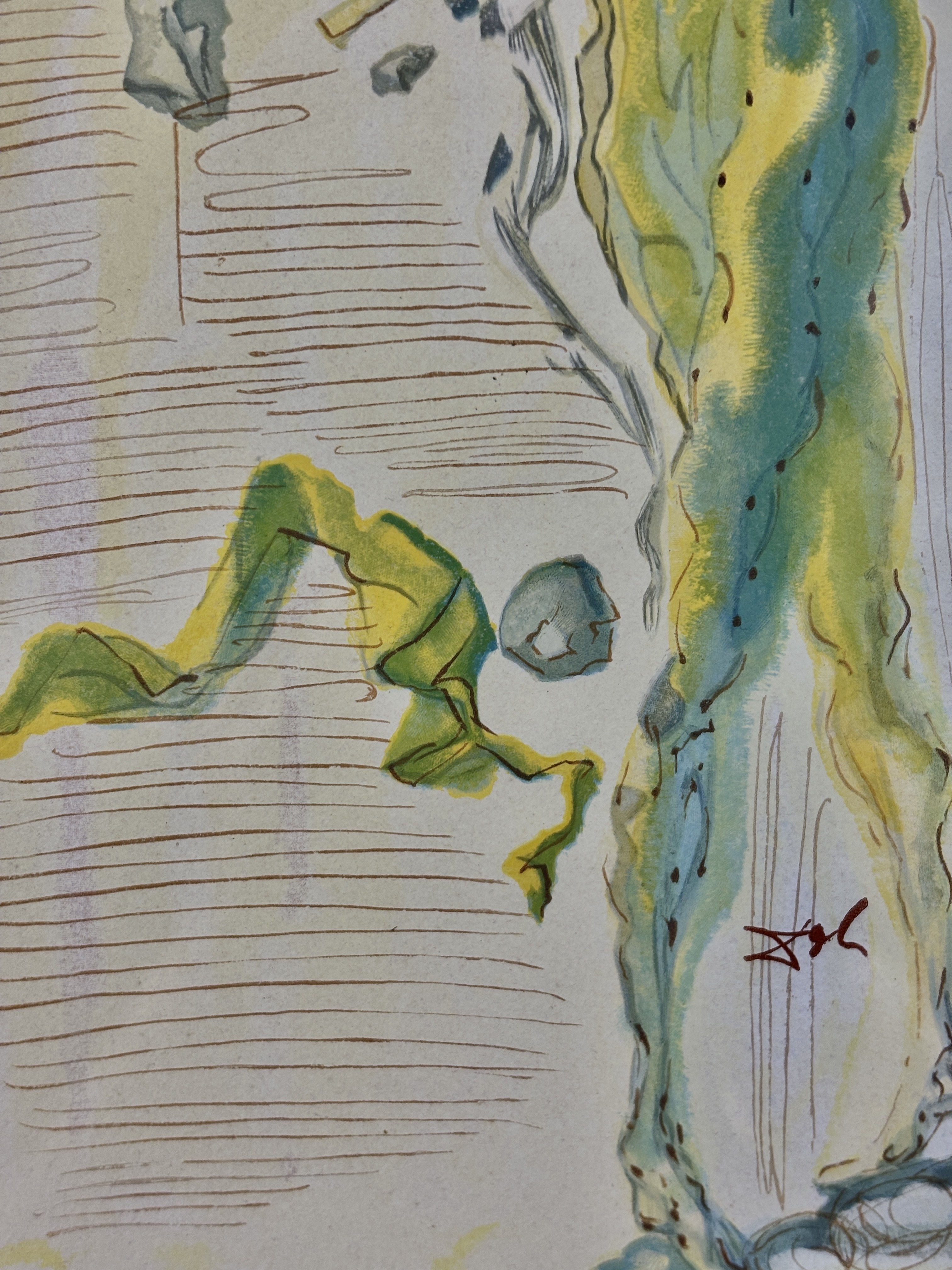
signed on the block, lower right
Publisher: Editions d'Art Les Heures Claires, Paris 1963
Woodcuts produced by: Ateliers Jacquet et Taricco, Paris, in collaboration with Jean Taricco and Paul Massina
References:
-Michler, Löpsinger—“Catalogue Raisonné of Prints, Lithographs, and Wood Engravings 1956–1980,” nos. 1039–1138
-Eduard Fornes, “Dali Illustrator of Dante: The Divine Comedy,” Les Heures Claires, 2016, pp. 125–207
This work is part of a monumental series—one of the most important graphic series in Salvador Dalí’s oeuvre—consisting of illustrations for Dante Alighieri’s Divine Comedy, commissioned by the Italian government and ultimately published by the Paris-based publishing house Les Heures Claires.
The composition refers to Canto XII of Paradise, set in the Sphere of the Sun—a place reserved for the souls of sages and saints. The main narrator of this section of the text is St. Bonaventure. Dalí chose not to reproduce the poem’s verses literally, opting instead for a unique, surrealist theological synthesis.
Literary context: In the 12th Canto of Paradise, Dante and Beatrice find themselves in the Heaven of the Sun. Around them, the souls of the great sages and saints dance and sing, forming two concentric, luminous circles.
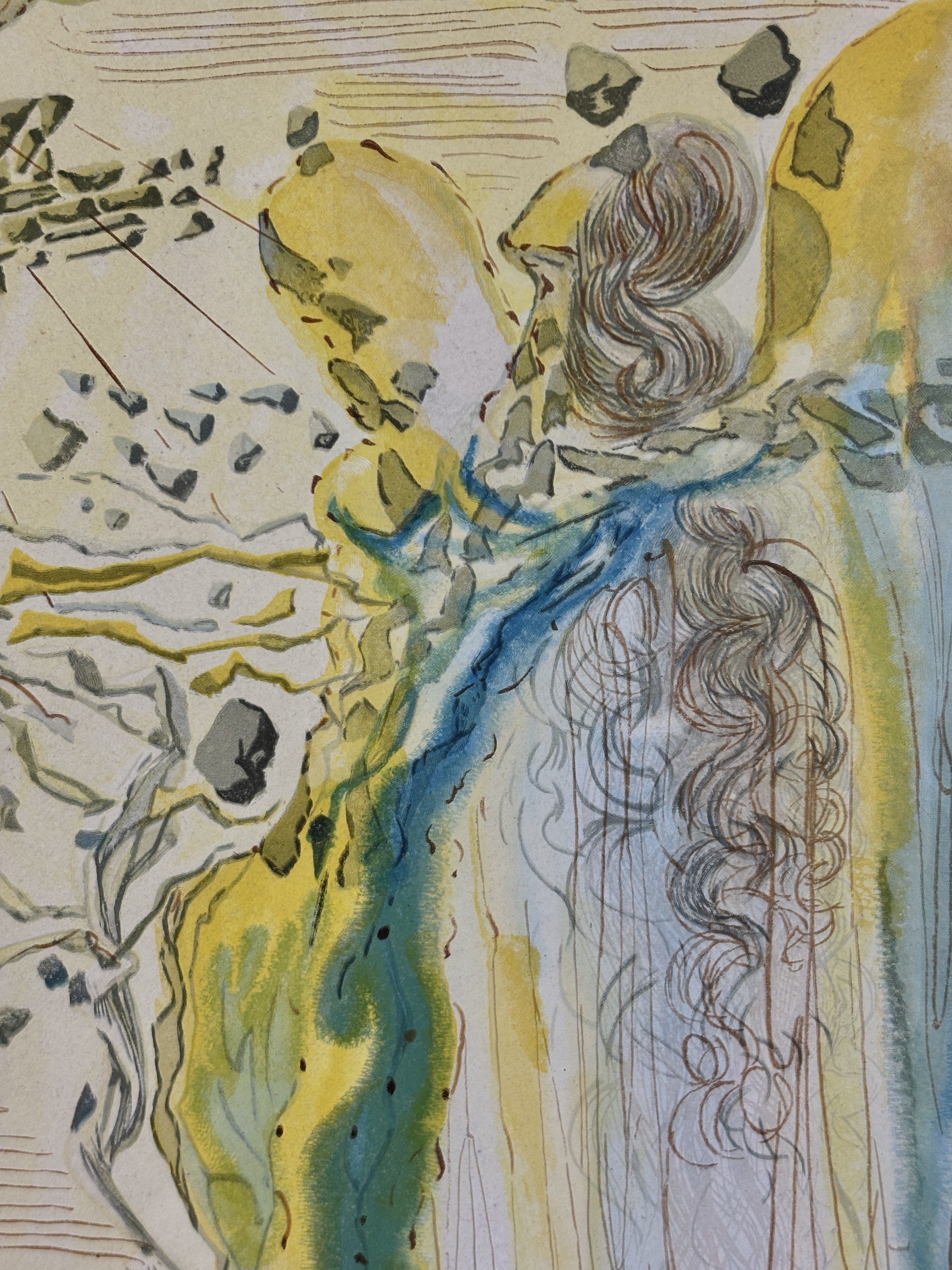
On the right, elongated, merging silhouettes are visible, rendered in shades of blue and green. In this way, Dalí depicts the spiritual unity and ecstasy of the glorious souls. The fluid, undulating lines of their hair and robes convey movement, dancing light, and the mystical singing of the heavenly choirs. The dominance of warm, yellow hues around the cross and on the left symbolizes the light of the Sun and Divine Grace, which illuminates and unifies the entire composition. In the upper left corner, a distinctive, angular structure resembling a cross and a ladder is visible—a signature motif from Dalí’s so-called “nuclear mysticism” period, symbolizing divine geometry and the structure of the universe.