


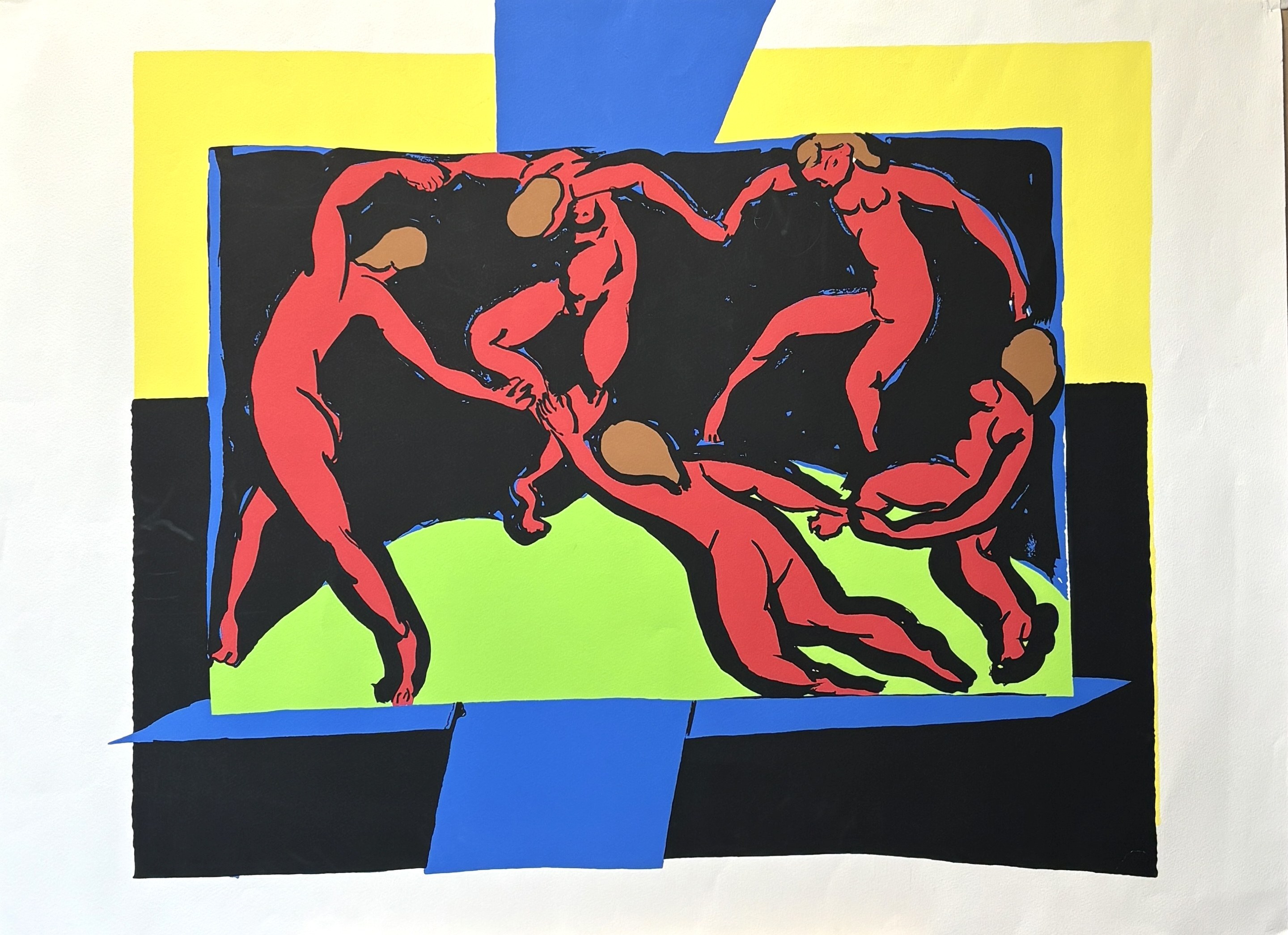
Color lithograph, Arches paper, 70 x 93 cm; this is the largest lithograph produced at Fernand Mourlot’s studio, created in honor of Matisse shortly after his death
La Danse was one of Matisse’s most famous paintings, created in two versions: the first in 1909 and the second in 1910. The painting symbolized freedom, the joy of life, and the unity of humanity with nature, and its expressive power lies in its dynamism and harmony. La Danse is often considered the pinnacle of the Fauvist style, and its simplified form and pure color had a profound influence on 20th-century art.
Although the original work is an oil painting, its motif was revisited 30 years later by the Master, who created an interpretation of his monumental painting La Danse for Verve—a famous French magazine showcasing the greatest artists. La Danse was created using the découpage technique with colored paper. This was a technique that became Matisse’s trademark and marked the beginning of a new phase in his work, in which figures and forms are highly simplified, almost abstract, making them appear as if cut out of paper.
Literature: Claude Duthuit, Henri Matisse: Catalogue Raisonné des Ouvrages Illustrés, no. 67.
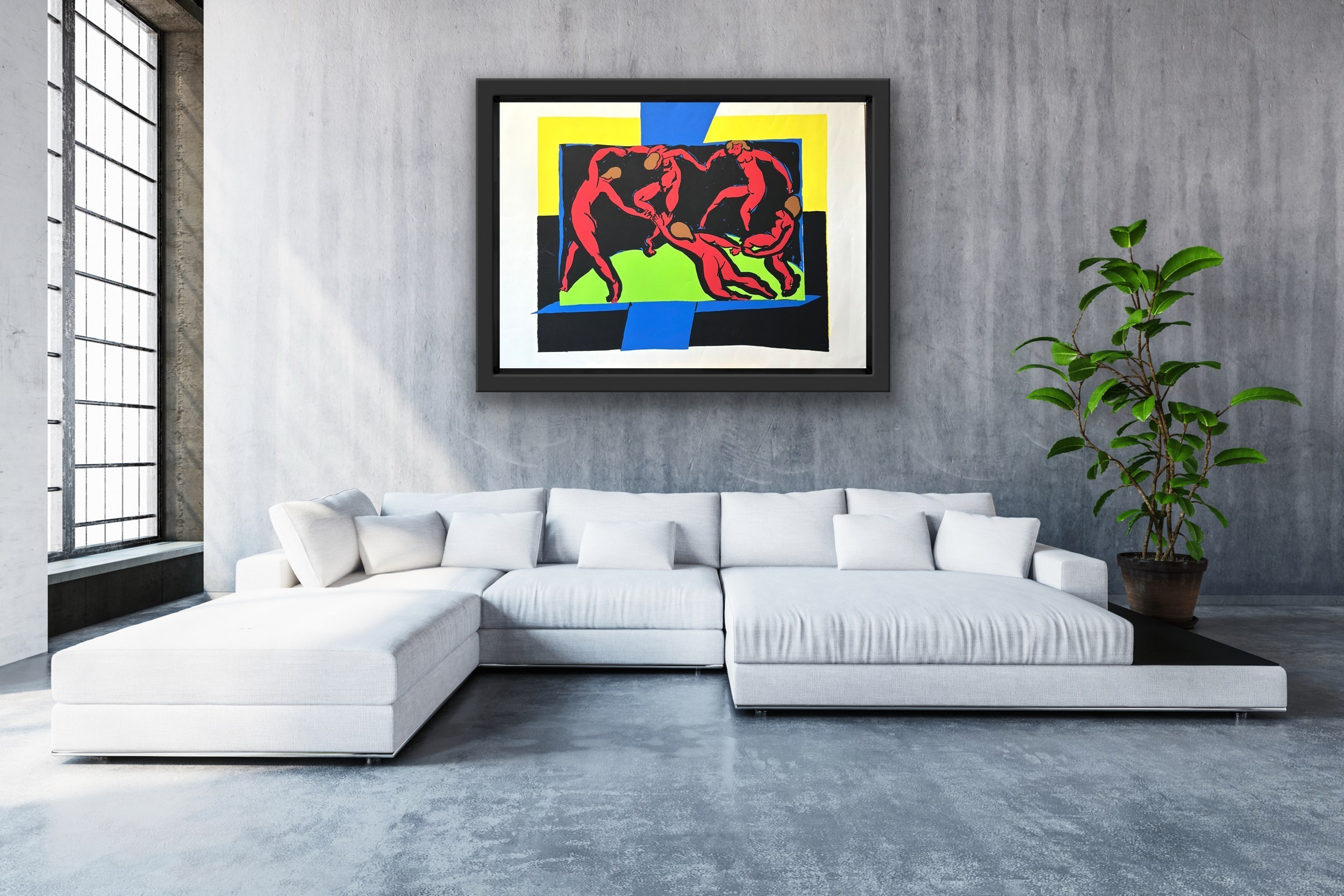
The frame shown in the images is for illustrative purposes only and does not constitute a commercial offer.










