


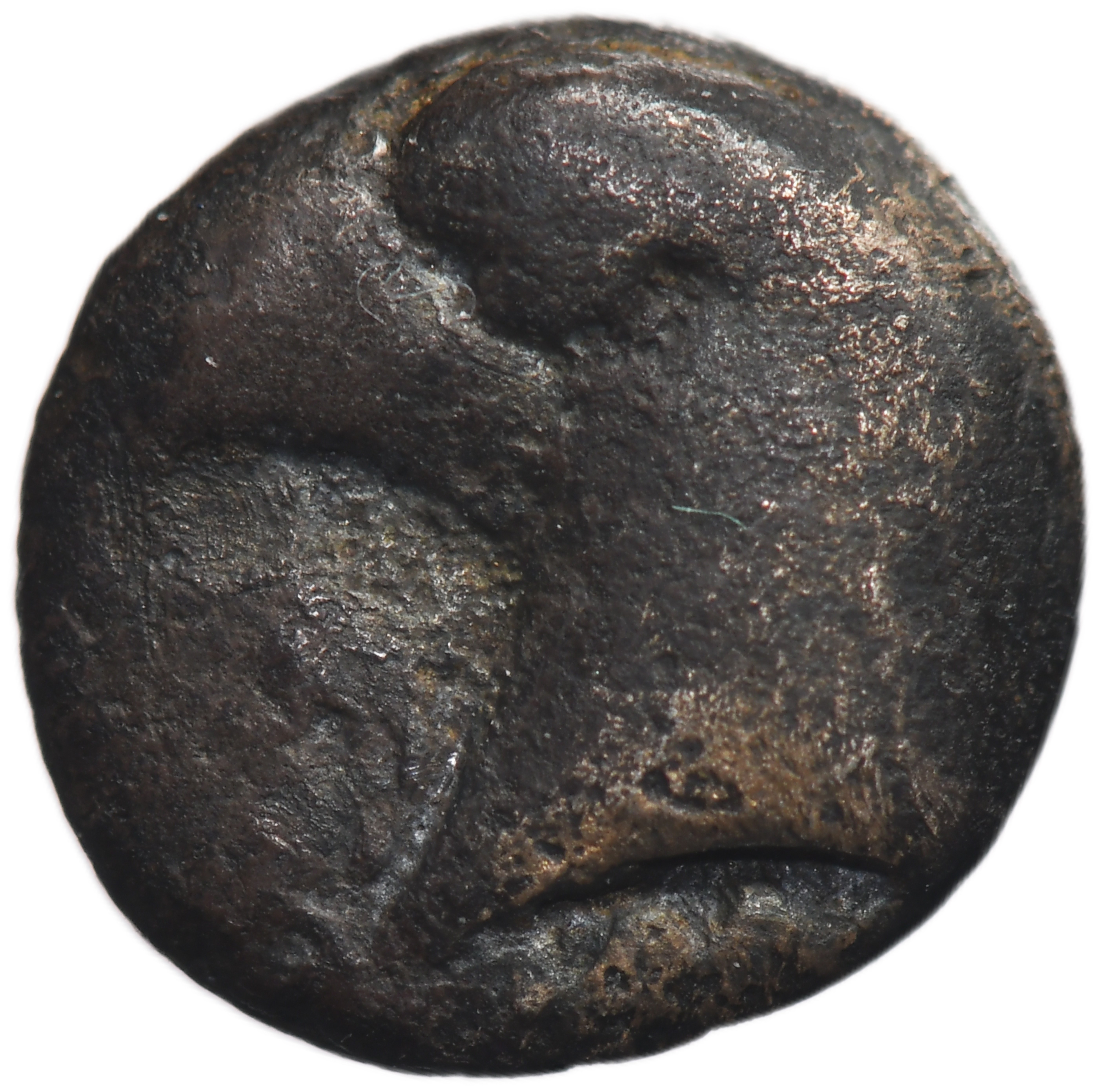
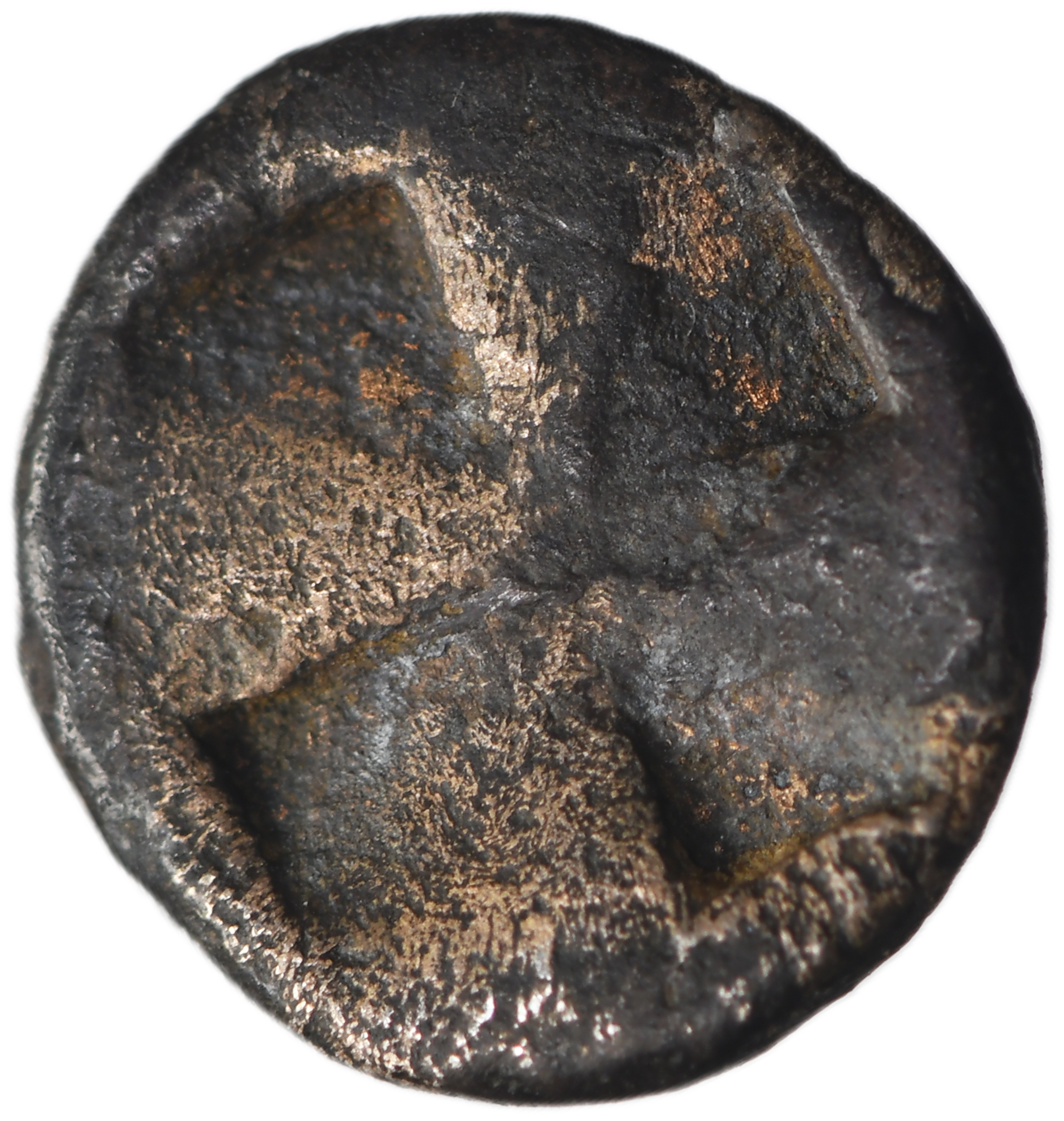


A silver obol of the city of Kyme in Aeolis, dated to approximately 450–400 BC, forming part of the Classical coinage of western Asia Minor during the period of Persian control over the region.
Kyme, one of the principal cities of Aeolis, is mentioned in ancient sources (including Herodotus and Strabo) and functioned as an important coastal center with active maritime and commercial connections. Its minting activity in the 5th century BC is well documented in numismatic scholarship and in major museum collections, comprising both larger denominations and small silver fractions.
The obverse displays the head of an eagle facing left, with the letters KI–M in the fields, serving as the ethnic abbreviation of the city. The eagle appears as a consistent identifying emblem in the coinage of Kyme and is a characteristic civic type of this polis.
Greece
Aeolis, Kyme, Obol 450-400 BC
Obverse: head of eagle left
Reverse: quadripartite incuse square
Diameter 8 mm, weight 0.45 g











