


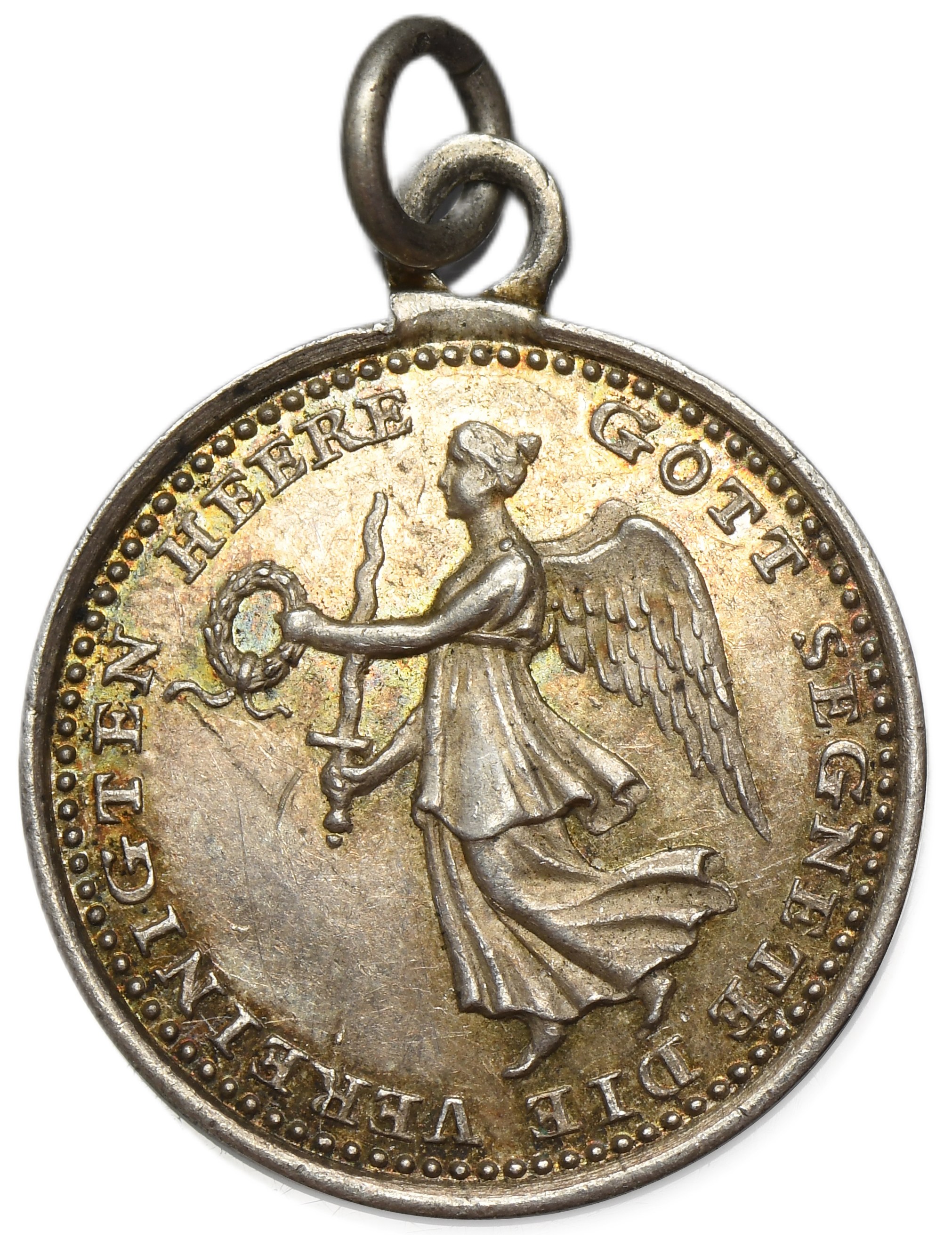
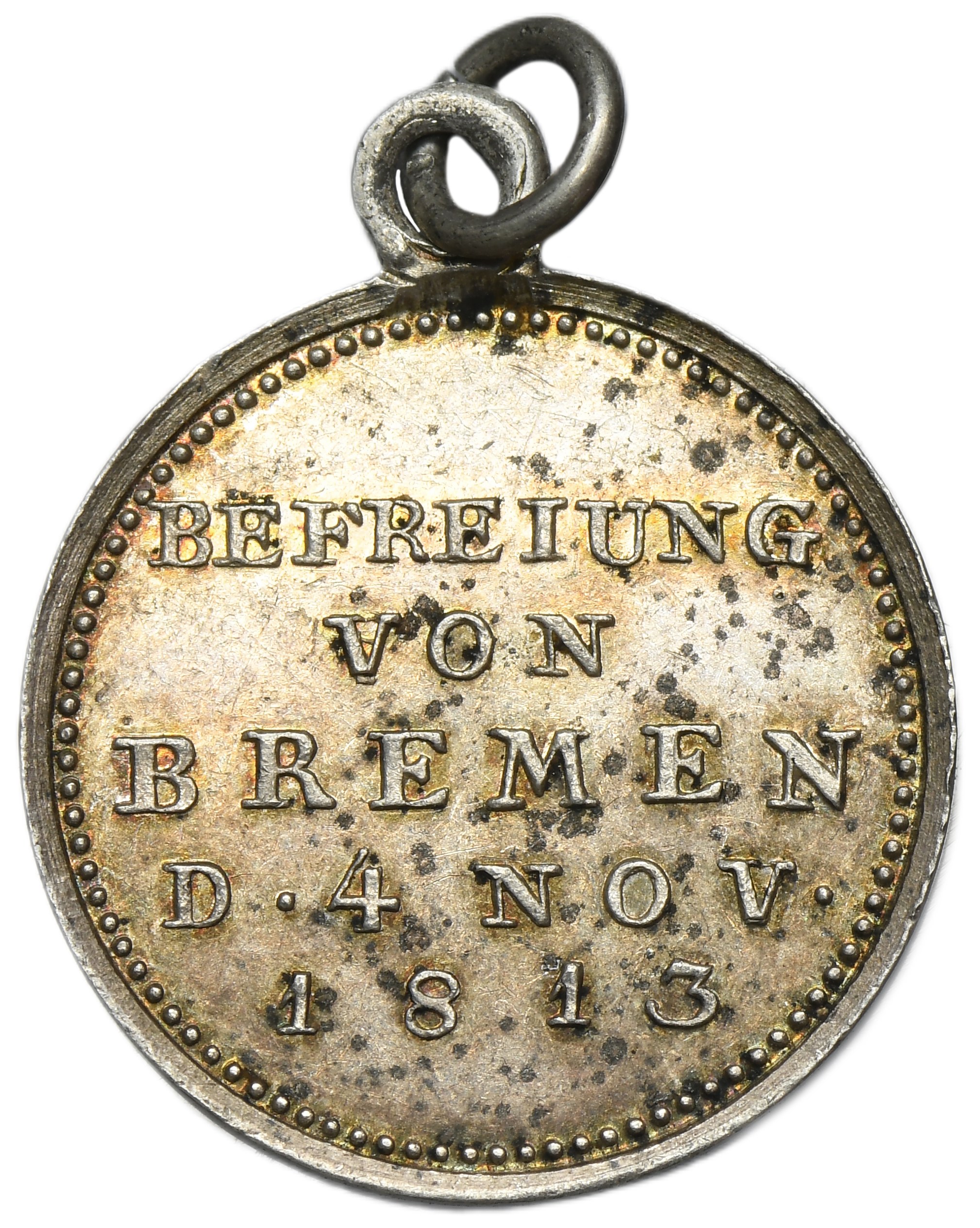
A small silver commemorative medal, known as a Siegespfennig, designed by Daniel Friedrich Loos and struck to commemorate Bremen’s liberation from French rule on 4 November 1813.
In 1811, Bremen was directly incorporated into the French Empire and made the capital of the Department of the Mouths of the Weser. The annexation deprived the city of its independence, introduced French administration and taxation, and subjected its economy to Napoleon’s Continental System.
Russian troops commanded by General Friedrich Karl von Tettenborn first entered the city in March 1813, although French forces temporarily regained Bremen in the autumn. Following Napoleon’s defeat at Leipzig, the French garrison permanently evacuated the city on 25 October.
Tettenborn returned to Bremen on 4 November 1813. The date recorded on the medal therefore refers not to a separate battle, but to the symbolic end of French rule and the beginning of the restoration of the city’s independent government. The general established a provisional governing commission, while the Senate and Bremen’s former municipal law were restored several days later. The city soon raised its own volunteer corps, which joined the Hanseatic Legion in the campaign against Napoleon.
With a suspension loop and ring.
An interesting memento of Bremen’s recovery of independence after its period of direct incorporation into the French Empire.
Obverse: the winged Victoria holding a sword and laurel wreath
GOTT SEGNETE DIE VEREINIGTEN HEERE
Reverse: five-line inscription
BEFREIUNG / VON / BREMEN / D. 4 NOV. / 1813
Silver, diameter 15 mm, weight 1.42 g











