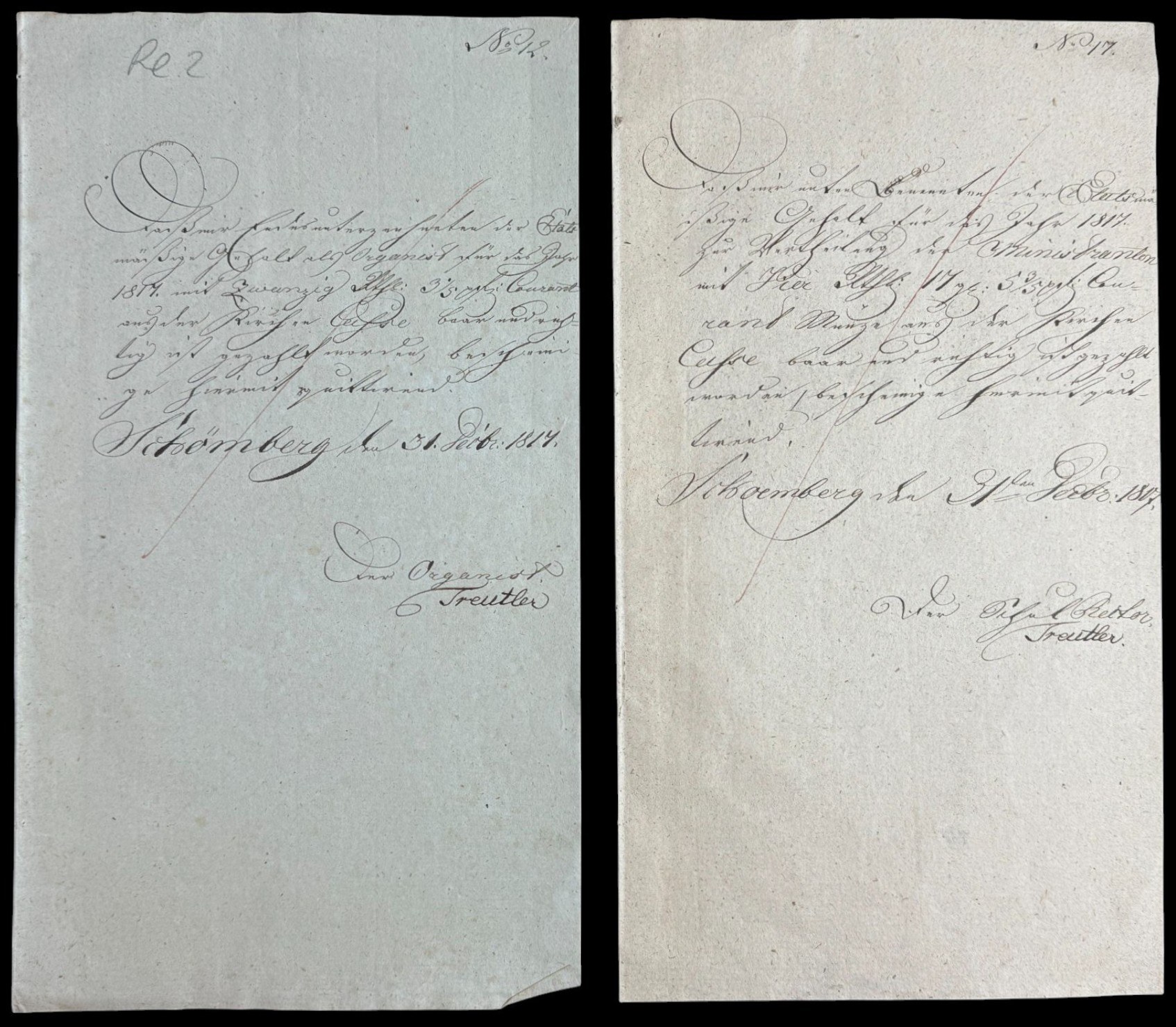
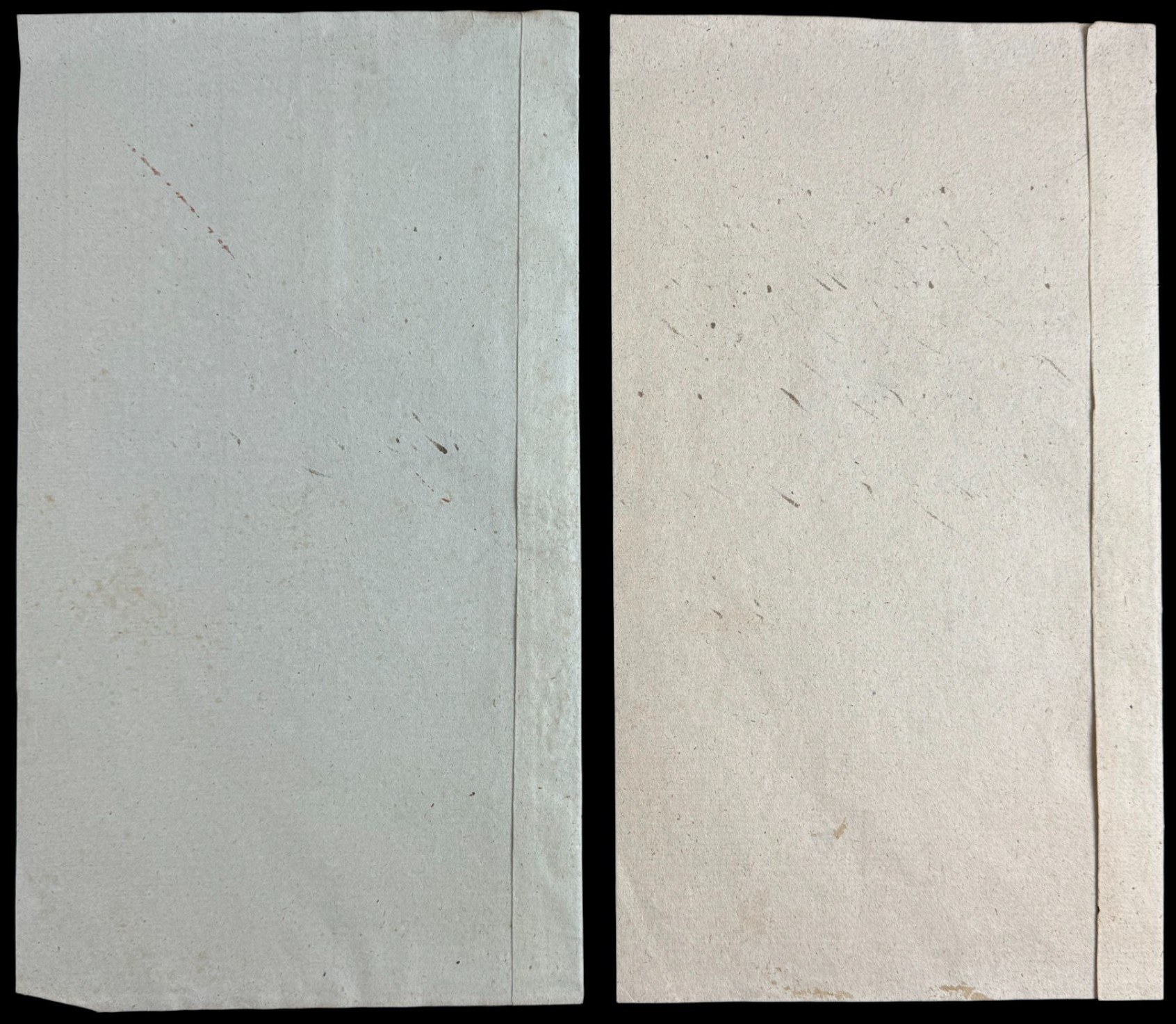
A set of two manuscript account receipts, both issued in Schomberg (today's Chelmsko Slaskie), dated December 31, 1817.
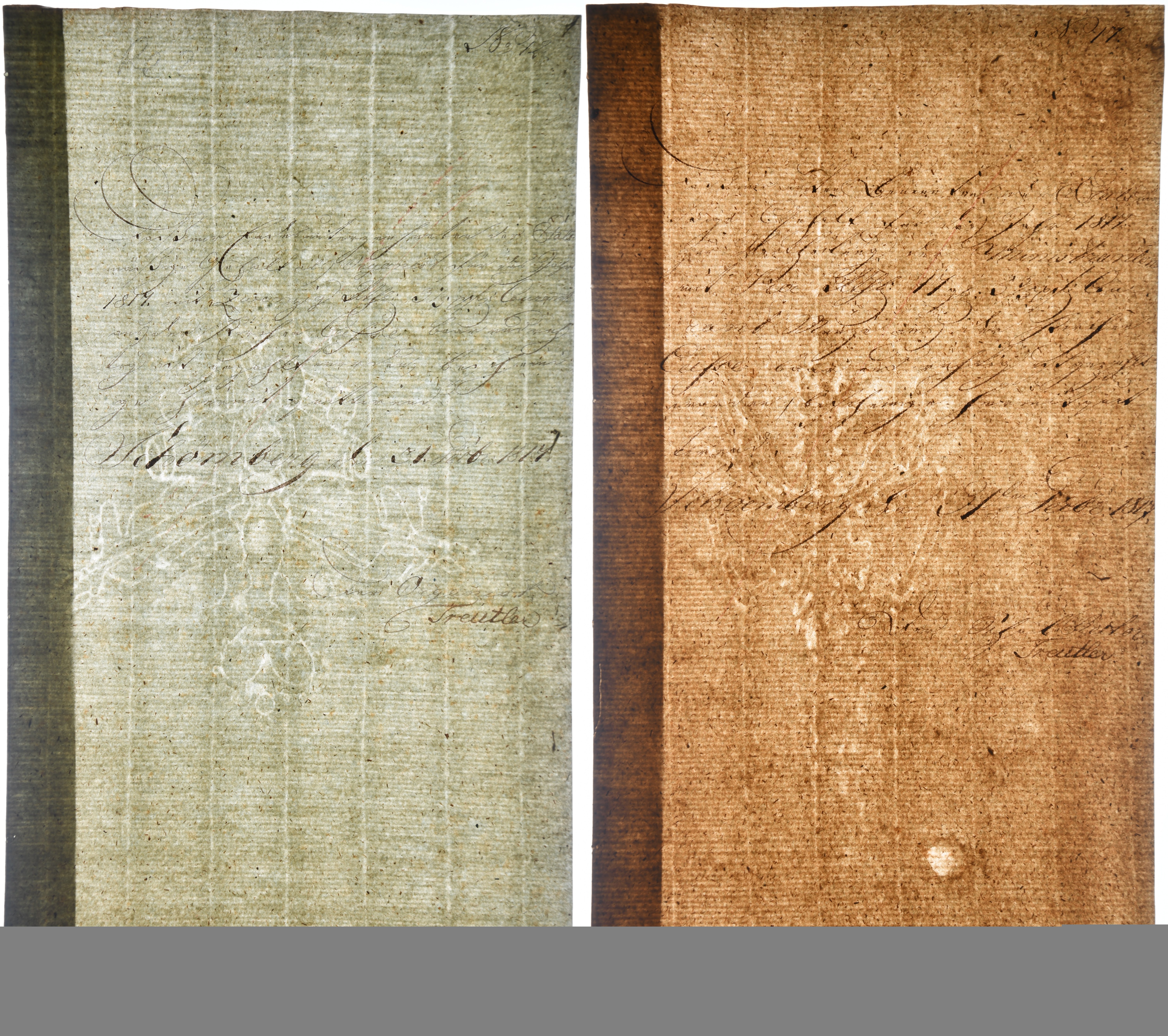
The documents are drawn on handmade paper with clear watermarks. The first card has a filigree panoply, while the second bears a filigree depicting a Silesian eagle with a scepter and sword - traditional symbols of power and justice.
The card with panoplies is distinguished by a delicate bluish shade of paper, which is the result of using shredded rags from old uniforms, which were dyed navy blue in the era. This is an interesting and rare example of the influence of raw material on the color of handmade paper.
Both receipts were issued by a person named Treutler, signing himself once as the school's rector and another time as the organist, indicating that he held both positions simultaneously. This provides an additional historical curiosity of particular interest to regionalists.
Both cards are products of the most famous paper mill on Polish soil - the Reinerz paper mill in Duszniki-Zdrój (near Glatz - Klodzko). The paper mill building, which has been preserved to this day, now houses the Museum of Papermaking, where the traditional technology of producing handmade paper from rags - exactly the kind of paper used in the offered documents - is presented.
It is worth noting that not all sheets of handmade paper were marked with filigree, and the surviving watermarks are often poorly legible. In the offered set, the watermarks are well preserved and legible, which significantly increases the collector value of the object.
Handmade paper, made from shredded linen and cotton rags, is characterized by exceptional durability and resistance to the passage of time. Books were printed on such paper from the 15th to the 19th centuries and documents and official records were made.
The set is a rare collector's rarity for regionalists, historians, enthusiasts of papermaking and old paper mills, as well as paper conservators.