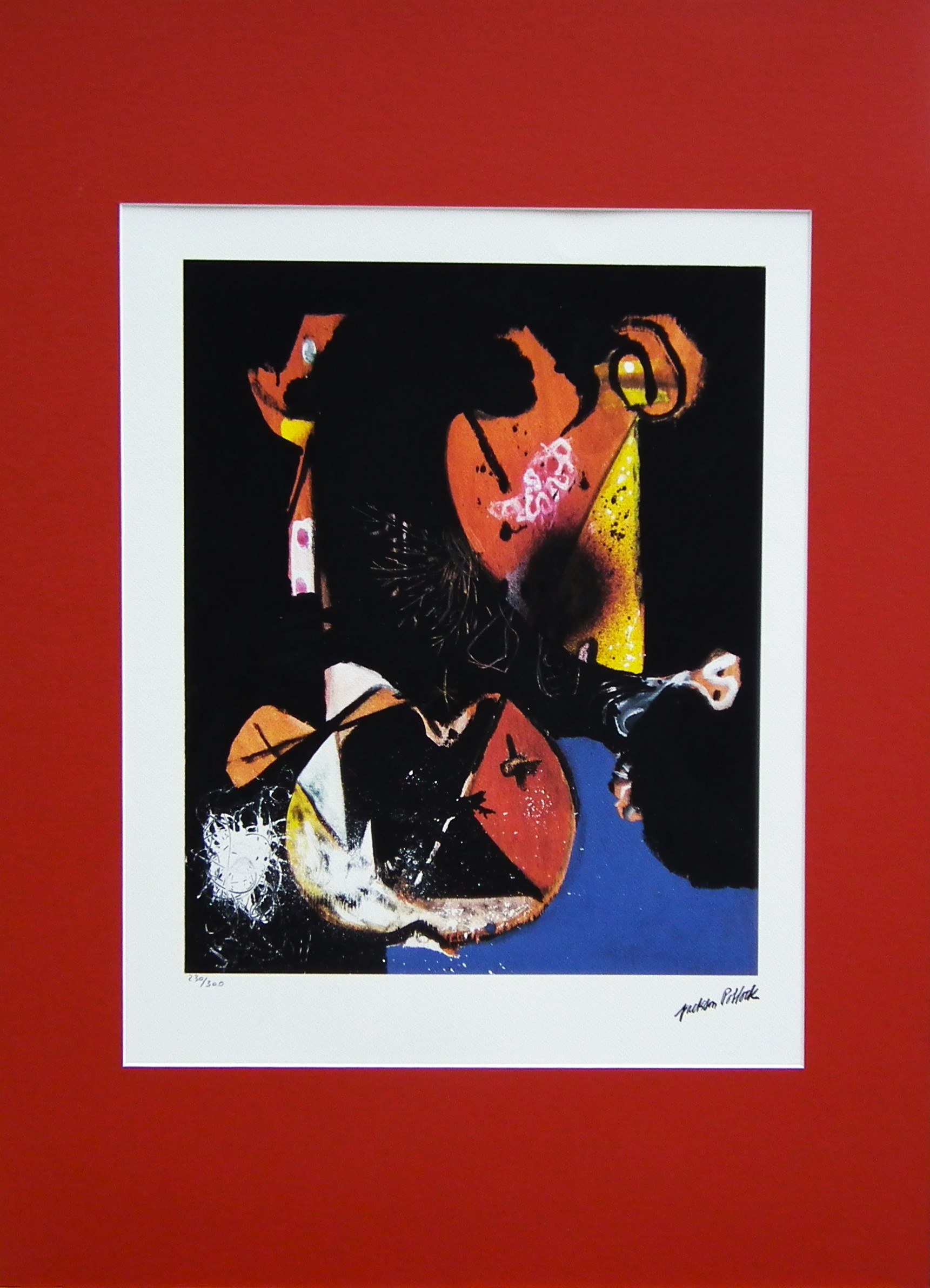
Color lithograph, high-grain veline paper 41 x 33 cm (composition), 70 x 50 cm (sheet), limited edition, numbered in pencil 230/300, signed under composition facsimile signature "Jackson Pollock" p.d.; dry publisher's stamp: S.P.A.D.E.M. PARIS l.d.; "verification of authenticity" hologram on back.
Jackson Pollock was an American painter, known as one of the representatives of Abstract Expressionism. His painting technique, known as "action painting" or gesture painting, involved the spontaneous dripping and splashing of paint on canvas, a radical creative method at the time.
Pollock moved away from figurative art, developing his own style that allowed him to be fully involved in the creative process, while claiming that he never lost control of his actions. His works were often edited by the artist himself, who would select pieces that matched his vision and destroy those he considered unsuccessful.
The work " No. 36 Paiting-1945," a privately owned work, is not widely documented in available sources. Pollock numbered his works, but not all of them are equally known or available to the public.
In 1945, Jackson experimented with different techniques and materials, which led to the development of his distinctive style involving dripping paint. At the same time, he stopped giving his paintings evocative titles, beginning instead to number them. His wife, artist Lee Krasner, later explained: "Numbers are neutral. They make people look at the painting for what it is - pure painting." Collectors did not immediately appreciate Pollock's radical new style, and when it was first exhibited in 1949 (then titled "Number 1, 1948"), the painting remained unsold. When exhibited again, Pollock's works such as "No. 5, 1948" reached record prices at auctions, underscoring their importance in art history.