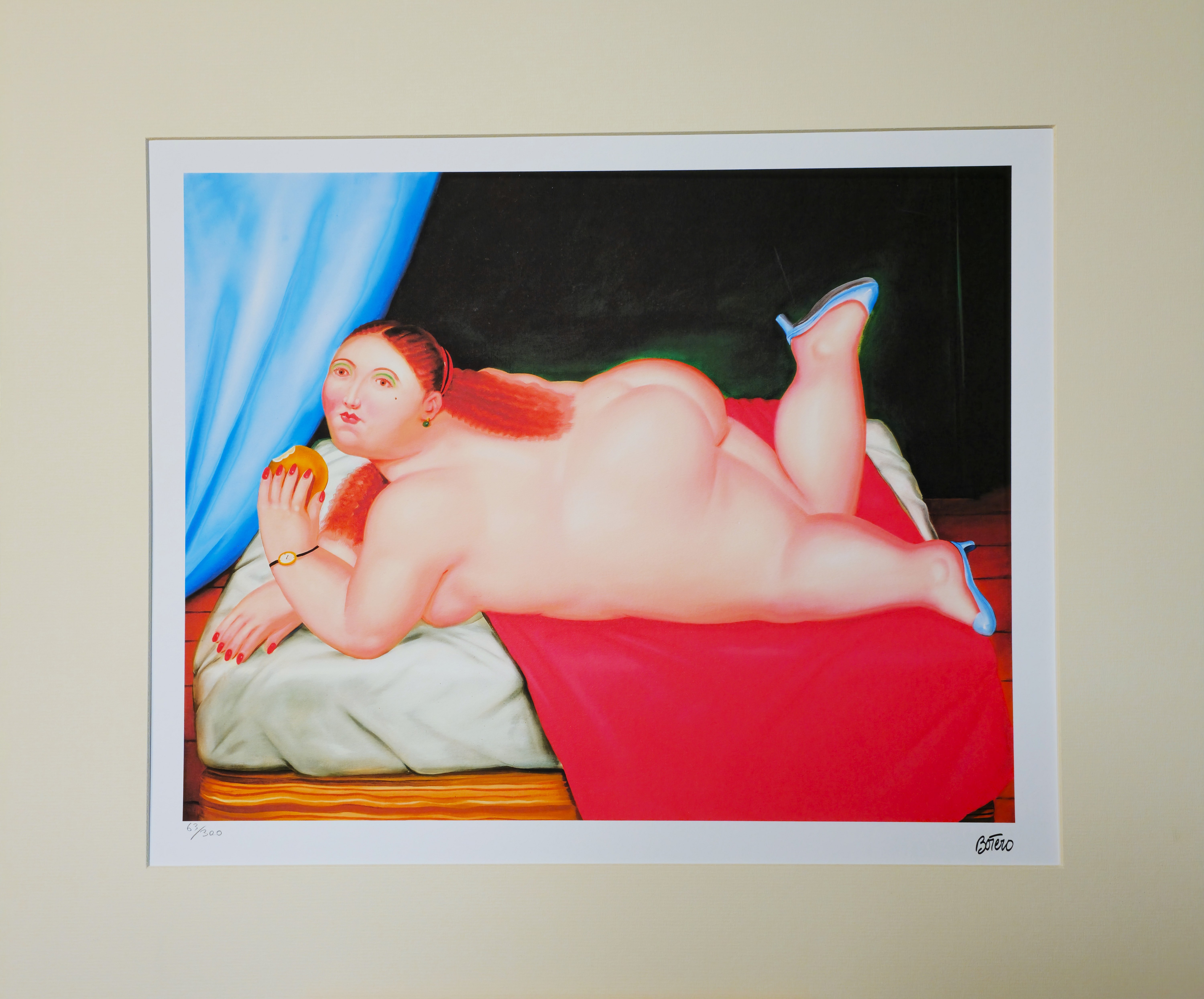

Lithograph, Carta Cotone vellum paper, 40 x 49 cm in light passe-partout, 65 x 56 in framed passe-partout, limited edition, numbered by hand in pencil 63/300, signed from the plate under the composition "Botero" l.d., dry publisher's stamp p.d.: "ARTIS"; hologram "verification of authenticity" on the back. Original certificate.
Fernando Botero - Colombian painter and sculptor known for his volumetric stylizations of figures and objects. His work includes subjects such as daily life in Colombia, references to art history such as the Mona Lisa, and abuses of power - all brought together by Botero's exaggeratedly plump figures. This stylization, has been called "Boterismo." His works are now in the collections of the Museum of Modern Art in New York, the Art Institute of Chicago, and the Museo Botero in Bogotá dedicated to the artist and his work.
His works depict figures and objects in exaggerated, plump forms, which is his trademark.
In the painting "Lady from Colombia," we see a characteristic scene full of the irony yet warmth that characterizes Botero's work. A fat woman, lying in a sensual pose, is the central figure of the work. Her body, as in most of the artist's paintings, has monumental, rounded shapes. She lies on a soft bed or sofa eating a donut-which heightens the impression of comfort and pleasure, hedonism and celebration of everyday pleasures.
Boter's works, such as the one on display, show beauty in unusual forms, forcing the viewer to reflect on our cultural norms of beauty and pleasure. The artist also pays homage to Colombian culture in his paintings, often highlighting its richness and everyday life, but with detachment and humor.
Fernando Botero's works can be admired in many museums, galleries and public spaces around the world: the Botero Museum, Bogotá, is one of the most important places to see his works. The museum houses more than 120 works by the artist that Botero donated to Colombia.
Botero's works can be found in the Museum of Modern Art (MoMA) and in many Manhattan galleries, among others, Botero's sculptures often appear in public exhibitions, such as in Park Avenue in New York.